



Iowa’s Aquifers Deserve Attention Before Scarcity
The national groundwater debate often begins with the Ogallala Aquifer, as headline news recently indicated, and for good reason. Its drawdowns across parts of the High Plains have changed irrigation economics, water law, rural development, and expectations for farm production. But the Ogallala should not narrow the debate to one region or one type of aquifer. It should widen the frame.
American Aquifer Systems
U.S. groundwater stress should be split into regional aquifer categories, rather than treated as one broad Ogallala story. The clearest depletion case begins in the southern and central High Plains, especially Texas and Kansas. In those states, heavy irrigation use, limited recharge, and long-term drawdown now pose a direct risk to farm viability. The Corn Belt and broader Midwest are different. There, water stress is often more local and tied to confined aquifers, municipal and industrial demand, expanding irrigation, drainage, recharge limits, and more volatile rainfall. The Mississippi River Valley alluvial system should be treated as a separate southern agricultural groundwater-stress region, not folded into either the Ogallala or Corn Belt matrix.
| Region + Aquifer | States | Significance |
|---|---|---|
| Southern & Central High Plains / Ogallala Aquifer | Texas, Kansas | Core depletion states. Heavy irrigation, limited recharge, sustained drawdown, and direct agricultural-risk exposure make these the strongest lead states for an Ogallala depletion thesis. |
| High Plains / Ogallala Aquifer | Nebraska, Colorado, Oklahoma, New Mexico | Central to the broader Ogallala story, though stress varies. Nebraska has scale and volume but uneven exposure; eastern Colorado faces municipal growth; the Oklahoma Panhandle and eastern New Mexico face arid recharge limits and irrigation-driven decline. |
| Northern High Plains / Ogallala-related Systems | South Dakota, Wyoming | Part of the High Plains system but less central to the acute depletion narrative. Relevant for a complete Ogallala / Great Plains frame. |
| Cambrian-Ordovician (Jordan), Dakota, Bedrock, and Drift Aquifers | Iowa, Illinois, Wisconsin, Minnesota | “Water-rich does not mean water-secure.” Stress is localized and often municipal, industrial, or confined-aquifer related rather than Ogallala-style agricultural depletion. Iowa is especially useful given uneven groundwater distribution, Dakota decline, and projected Jordan drawdown. |
| Irrigation Expansion, Groundwater Variability, Drainage / Recharge Tension | Indiana, Ohio, Missouri | Not core depletion hotspots, but relevant to a broader Corn Belt water-security thesis as irrigation expansion, rainfall concentration, drainage, water quality, and groundwater management become more important. |
| Mississippi River Valley Alluvial Aquifer / Mississippi Embayment System |
Arkansas, Mississippi, Tennessee, Louisiana, Kentucky, southern Illinois, Missouri | Parallel southern/alluvial groundwater-stress category. Important because of agricultural withdrawals, alluvial-aquifer stress, and groundwater availability issues, but should not be merged into the Ogallala matrix. |
Iowa belongs in that wider frame. The state does not face the same groundwater profile as the High Plains. Iowa is not an irrigation economy built around one vast aquifer. Its water position is more layered. The state relies on alluvial aquifers, glacial drift and buried sand-and-gravel aquifers, bedrock aquifers, and deep confined systems such as the Cambrian-Ordovician, often called the Jordan Aquifer. These systems differ by region, depth, recharge, productivity, and contamination risk.
Iowa DNR Water Summary Update April 2026
That unevenness is the main point. Iowa has groundwater, but abundance in one place does not solve vulnerability in another. A wet state can still face groundwater stress. A rainfed farm state can still face water-security risk. A food-production state can still rely on aquifers whose limits are poorly understood outside technical circles.
The Ogallala’s decline makes Iowa’s aquifers more relevant, not because Iowa is part of that system, but because it shows a national lesson. Groundwater can support economic confidence for decades before its limits begin to shape public policy.

Iowa’s Groundwater Is Not One Resource
Iowa’s aquifers form a regional mosaic. Alluvial aquifers along rivers can provide accessible water for cities, towns, and local users. Sand-and-gravel aquifers within glacial deposits can serve as strong sources where permeable material is thick and connected. Buried valley aquifers can yield large volumes, but their value depends on local geology. Bedrock aquifers can be dependable, yet their depth, water quality, recharge, and exposure to contamination vary sharply.
Iowa Water Quality Data – USGS
That structure matters because Iowa cannot manage groundwater through a single statewide assumption. The state needs aquifer-specific accounting. Some formations recharge on useful planning timelines. Others hold older water and may respond slowly to heavy withdrawals. Some shallow sources are productive but exposed to nitrate, manure, pesticides, and other pollutants. Some deeper sources are more protected but less renewable.
A groundwater strategy that treats Iowa as simply water-rich will miss the problem. Iowa is water-varied.
N/NW Iowa: Productive Pockets, Uneven Security
Northern and western Iowa depend heavily on local geology. In some places, buried sand-and-gravel valleys supply strong wells. In others, clay-rich glacial material limits recharge and reduces yields. Two nearby communities can therefore face different water realities.
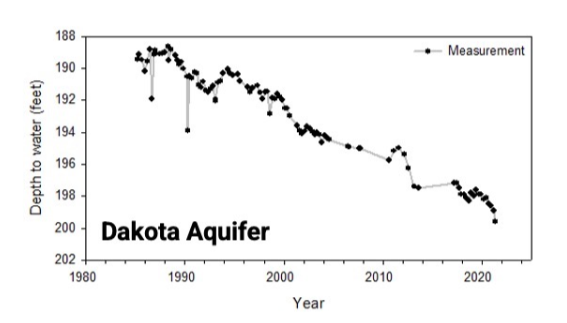
The Dakota Aquifer is important in northwest Iowa. It supports local and municipal needs in areas where other sources may be limited. Yet planning material points to water-level declines in some locations. That does not suggest statewide failure. It does show how local stress can develop inside a state rarely described as water scarce.
This is the policy warning. Groundwater stress often starts as a technical issue before it becomes a public concern. It first appears in monitoring wells, pumping costs, well interference, or local water plans. By the time it becomes politically visible, cheaper management choices may already have narrowed.
NE Iowa: Strong Aquifers, Higher Contamination Risk
Northeast Iowa presents a different problem. The region has productive bedrock aquifers and generally good water access, but productivity comes with vulnerability. Fractured carbonate and karst-influenced systems can move water rapidly through bedrock openings, sinkholes, and shallow pathways. That reduces natural filtration and raises contamination risk.
In this region, groundwater policy must focus on protection as much as supply. Nitrate, manure, pesticides, and other pollutants can reach groundwater faster where geologic barriers are thin or broken. A productive aquifer can lose value if land use overwhelms water quality.
For northeast Iowa, the question is not only whether the geology can produce water. It is whether land use, monitoring, and source-water protection can preserve that water.
Southern Iowa: Limited Groundwater, Fewer Fallbacks
Southern Iowa faces the opposite challenge. Groundwater is more limited in many areas because alluvial, drift, and bedrock aquifers may be less productive. Fine-textured bedrock and clay-rich glacial deposits can restrict recharge and lower well yields.
That limitation matters for residential growth, livestock siting, food processing, ethanol production, and industrial recruitment. These activities need dependable water. Where local aquifers are weak, planning must recognize the limit before development decisions become fixed.
Southern Iowa shows that scarcity need not be statewide to matter. A state can have major rivers, productive farms, and ample rainfall while still containing regions where groundwater constrains growth.

The Jordan Aquifer: Iowa’s Strategic Reserve
The Cambrian-Ordovician, or Jordan Aquifer, deserves special attention because it plays a different role from Iowa’s shallow aquifers. It is not the state’s main irrigation source. It is better understood as a strategic water-security aquifer.
The Jordan supports cities, industries, food processors, ethanol plants, livestock systems, and backup supply in areas where shallower sources may be limited, exposed, or unreliable. Its value lies not only in daily withdrawals, but in the security it provides to a state whose economy depends on water-intensive agriculture and processing.
That role makes drawdown in the Jordan more serious than a narrow farm-water discussion would suggest. Iowa ranks among the country’s most important producers of corn, soybeans, pork, eggs, ethanol, biodiesel, cattle, turkey, and dairy products. Much of its crop production remains rainfed and does not depend directly on Jordan irrigation. But the broader food economy depends on water for communities, livestock, sanitation, processing, and biofuels.
Below is a comparison of proven drawdowns in 2008 (first image) to forecasted drawdowns moving forward (second image).

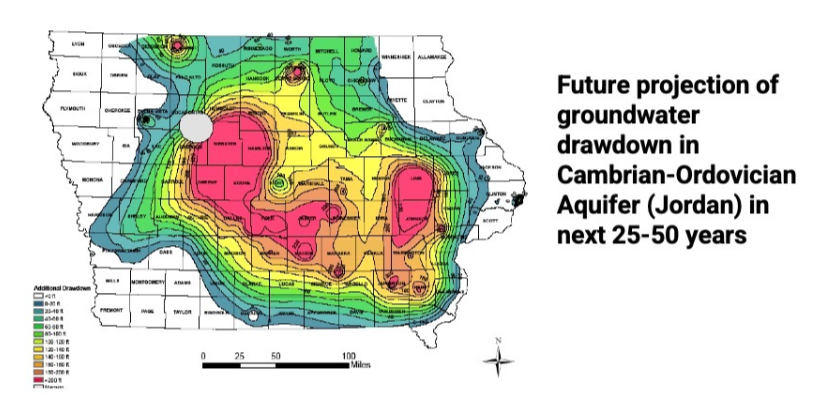
The distinction is critical. The Jordan does not feed Iowa agriculture in the same direct way that the Ogallala supports large-scale irrigation. Its role is indirect but strategic. It underwrites the water reliability behind one of America’s core food-production economies.
Drawdown Is Local Before General
Iowa’s aquifer stress does not appear evenly across the map. The Cambrian-Ordovician system does not decline uniformly. Drawdown tends to concentrate around pumping centers, forming localized cones of depression. Forecasts for the Jordan suggest greater future pressure in parts of central, west-central, south-central, and eastern Iowa. The Dakota also shows water-level concern in some areas.
This pattern demands better groundwater accounting. The relevant unit is not the state as a whole. It is the aquifer, the pumping center, the recharge area, and the local hydrogeologic setting. Iowa needs better aquifer mapping, geophysics, drilling data, models, and long-term monitoring. It also needs the discipline to turn that knowledge into allocation rules and infrastructure choices.
Groundwater management begins with measurement. Without measurement, abundance becomes a political belief rather than a physical condition.
Des Moines Shows the Future of Practical Water Planning
Central Iowa shows the operating complexity of modern water supply. Des Moines Water Works serves a large regional population and relies on surface water and groundwater, including the Des Moines River alluvial aquifer. That system requires attention to river conditions, collector wells, alluvial deposits, glacial outwash, recharge, evapotranspiration, stream seepage, quarry interactions, withdrawals, and groundwater movement.
This is the future of Midwestern water planning. Iowa’s water systems cannot be divided neatly between surface water and groundwater. Rivers, alluvial aquifers, buried valleys, glacial deposits, and bedrock formations interact. Pumping affects local gradients. Streamflow affects recharge and well performance. Drought changes the balance between sources. Floods create temporary abundance that may not become long-term supply.
The lesson is clear. Iowa needs aquifer budgets, withdrawal scenarios, contamination reviews, and joint management of surface water and groundwater. Some places may support recharge. Others may not. Some may need treatment or long pilot testing. Others may depend more on demand management, alternative sources, or regional supply systems.
Iowa’s ASR Pilots Show Promise and Limits
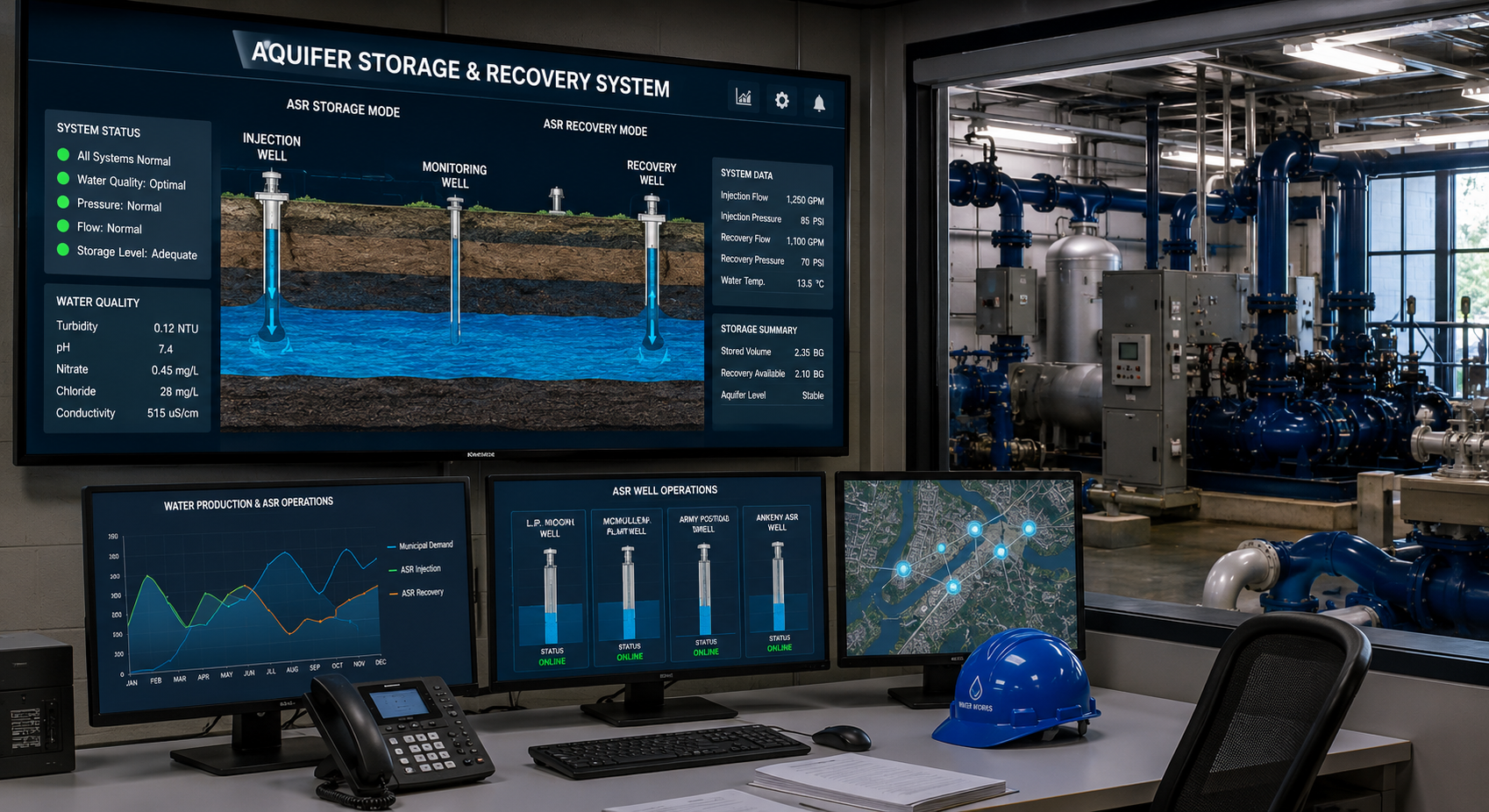
Iowa is not starting from theory. Central Iowa already contains one of the clearest Aquifer Storage and Recovery examples in the Corn Belt. Des Moines Water Works and the City of Ankeny operate ASR wells that store treated drinking water in the Jordan Aquifer during lower-demand periods and recover it when seasonal or emergency demand rises. The system includes wells such as the L.P. Moon, McMullen Treatment Plant, Army Post Road, and Ankeny ASR wells.
The Army Post Road well is the most useful case study. It injects finished drinking water into the Jordan Aquifer and recovers that water during high-demand periods or when surface-water quality complicates operations. The receiving formation includes parts of the Prairie du Chien and Jordan Sandstone system. The project shows that Iowa’s deep confined aquifers can support engineered storage where geology, treatment, permits, and system hydraulics align.
It also shows why ASR is not simple. Finished water differs chemically from native Jordan groundwater, which can be highly mineralized. Recovery must be monitored for total dissolved solids, sulfate, metals, radionuclides, pressure, injection rate, and well performance. The system works Fbecause it is engineered, regulated, and watched.
Ankeny’s ASR permits reinforce the point. The wells are designed to provide treated water during peak demand and emergency backup during drought or flood, while avoiding the immediate need for larger treatment capacity. West Des Moines has also advanced an ASR project, with a deep well intended to store treated water during lower-demand winter months and recover it during higher-demand summer periods.
These projects show that ASR is feasible in selected Iowa settings, especially for municipal peak-demand management, emergency supply, and resilience against short-term surface-water quality problems. They do not prove that ASR can become a broad agricultural recharge strategy across the state.
Where MAR Fits in Iowa
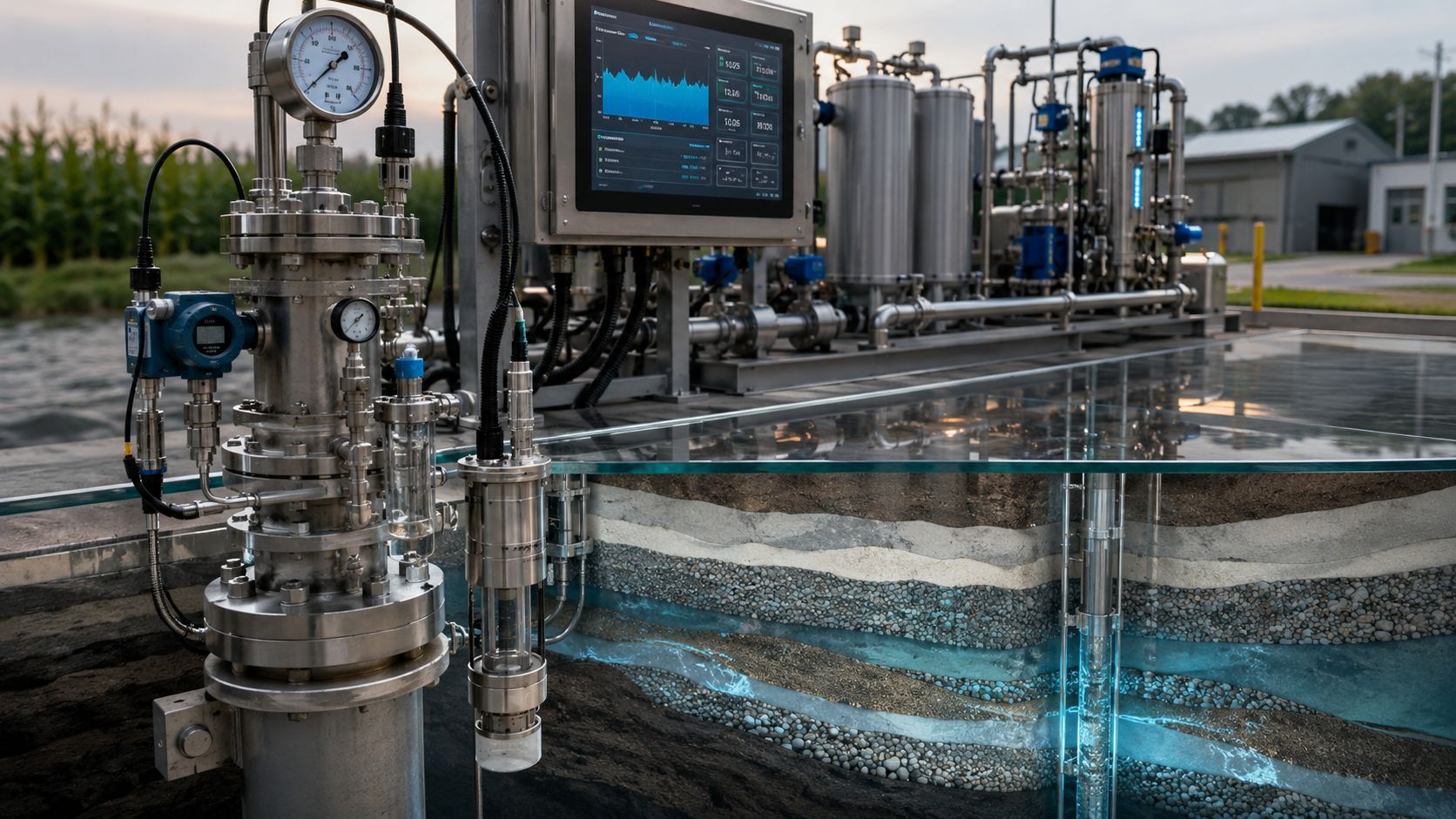
Managed Aquifer Recharge is broader than ASR. It can include infiltration basins, bank filtration, induced recharge, stormwater capture, floodwater recharge, treated wastewater reuse, and recharge through suitable sand-and-gravel deposits. Iowa should evaluate these methods, but only where geology and water quality support them.
Alluvial aquifers near rivers may be the best candidates for bank filtration, induced recharge, and off-channel infiltration. Buried valley and sand-and-gravel aquifers may support pilot recharge basins where mapping confirms storage capacity and recovery potential. Some bedrock systems may support targeted municipal or industrial ASR if transmissivity, confinement, chemistry, and well interference risks are favorable.
Agricultural MAR is the harder question. Iowa has heavy rainfall at times, extensive tile drainage, and seasonal gaps between water abundance and crop need. Capturing excess water and storing it underground has appeal. But agricultural recharge can move nitrate, phosphorus, pesticides, pathogens, and sediment into vulnerable aquifers if it is poorly designed.
For Iowa agriculture, the most credible pilots would be controlled and instrumented projects: tile-drainage capture linked to treatment wetlands, recharge basins above mapped sand-and-gravel deposits, induced recharge near alluvial aquifers, and municipal-agricultural partnerships that pair stormwater or treated effluent reuse with aquifer protection. Broad, untreated recharge into karst, fractured bedrock, or shallow vulnerable aquifers should remain a low-feasibility option.
The feasibility ranking is practical. Municipal ASR in selected Jordan settings is high-feasibility. Alluvial and buried-valley MAR pilots are moderate-feasibility where source water is controlled and aquifer geometry is known. Industrial or food-processing ASR is selective-feasibility where demand and geology justify the cost. Agricultural MAR is limited but worth testing under strict water-quality controls. Untreated recharge into vulnerable aquifers is low-feasibility.
Prime Players
Regardless of feasbility and scale, a number of prime players in the MAR/ASR technology field standout to benefit from any project that adheres to genuine water conservation at critical points in the supply- and value-chains.
Tetra Tech and, to a lesser extent, Jacobs and AECOM, are primarily engineering and project-development beneficiaries. Xylem is the infrastructure and equipment supplier. Veralto and Badger Meter provide the monitoring, measurement, and analytics layer that supports the entire ecosystem.
Tetra Tech, Inc. (NASDAQ: TTEK)
Tetra Tech is the closest public-market proxy for managed aquifer recharge (MAR), aquifer storage and recovery (ASR), groundwater banking, and water-resource resilience. Unlike diversified infrastructure firms, its business is heavily concentrated in environmental engineering, hydrogeology, water-resource planning, remediation, and climate adaptation.
Tetra Tech Stock Price | NASDAQ: TTEK Live – Investing.com
The company benefits from long-term structural drivers including groundwater depletion, water-quality concerns, infrastructure modernization, PFAS remediation, and increasing climate-related water stress. Because Tetra Tech frequently participates in project design, modeling, permitting, and planning before construction begins, it often sits at the front end of the water-investment cycle.
Financially, the company continues to demonstrate strong margins, growing backlog, and recurring federal and municipal demand. Recent results included record EBITDA and a guidance increase, reinforcing confidence in future project activity.
Key Investor Metrics
- Revenue: $1.22 billion (Q2 FY2026)
- EBITDA: $146 million
- Backlog: $4.28 billion
- Adjusted Net Revenue Growth: +8%
- FY2026 Guidance: Raised
Tetra Tech is best viewed as a direct beneficiary of increasing investment in groundwater management, drought resilience, and water-security infrastructure.
Xylem Inc. (NYSE: XYL)
Xylem supplies the equipment and technologies that move, monitor, treat, and optimize water systems. Its portfolio includes pumps, treatment equipment, sensors, digital monitoring platforms, and smart-water infrastructure used across municipal, industrial, and utility markets.
Xylem Stock Price | NYSE: XYL Live – Investing.com
Nearly every major water investment ultimately requires physical infrastructure, making Xylem a broad beneficiary of groundwater recharge, wastewater reuse, utility modernization, and water-efficiency initiatives. The company is also increasingly leveraging digital technologies such as predictive maintenance, leak detection, and network analytics, enhancing its transition toward a higher-margin technology platform.
Financial performance remains solid, supported by improving profitability, cash-flow generation, and margin expansion. Recent guidance increases suggest management remains confident in long-term water-infrastructure demand.
Key Investor Metrics
- Revenue: $2.13 billion (Q1 2026)
- Adjusted EPS: $1.12
- EBITDA Margin: 20.6%
- FY2026 Revenue Guidance: $9.2–$9.3 billion
- FY2026 Adjusted EPS Guidance: $5.35–$5.60
For investors seeking broad exposure to global water infrastructure, Xylem remains one of the strongest large-cap opportunities in the sector.

Jacobs Solutions Inc. (NYSE: J)
Jacobs combines significant exposure to water-resource engineering and climate resilience with operations in transportation, energy, national security, and advanced facilities. This diversification provides stability across economic cycles but reduces direct exposure to any single theme, including groundwater management.
Jacobs Stock Price | NYSE: J Live – Investing.com
The company’s most important financial attribute is its substantial backlog, which provides exceptional revenue visibility and reflects strong demand across infrastructure markets. Jacobs has benefited from public-sector infrastructure spending while expanding its role in climate adaptation and water-security projects.
As governments address drought, flood risk, and aging infrastructure, Jacobs is well positioned to participate in large-scale planning, engineering, and implementation efforts.
Key Investor Metrics
- Revenue: $3.7 billion
- EBITDA: $327 million
- Backlog: $27 billion
- Backlog Growth: +22%
- FY2026 EPS Guidance: $7.10–$7.35
Jacobs offers meaningful water exposure within a broader infrastructure platform supported by one of the industry’s strongest backlogs.

AECOM (NYSE: ACM)
AECOM is one of the world’s largest infrastructure companies and plays a significant role in designing and managing water, flood-control, resilience, and environmental projects. Compared with Tetra Tech, AECOM is more heavily focused on project execution and construction management.
Aecom Technology Stock Price | NYSE: ACM Live – Investing.com
The company benefits from growing demand for integrated resilience solutions as municipalities respond to flooding, drought, groundwater stress, and aging infrastructure. Its scale allows it to compete for large, multidisciplinary projects that combine water systems, transportation, utilities, and environmental services.
Recent results reflect improving profitability and disciplined execution, with earnings growth outpacing revenue growth and backlog continuing to expand.
Key Investor Metrics
- Revenue: $3.8 billion
- EPS Growth: +22%
- Net Income Growth: +19%
- Backlog: $26.2 billion
- Capital Returned During Quarter: >$340 million
AECOM is best viewed as a large-scale infrastructure and resilience beneficiary whose water exposure is substantial but less concentrated than Tetra Tech’s.

Veralto Corporation (NYSE: VLTO)
Veralto is a water-quality monitoring and analytics company focused on instrumentation, testing, sensing, and compliance. While it has limited direct exposure to MAR or ASR deployment, it benefits from the monitoring and regulatory requirements that accompany nearly all water-management projects.
Veralto Corp Stock Price | NYSE: VLTO Live – Investing.com
Key Investor Metrics
- High recurring-revenue profile
- Strong free-cash-flow generation
- Premium-margin analytics business
- Significant water-quality monitoring exposure
Veralto is best viewed as a water-intelligence and monitoring company rather than a water-infrastructure provider.
Badger Meter, Inc. (NYSE: BMI)
Badger Meter specializes in smart metering, leak detection, digital monitoring, and utility analytics. Its investment thesis centers on improving water-use efficiency as utilities face increasing resource constraints and infrastructure challenges.
Badger Meter Stock Price | NYSE: BMI Live – Investing.com
Key Investor Metrics
- Strong smart-metering growth
- Expanding software and analytics revenue
- High utility-market penetration
- Consistent free-cash-flow generation
Badger Meter is best viewed as a water-efficiency and utility-digitization company rather than a direct beneficiary of groundwater recharge infrastructure.
If managed aquifer recharge and groundwater banking emerge as major infrastructure priorities over the next decade, Tetra Tech appears to possess the highest direct exposure. Xylem offers the strongest large-cap water-infrastructure platform. Jacobs and AECOM provide diversified participation through large-scale infrastructure execution, while Veralto and Badger Meter offer higher-margin exposure to the increasingly data-driven management of scarce water resources.
| Company | Scale | Growth | Profitability | Revenue Visibility | Outlook |
|---|---|---|---|---|---|
| TTEK | $1.22B Revenue | +8% Adj. Net Revenue; Adj. EPS +13% | $146M EBITDA | $4.28B Backlog (+8%) | Guidance Raised |
| XYL | $2.13B Revenue | Revenue +2.7%; Adj. EPS +8.7% | 20.6% EBITDA Margin | ~$5.1B Backlog | Guidance Raised |
| J | $3.7B Revenue | +27% Gross Revenue; +8.8% Net Revenue | EBITDA +14% ($327M) | $27B Backlog (+22%) | Guidance Raised |
| ACM | $3.8B Revenue | Revenue +1%; EPS +22% | Margin Expansion | $26.2B Backlog (+8%) | Guidance Raised |
| VLTO | Large-Cap Analytics Platform | Mid-Single-Digit Growth | High-Margin Model | Recurring Revenue Base | Stable |
| BMI | Smart-Water Technology Platform | High-Single-Digit Growth | Strong Operating Leverage | Utility Recurring Revenue | Positive |
Final Thoughts
Iowa’s aquifers represent a different and important dimension of the national groundwater debate. The Ogallala shows the cost of treating groundwater as an inexhaustible reserve, yet Iowa shows why that lesson must extend beyond the High Plains.
Iowa’s risk is not a single collapsing aquifer but rather a distributed system of uneven supply, localized drawdown, contamination vulnerability, deep-aquifer dependence, rising demand, and uncertain storage. Iowa needs a groundwater quantity strategy equal to its agricultural and industrial importance. That strategy should map aquifers, measure withdrawals, protect recharge areas, monitor water quality, test MAR and ASR where suitable, and plan allocation before conflict hardens.