



ESG Rebranding Still Exposes Gaps Between Labels and Impact
Last month marked both a deadline and a milestone for investment firms and fund managers of large-cap ESG-based ETFs to adhere to the SEC’s extended Names Rule, priorly enacted in 2023 to prevent investor fraud deriving from misleading fund names.
The rationale for the updates, per the SEC, essentially centers on eliminating the risk in each fund of greenwashing: deceiving investors or consumers of a product’s sustainable (i.e., green) qualities with misleading claims or labels.
AI Risk Becomes ESG’s Next Flashpoint | TradersQue
The updated mandate specifically seeks to,
- Improve and broaden the scope of funds that must comply with the current requirement to adopt a policy to invest at least 80 percent of their assets (“80/20 Rule”) in accordance with the investment focus that the fund’s name suggests or states
- Provide enhanced disclosure and reporting requirements related to terms used in fund names; and
- Establish additional recordkeeping requirements
Surprisingly, despite past and present criticism toward all things ESG by high-profile financiers and opportunistic politicians, a remarkable number of U.S. firms complied.
A Who’s Who of Updated U.S. ESG Funds
Funds too numerous to list await final SEC compliance approval. But below is a representative sample of familiar namesakes and material changes made to these funds based on the updated SEC Names Rule. Among nearly two dozen total ESG funds, material changes range from name changes to revised holdings to outright fund liquidation.
| Fund | Changes |
|---|---|
| iShares ESG Optimized MSCI USA ETF (SUSA) — BlackRock | Changed name from iShares MSCI USA ESG Select ETF. Updated ESG methodology and index language to increase positive ESG exposure while maintaining broad-market risk and return characteristics. |
| iShares ESG Aware MSCI USA ETF (ESGU) — BlackRock | Updated its ESG-aware strategy and 80/20 rule commitment while maintaining broad U.S. large- and mid-cap exposure. |
| Vanguard ESG U.S. Stock ETF (ESGV) | Renewed its ESG-screened U.S.-only equity holdings through its 80/20 rule commitment. |
| State Street SPDR S&P 500 ESG ETF (EFIV) | Updated its S&P 500 ESG strategy through an ESG-screened S&P 500 index methodology and 80/20 rule. |
| Fidelity Sustainable U.S. Equity Fund (FSEBX) | Updated its sustainable U.S. equity strategy by tying eligibility to companies with proven or improving sustainability practices. |

ESG Ratings: Methodologies May Vary
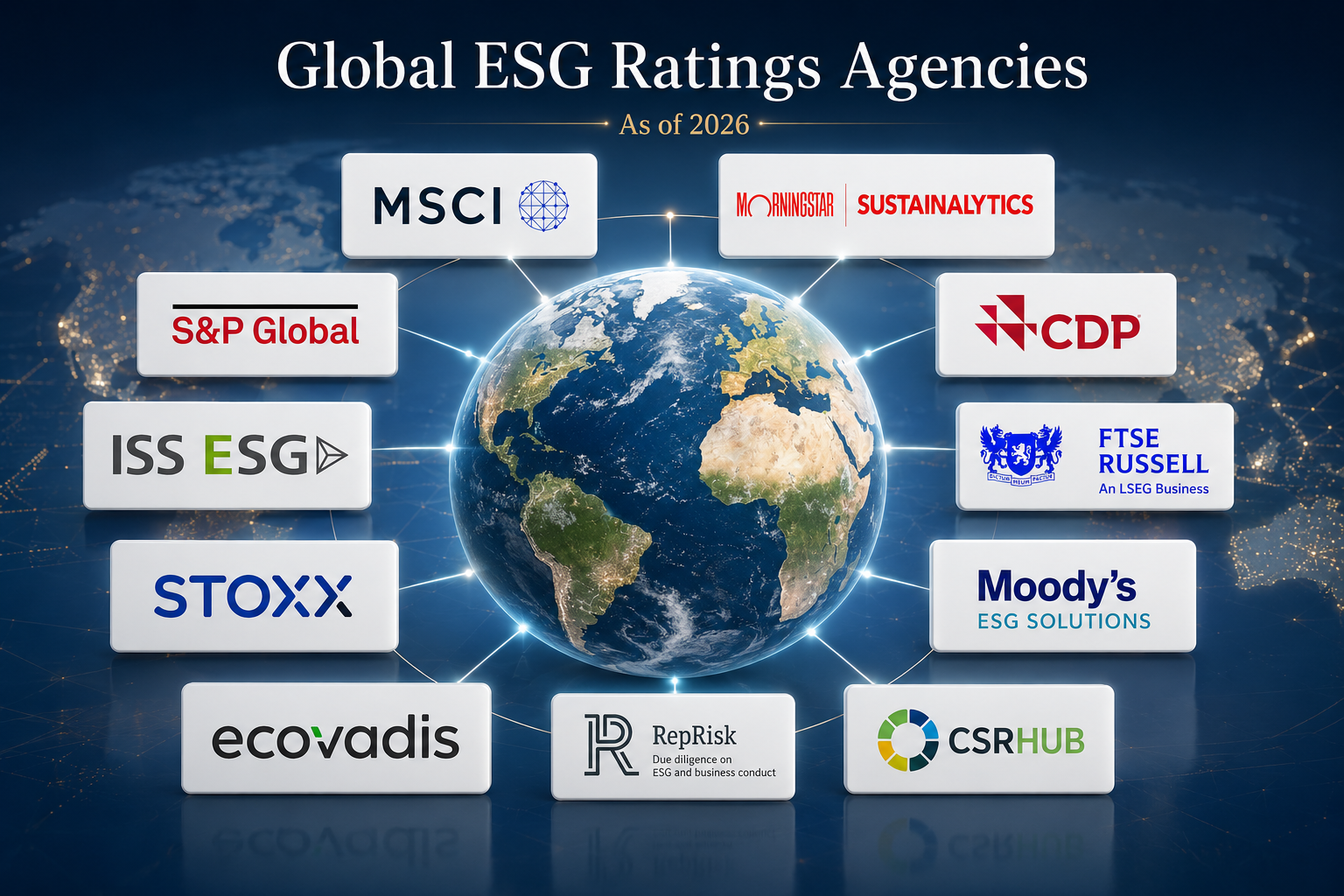
Fund managers depend heavily on ESG ratings agencies, but those providers do not apply a single, harmonized definition of or scoring rubric for ESG.
MSCI, Sustainalytics, and S&P, among others (CDP, ISS, RepRisk, FTSE, STOXX) assess different questions or establish different criteria regarding financial ESG risk, sustainability performance, disclosure quality, and climate impact, among others.
Because each provider uses different data, thresholds, weights, and sector analyses, the same company can appear ESG-qualified under one methodology and questionable under another. This allows ESG funds to comply with their disclosed rules while still holding companies that investors may not view as authentically green or sustainable. Methodology updates to flagship ratings agency, MSCI, reveals ongoing shortcomings relative to authentic impact assessments via ESG investments.
E.U. Rebrand Exposes U.S. Limits
While the U.S. ESG funds reflect a Names Rule compliance requirement, data from its EU counterpart, the European Securities and Markets Authority (ESMA), reveals a concerted ESG rebrand since 2024 that escalated throughout 2025 from the ESMA’s own names rule codified in 2024.
By the start of 2026, over 1,700 European funds, or about 37% of funds in scope, had changed ESG-related names with nearly 1,500 having transitioned from ESG themes, commitments, and holdings entirely.
The ESMA’s compliance requirements are mandated by law with strict oversight to ensure full compliance. Not so for the U.S. Methodologies can be opaque and flawed since fund disclaimers explicitly convey a lack of fund assurances or a bevy of fund manager limitations:
- ESG data may be incomplete, estimated, or inconsistent
- Index providers’ methodologies may rely on unaudited third-party data
- ESG ratings can differ across providers
- Holdings may cease to meet criteria between index rebalances
- Representative sampling may cause the fund’s ESG profile to differ from the index; and
- Inclusion in an ESG index is not a guarantee of positive sustainability impact
A fund manager does not have to prove each holding is “truly ESG” even in a scientific sense because U.S. law does not currently define one universal ESG authenticity standard. (The SEC withdrew its proposed ESG fund/adviser disclosure rule in 2025.)
The scathing level of public scrutiny toward all things ESG over the past several years can be owed largely not to woke investors or liberal politicians but arguably to fund manager malpractice. By using broad moral language for strategies often built on narrow ratings, screens, and index rules, they allowed ESG to look less like disciplined sustainability analysis and more like marketing. That made it easy for critics to portray ESG as political, even when the problem was weak labeling, loose methodology, and poor disclosure.
Record inflows to ESG funds from 2022-2024 further revealed nothing legitimately sustainable about either the fund or its impacts that fund managers then marketed to many investors. And any looming threat that such inflows would translate to sustainable action both tricked and threatened the most ardent ESG critics into sermonizing across national airwaves and headlines on a subject neither did nor does threaten either the economy or financial markets.

Final Thoughts
Many ESG-themed U.S. investments remain by name only. It is foremost important to distinguish ESG from sustainability, the latter of which requires significantly more (and more serious) due diligence and greater scope and scale to qualify. TradersQue provides a breakdown for investors and clients here and below.
ESG is Not Sustainability. Stop Pretending. | TradersQue
Although net-zero targets, emissions-reductions goals, MOUs or partnership announcements among a fund’s holdings remain key drivers to SEC Names Rule eligibility, these objectives are often the first to be modified, dropped, or delayed when emergent matters require a company to reallocate capex or investment. Or when reputation risks emerge from political targeting and subsequent social backlash to ESG-related matters.
Until ESG achieves legitimacy akin to modern GAAP, itself once scrutinized and opposed only generations earlier but is now necessity, then ESG-themed investments and ratings agencies will remain questionable in integrity and practice, likely to continue deflecting accusations of greenwashing.
In the interim, ESG investment funds will follow the path of least resistance as faithfully as the U.S. SEC executes its fiduciary duties.
Additional Coverage
Additional coverage can be found on the author’s X account.