



Politically Divisive and Financially Misunderstood, “ESG” Needs More than a New Name
ESG has spent the past few years as both a market term and a political target. Aforementioned criticisms among others (add “virtue-signaling”) run aplenty. Some of that criticism is lazy. Some of it is earned. But much of it misses the main issue.
ESG still assumes too many roles: a fund label, an investing style, a risk screen, a rating, a company report, or a loose set of goals. The same obnoxious three letters are used for products, data, values, and marketing. Confusion prevails over clarity, even among ESG specialists.
The Existential Crisis of ESG Investments | TradersQue
ESG Is Not One Thing
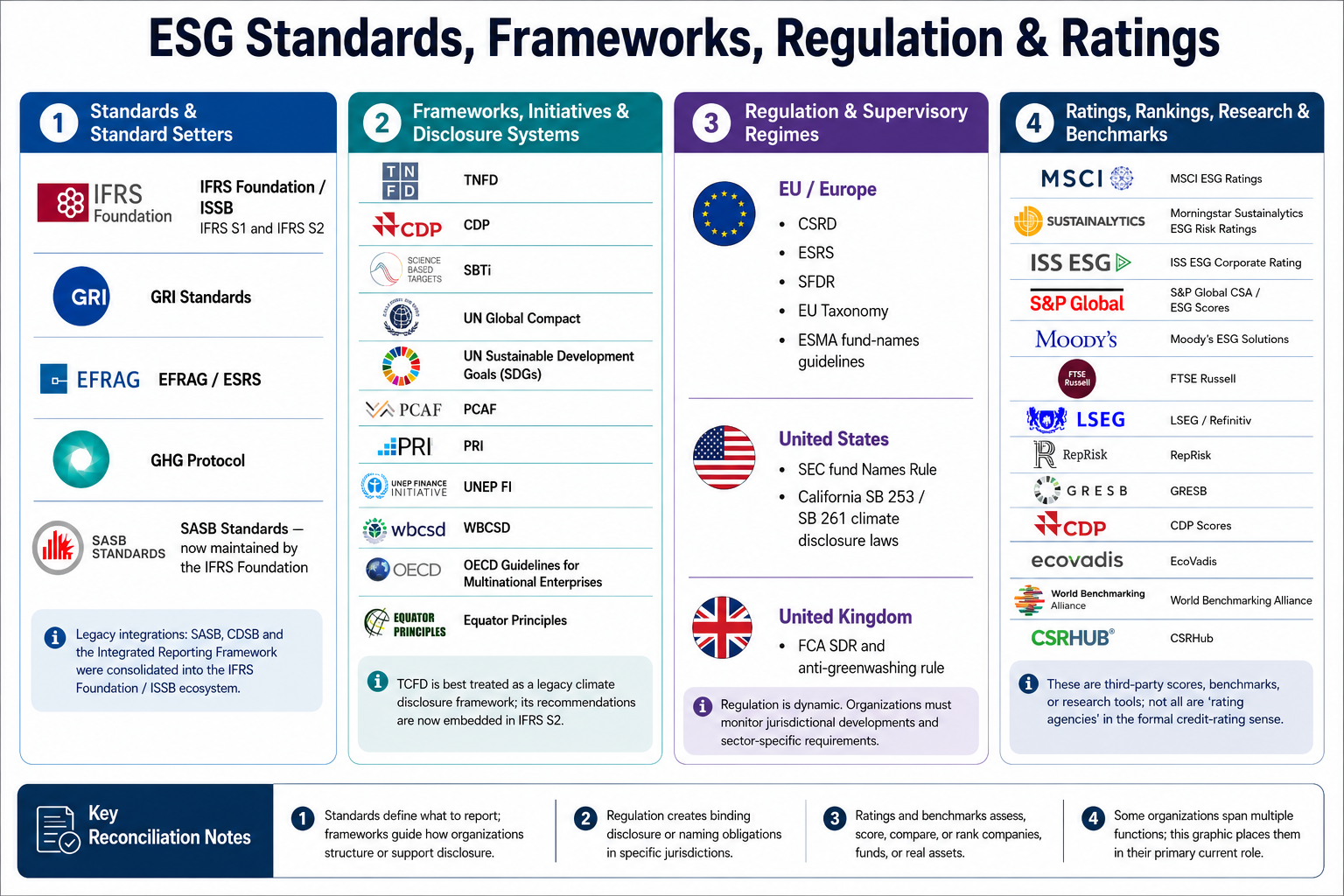
Practitioners first need to be clearer about what ESG is, what it is not, and how it differs from sustainability. A useful distinction starts with the parts.
- ESG investing concerns how investors use environmental, social, and governance data. They may use it to screen holdings, build funds, engage companies, or manage risk.
- ESG ratings are third-party scores. They assess and grade how exposed a company is to certain risks. They rarely measure the scale of a company’s effects on workers, communities, climate, nature, or human rights.
- Corporate ESG disclosures are the facts a company shares about environmental, social, and governance topics. Some are useful. Others are thin, selective, or hard to compare.
- Sustainability-related financial disclosures are different again. They focus on risks and opportunities that may affect cash flow, access to finance, cost of capital, or enterprise value. Their main audience is investors and other capital providers.
- Sustainability impact reporting asks a wider question: how does the company affect the economy, the environment, and people? That question is not limited to what investors find material today.
This is where the public debate often fails. A weak ESG fund is not the same as a weak sustainability report. A flawed ESG rating is not the same as impact reporting. And a climate-risk note is not the same as a climate transition plan.

How ESG and Sustainability Differ
ESG is often a financial perspective scrutinizing how environmental, social, and governance issues may affect a company, a fund, or an investment decision. It adopts an outside-in examination or how external factors impact the business. Climate rules, labor disputes, water stress, corruption, supply shocks, and public backlash are thus viewed for their effect on enterprise value.
EPA Cuts GHG Rules, But EU Mandates Still Apply | TradersQue
Sustainability proves broader. Or it should. By examining how a company affects the systems that allow it, its stakeholders, and communities to endure, it looks from the inside out as well as the outside in. It considers impacts on people, ecosystems, markets, public trust, and future generations. It likewise examines how those effects may return as legal, financial, operational, or reputational risks.
Double materiality joins these views: Impact materiality asks how the company affects people, the environment, and the economy. Financial materiality asks how sustainability issues could affect the company’s prospects. The two are indeed linked. Many impacts that are not financially material today can become so later.
This is why ESG and sustainability are not and should be synonymous. ESG is at best a tool for capital markets. Sustainability is at least a broader discipline of conduct, duty, and resilience.
The Limits of ESG Reporting
Many ESG disclosures are narrow by design. They are built for investors, lenders, ratings firms, or fund managers. They often focus on risks to the company more than the company’s effects on others.
That narrow purpose does not make them useless. But it does mean they should not be mistaken for full sustainability reporting.
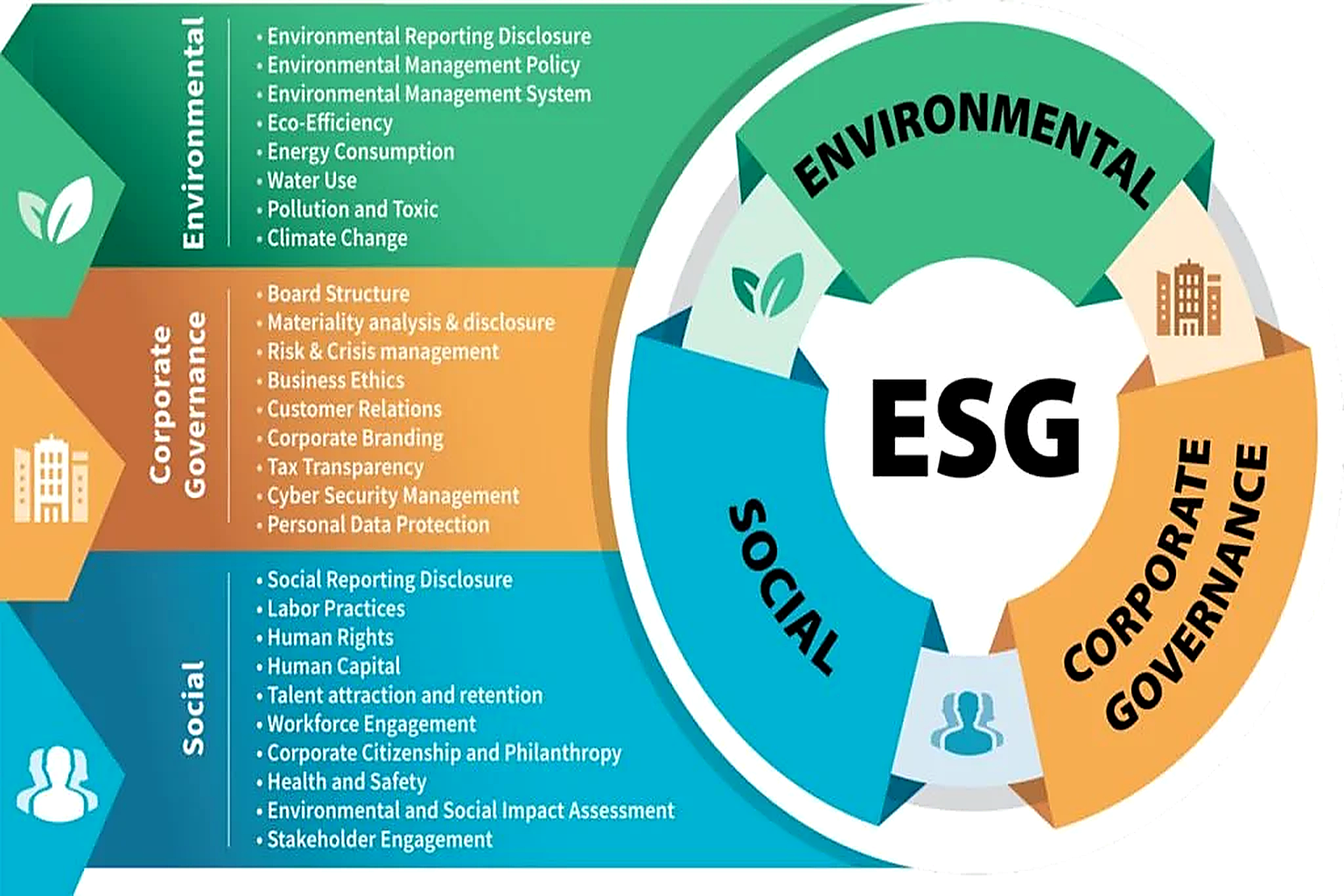
Common ESG topics include emissions, energy use, board makeup, pay, workforce diversity, safety, ethics, political activity, privacy, and supply-chain oversight. Sustainability reports may cover many of the same topics. But they should add more context, stronger boundaries, and clearer attention to impact.
Weak ESG disclosures often leave out direct effects on communities and nature. They may skip tradeoffs, value-chain risks, data limits, methods, and reasons for omissions. Progress may be measured only against internal goals, not sector trends, local needs, or science-based pathways.
A company may report lower emissions from its own sites while leaving out larger emissions from suppliers, transport, product use, investments, or disposal. It may report diversity numbers without explaining pay equity, retention, promotion, culture, or worker voice. It may publish a supplier code without evidence of due diligence or remedy.
Such reporting may still have value albeit limited and insufficient.
The Role of ESG Ratings
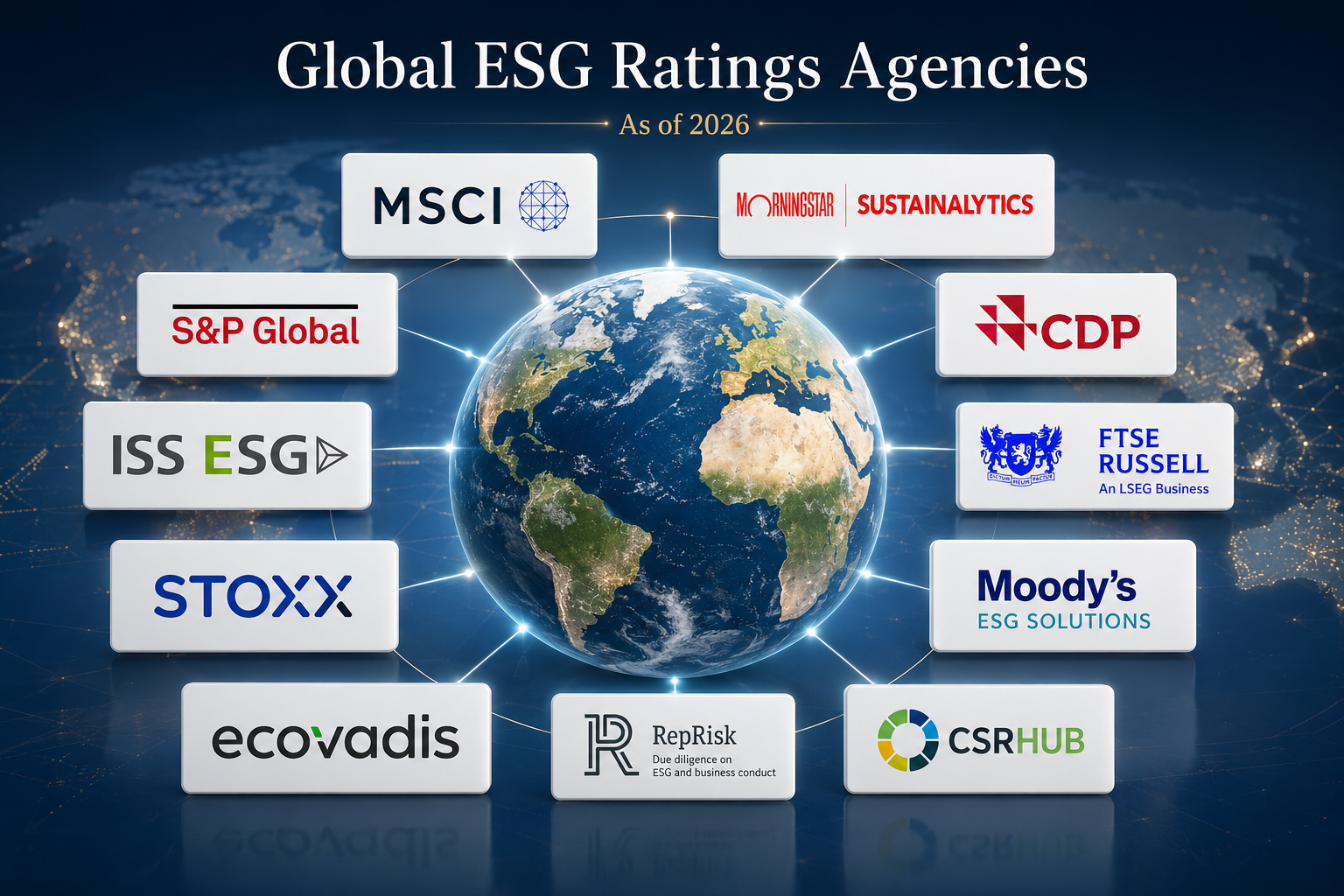
ESG ratings add more confusion. They are often treated as judgments about corporate virtue. Many function closer to risk scores that mirror the risk-management nature of ESG and sustainability to most specialists. But ratings only show how well a company manages ESG exposure, not whether it creates major harm or benefit (or the extent of such impacts).
A company with severe or widescale impacts can still receive a strong ESG score that reflects reliable disclosure quality, ethical governance systems, sound risk controls, or comparison to industry peers. A score may not reflect absolute impact.
Ratings also differ because each provider uses its own method, weights, data sources, and judgment. It makes them limited, not worthless. So they should be read as just one contributing factor, not as proof of sustainability.
What Strong Sustainability Reporting Requires
Strong sustainability reporting starts with impacts. It identifies a company’s most significant effects on the economy, the environment, and people, including human rights. It explains whether the company caused, contributed to, or is linked to those effects through its operations and business ties.
It also takes a wider view of boundaries. Operations represent an overarching term requiring a more granular breakdown. Suppliers, raw materials, contractors, logistics, land use, finance, product use, and end-of-life effects matter as much or more. In many sectors, the largest impacts occur outside the company’s walls.
EZES Expands EasyFEN™ in Africa | TradersQue
Strong reporting also separates stakeholders from report users. Investors are important. They are not the only audience. Workers, customers, suppliers, local communities, Indigenous Peoples, regulators, civil society groups, and future generations may be affected even when they have no direct financial tie to the company.
This is where due diligence matters. A credible report should not only name impacts. It should explain how the company finds, prevents, reduces, and accounts for harm. Where harm has occurred, the report should address remedy. Without remedy, disclosure can become a record of awareness rather than a form of accountability.

Beyond Climate, Beyond Carbon
Sustainability extends beyond climate, though climate remains central. A serious report should address physical climate risks, transition risks, emissions, energy use, adaptation, and the quality of transition plans. It should also address just transition: how climate action affects workers, communities, suppliers, and vulnerable populations.
Still, climate is not the whole field. Biodiversity, water, waste, pollution, circularity, land use, human rights, tax, anti-corruption, lobbying, customer safety, data rights, and labor practices all affect whether a company can claim to operate responsibly.
Market Nuances of Carbon Markets | TradersQue
Biodiversity shows why sustainability cannot be reduced to carbon. Nature-related impacts are often tied to place. They depend on ecosystems, species, land and sea use, pollution, invasive species, water stress, and the needs of people who rely on nature.
The same is true for social issues. A human rights profile cannot be captured by a policy statement or a training rate. It depends on wages, working hours, freedom of association, grievance channels, buying practices, safety, bias, community effects, and access to remedy.
Transparency Is Not Sustainability
A critical caveat, however: a sustainability report does not prove that a company is sustainable.
Reporting standards can require transparency about impacts, governance, policies, metrics, targets, and controls. Yet they do not always set the thresholds or allocations that define business performance. A report can be standards-aligned and still show that a company is causing harm, moving too slowly, or relying on weak assumptions and biased data.
Authentic sustainability analysis asks harder questions: Is the company reducing harm at the pace required? Are its targets linked to credible science, law, and stakeholder needs? Are its business model and capital plans aligned with those targets? Can affected people take part in decisions that concern them? Are tradeoffs disclosed rather than buried?
These questions move reporting beyond the scope of cellar-dwelling public relations and treat disclosures more than branding campaigns hiding suspect science and questionable data behind Orwellian sales-speak.

Evidence, Assurance & Control
The quality of any sustainability claim depends on the evidence behind it. High-integrity reporting should explain methods, boundaries, estimates, assumptions, restatements, data gaps, and reasons for omission. It should also explain internal controls over sustainability data and whether any information has been assured by third-party credentialed auditors.
Managing what can be certifiably measured is not a minor detail. Data quality is central to trust. A company cannot claim progress if it cannot explain what it measured, what it left out, how it calculated results, and whether results can be compared over time. Increased demand for audited sustainability reports and similar disclosures continues as part-and-parcel of the integrity of the entire process.
Sustainability (or ESG) targets require the same care. A target without a baseline, boundary, timeframe, method, procedure, and progress data is closer to intent than accountability. Roads of the former, however good they may be, are never paved with gold in this context. And a transition plan without capital plans, oversight, scenarios, and action is not yet a useful plan, only a novel idea.
Financial Value and Systems Value
Sustainability is sometimes framed as moral, while ESG is framed as financial. That split is too simple, though.
Sustainability information can certainly be financially relevant. Pollution, unsafe work, ecosystem loss, corruption, poor governance, and weak supplier oversight can translate evermore easily into lawsuits, rules, higher costs, confiscated assets, or loss of public trust. Harm to others can become a near-fatal reputational crisis for the company.
GHG Deregulation Does Not Derail PFAS | TradersQue
But sustainability should not matter only when it becomes financial. Impacts on people and the environment inherently matter. They are also part of the public interest in corporate reporting. A company’s license to operate depends not only on bottom-line revenues and profits, but also on the non-financial conditions that make that success possible.
This is the deeper value of sustainability reporting. It links enterprise value with systems value. It asks whether a company can create durable value without weakening the natural, social, and civic systems on which that value depends.

Final Thoughts
As an investment and risk lens, ESG can still serve a purpose. It can help capital providers assess exposure, compare firms, and ask better questions. But it should not stand in for sustainability.
Sustainability is broader and more demanding. It reaches across the value chain. It considers affected stakeholders as well as investors. It requires evidence, context, due diligence, and remedy. It connects governance and strategy with real-world impacts. And it treats resilience as a test of whether a company can endure without eroding the systems that enable it and in the wake of threats ranging from economic downturns to supply-chain disruptions to natural disasters to reputational damage. Building such resiliency is what transforms a successful business into a legacy enterprise.
The future of ESG will not be saved by a rebrand but instead it will survive only if companies, investors, and fund managers are willing to say exactly what they mean.
Additional Coverage
Additional coverage can be found on the author’s X account.