



Carbon Streaming Corp Offers a Bold Entry into Voluntary Carbon Markets
But a post-mortem of its setbacks reveals critical truths about project risk, geography, and credit value of those same markets.
Carbon credits are a key tool in the global effort to mitigate climate change, representing one metric ton of carbon dioxide equivalent (tCO₂e) either removed from or avoided being released into the atmosphere.
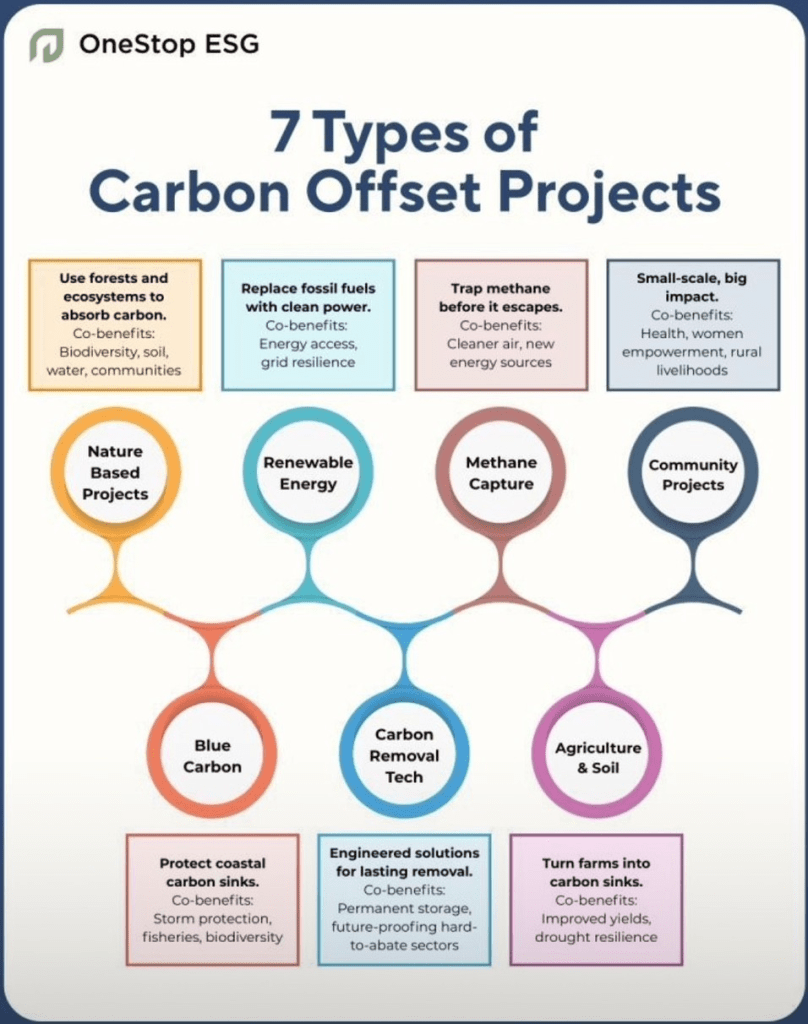
Carbon credits are categorized by project type and quality:
- Nature-Based Removals: High potential, but dependent on permanence and verification. Reforestation, Soil Carbon Capture.
- Avoidance Projects: Typically lower-priced and more controversial emissions prevention. Clean Cookstoves, Forest Preservation.
- Engineered Removals: Premium-tier credits with high cost but robust permanence. Biochar, Direct Air Capture, BECCS.
Irrespective of project type or credit class, two different markets accommodate carbon accounting and bear striking distinctions. Compliance markets are government-mandated systems like the EU Emissions Trading System (EU ETS) or California’s Cap-and-Trade, where governments set a limit on how much carbon companies can emit, and companies can buy or sell unused allowances to stay under that cap. With carbon prices often exceeding USD $75/tCO₂e, the EU ETS is the most established global compliance market.
EU Carbon Permits | Trading Economics
Carbon Baseline Revenue Forecasts
The matrices below provide illustrative gross revenue projections under varying market conditions and carbon project types. They assume full issuance and sale of credits at stated prices without adjustments for entitlement splits, project delays, discount rates, verification costs, or market access limitations.
Actual realized revenues are typically lower and subject to operational, jurisdictional, and market-based risks.
| Market Type | Price ($/tCO₂e) | Issued Volume (tCO₂e) | Gross Revenue (USD) |
|---|---|---|---|
| Compliance | $90 | 500,000 | $45,000,000 |
| Compliance | $60 | 500,000 | $30,000,000 |
| Compliance | $30 | 500,000 | $15,000,000 |
| Voluntary | $30 | 500,000 | $15,000,000 |
| Voluntary | $15 | 500,000 | $7,500,000 |
| Voluntary | $5 | 500,000 | $2,500,000 |
Carbon Streaming Corp Mid-Tier Removal
| Price ($/tCO₂e) | Issued Volume (tCO₂e) | Gross Revenue (USD) |
|---|---|---|
| $60 | 300,000 | $18,000,000 |
| $40 | 300,000 | $12,000,000 |
| $20 | 300,000 | $6,000,000 |
High-Quality Removal (Biochar/DAC)
| Price ($/tCO₂e) | Issued Volume (tCO₂e) | Gross Revenue (USD) |
|---|---|---|
| $90 | 100,000 | $9,000,000 |
| $100 | 100,000 | $10,000,000 |
| $120 | 100,000 | $12,000,000 |
Low-Quality, High-Volume Removal (REDD+)
| Price ($/tCO₂e) | Issued Volume (tCO₂e) | Gross Revenue (USD) |
|---|---|---|
| $5 | 1,000,000 | $5,000,000 |
| $7 | 1,000,000 | $7,000,000 |
| $10 | 1,000,000 | $10,000,000 |
Carbon Pricing Dashboard | World Bank
Voluntary Markets are private systems aiming to meet internal ESG or net-zero targets. These are flexible, fast-moving—but often underregulated and fragmented. As such, voluntary carbon credits trade at far lower levels, ranging broadly from $5 to $30/tCO₂e, depending on credit quality, project verification, and buyer demand. Voluntary markets have matured unevenly, facing challenges around additionality, permanence, verification standards, and a glut of low-integrity offsets. Recent efforts by organizations such as the Integrity Council for the Voluntary Carbon Market (ICVCM), Climate Action Reserve, and other crediting programs aim to bring transparency and consistency, which in turn could elevate price discovery, improve liquidity, and restore confidence (albeit not without controversy).
Carbon Credit Market Forecasts
Recent forecasts from BloombergNEF, Trafigura, and Trove Research (MSCI) suggest the global voluntary carbon market could reach $10 to $50 billion by 2030, up from less than $2 billion in 2023 — a 5x to 25x increase. This projected growth hinges on regulation, global climate agreements, and increasing demand from companies facing Scope 3 reporting pressures.
In this context, carbon credit companies differ significantly in structure and strategy. Many act as credit traders, project developers, or exchange facilitators. Few, however, are structured as carbon credit streamers—a model similar to royalty firms in mining —where capital is provided upfront to project developers in exchange for a portion of future credit issuance.
Understanding Carbon Accounting | One Stop ESG
At TradersQue, we do not oppose carbon markets. On the contrary, we see their role as critical in financing authentic climate solutions, albeit more directly. But we emphasize caution, especially for early-stage investors navigating underregulated markets rife with structural uncertainty and project execution pitfalls.
Carbon Streaming Corp: Ambition and Exposure
Carbon Streaming Corp (OTCQB: OFSTF) employs a rather unique model: it funds carbon-offset projects in exchange for future credits through streaming contracts—akin to royalty agreements in mining. This offers recurring exposure to carbon credits without owning or operating the projects. Its portfolio spans various regions and diverse projects:
| Project | Type & Credit Class | Location | Est. Price Tier |
|---|---|---|---|
| Sheep Creek | Reforestation (Nature-based removal) | Montana | $30–$60+ |
| Feather River | Reforestation (Nature-based removal) | California | $30–$60+ |
| Community Carbon | Cookstoves & Water (Avoidance) | Sub-Saharan Africa | $10–$25 |
| Enfield & Waverly Biochar | Biochar (Engineered removal) | Maine & Virginia | $40–$70 |
| Rimba Raya | REDD+ (Avoidance) | Indonesia | $25–$40 |
| Cerrado Biome | Forest Preservation (REDD+) | Brazil | $25–$40 |
| Nalgonda Rice | Methane Reduction (Avoidance) | India | $15–$30 |
OFSTF – Carbon Streaming Corporation | OTC Markets
Although several projects align with premium categories, the company’s average realized price per purchased credit (not from streams) was $5.52/tCO₂e through Q3 2024, suggesting current monetization leans toward lower-tier assets. Additionally, Carbon Streaming may only retain 15–25% of net cash flows depending on agreement terms and sales channels because of its unique model.
| Price ($/tCO₂e) | Issued Volume (tCO₂e) | Gross (USD) | Entitlement (25%) | Discounted Net Revenue (est.) |
|---|---|---|---|---|
| $30 | 500,000 | $15,000,000 | $3,750,000 | $3,000,000 |
| $60 | 500,000 | $30,000,000 | $7,500,000 | $6,000,000 |
| $90 | 500,000 | $45,000,000 | $11,250,000 | $9,000,000 |
Note: This illustrative forecast assumes Carbon Streaming receives 25% of total credit volumes under its streaming agreements, with discounted net revenue (0.80 multiplier) reflecting time value, market volatility, and execution risk; actual results will vary by credit class, verification timing, market price, and contract terms.
Carbon Streaming Corp Projects
More critically, however, is several of the company’s flagship projects have stalled, encountered impairment, or been terminated due to verification delays, ecological issues, or jurisdictional risk.
| Risk Category | Project | Risk Source | Outcome |
|---|---|---|---|
| Regulatory (Jurisdictional) | Rimba Raya (Indonesia) | Concession and legal conflict | Terminated |
| Regulatory (Mixed) | Cerrado Biome (Brazil) | Land tenure ambiguity | Inactive |
| Operational (Verification) | Community Carbon (Africa) | Monitoring complexity | Early-stage |
| Biological (Execution) | Sheep Creek (USA) | Seedling mortality | Impaired |
| Market Timing (Engineering) | Enfield Biochar (USA) | Infrastructure delays | Pending issuance |
Impairment Lessons: Sheep Creek and Rimba Raya
- Sheep Creek (Montana): Partner Mast Reforestation reported seedling mortality and underperformance, nullifying the expected 286,000+ carbon credits. Biological failure—not regulatory—was the root cause.
- Rimba Raya (Indonesia): This REDD+ project was terminated after disputes over land concessions and partner misalignment. The location—known for legal overlap and opaque governance—exemplifies jurisdictional risk.
These cases reflect the reality that pre-issuance ≠ guaranteed delivery and highlight a key risk in streaming models: when counterparties falter, the streamer absorbs the financial loss.
Geographic Risk & Regulatory Fragility
Carbon Streaming’s global footprint reveals how geography and therefore jurisdiction and governance can amplify or mitigate risk for any industry player.
- Low Risk: North American projects benefit from strong registry systems and legal stability.
- Moderate Risk: India and Sub-Saharan Africa offer high potential but face bureaucratic and data-verification delays.
- High Risk: Indonesia and Brazil struggle with land tenure disputes and inconsistent regulation—directly contributing to project cancellations or slow progress.

Carbon Streaming’s decisions, while risky, follow an understandable portfolio logic not uncommon to industry peers:
- High Carbon Density, Low Entry Cost
Forests in Indonesia or Brazil, or cookstove programs in Africa, can deliver massive credit volumes per dollar compared to projects in jurisdictions with higher oversight costs. - Alignment With ESG Narratives
Projects in developing countries produce more concentrated social and biodiversity co-benefits that prove attractive to buyers seeking premium impact offsets. Such improvements in emerging economies often reflect orders of magnitude, propelling valuations parabolically. - First‑Mover Advantage
Entering underdeveloped carbon markets early allows a streamer to secure exclusive rights or long‑term pricing leverage if regulation matures favorably, thus simultaneously maturing carbon markets in tandem. Such opportunity represents the lodestone of any enterprise: total market capture. - Diversification
Akin to a garden-variety investment portfolio, balancing projects in high‑integrity regions (U.S., Canada) with those in high‑potential regions (Africa, Asia, South America) reduces dependence on and exposure to fewer markets.
What Carbon Streaming Corp Teaches
Carbon Streaming Corp. exemplifies both the promise and the pitfalls of the voluntary carbon market:
- It showcases nearly every credit class and project type, from REDD+ and reforestation to biochar and methane reduction.
- It exposes the fragile path from forecast to revenue—delays, terminations, and price volatility all pose hurdles.
- It underscores the need for due diligence, not only in project methodology but also in jurisdictional context and partner capacity.
Despite setbacks, the company remains a valuable case study for learning the structural dynamics of carbon investing that can certainly establish Carbon Streaming Corp as a flagship enterprise in carbon credit markets. Regardless of impairments, the company’s stock sits near $0.52, down from its $0.57 high from early October but nearly double from its March 2025 low of $0.27, benefitting from an organically rising channel. Investors, in other words, remain confident.
Passive Exposure to Carbon Markets
For readers looking to participate in carbon markets without directly assuming the project execution risk that Carbon Streaming Corp (and similar equities) face, exchange-traded funds (ETFs) and exchange-traded notes (ETNs) offer a more stable, diversified, and transparent entry point.
Most of these instruments track compliance carbon markets and offer indirect exposure to carbon pricing trends and policy developments, thus serving as a bridge for new or risk-averse investors. These instruments trade on major U.S. exchanges and offer direct pricing exposure to mature, regulated carbon markets. They moreover avoid project-specific execution risks.
However, they do not provide co-benefits or social impact exposure and may lack ESG “depth” compared to credits from nature-based or community projects.
| Ticker | Fund Name | Focus |
|---|---|---|
| KRBN | KraneShares Global Carbon ETF | Global carbon futures (EU, CA, RGGI) |
| KCCA | KraneShares California Carbon ETF | California Cap-and-Trade |
| KUEC | KraneShares European Carbon ETF | EU ETS futures |
| GRN | iPath Series B Carbon ETN | ICE EUA futures |
Regardless of market type, however, these investments lack the impact narrative and upside of early-stage projects, and they guarantee neither ethical nor emissions integrity. Put differently: carbon ETFs and ETNs are financial tools, not environmental solutions. Understanding carbon investments requires more than optimism. It demands structure, skepticism, and clarity.
Could a Carbon Tax Reshape Market Risk?
Carbon markets are contrarian, with the present-day underscoring the ironies. Despite current macroeconomic conditions, ideological hostility, and investor malaise, a contrarian perspective emerges claiming that the present represents a prime opportunity to fast-track carbon markets into maturity.
How Would a Carbon Tax Affect the Economy?
One of the least discussed but potentially most consequential macro catalysts for the carbon market is the growing conversation around a U.S. carbon tax. While largely absent from domestic legislation in recent years, a confluence of federal debt pressure, global competitiveness (and carbon market awareness), and corporate accountability is reopening the debate.
From a macroeconomic lens, a carbon tax could become not only an environmental necessity but also a fiscal one. With U.S. debt-to-GDP exceeding 124% in CY2024, an additional $1.5 trillion in additional debt YTD, and interest payments projected to surpass defense spending ($850 million) within a few years, political pressure is mounting to raise revenue without disrupting essential programs. A carbon tax is increasingly framed as both a climate policy tool and reframed as a revenue-generation mechanism. Injecting clout into the deliberations are representatives of a likewise contrarian sector: oil and gas.
For carbon markets—and especially voluntary market participants like Carbon Streaming Corp—a federal carbon tax could act as a pricing anchor, reducing uncertainty and improving long-term credit demand and rewarding verified carbon projects with real pricing power. It would not erase verification risk or project delays, but it could meaningfully improve buyer appetite, credit liquidity, and market structure.
But until such a tax is legislated, the voluntary carbon space remains exposed to wide pricing bands, low enforcement, and buyer skepticism, notably in regard to legitimizing permanence to actual offsets or reductions.
How Is the US Pricing Carbon? | Harvard Kennedy School
Likewise, investors in the interim face a bifurcated landscape: high-risk equities exposed to pre-regulatory volatility, and passive instruments tracking more mature compliance markets.
For traders and investors, the carbon tax debate adds a macro overlay to a micro-level risk profile. Policy will not rescue underperforming projects—but it could elevate the entire pricing ecosystem from speculation to structure.
Final Thoughts
TradersQue views carbon markets as a viable, evolving mechanism for emissions reduction and investment innovation. But viability does not mean immunity from risk. The voluntary carbon market—where Carbon Streaming operates—is particularly susceptible to verification lags, credit devaluation, and regulatory ambiguity. Carbon Streaming’s real-world outcomes reflect this fragility: attractive credit classes on paper, but difficult monetization in practice.
Ultimately, the lesson is not about which investment is superior, but rather that understanding the distinctions among carbon credit mechanisms are critical to managing expectations, timelines, and volatility. Investors must differentiate between price forecasts and real delivery, headlines and registries, and project types and jurisdictions.
Our take is not anti-carbon. It is pro-diligence. Carbon Streaming (OTCQB: OFSTF) aims to accelerate a net-zero future. The company pioneered the use of streaming transactions, a proven and flexible funding model, to scale high-integrity carbon credit projects. Its focus is on projects that have a positive impact on the environment, local communities, and biodiversity, in addition to their carbon reduction or removal potential. This approach aligns strategic interests with those of project partners to create long-term relationships built on a shared commitment to sustainability and accountability and positions the company as a trusted source for buyers seeking high-quality carbon credits.
Investors Page – Carbon Streaming
Additional Coverage
Additional coverage can be found on the author’s X and LinkedIn accounts.

🌿 From Compliance to Competitive Advantage:
Your Sustainability Story Starts Here
In global business, sustainability remains no longer a sidebar — it represents the storyline. At TradersQue, we guide organizations with disclosures ranging from CSR initiatives to basic ESG metrics to sustainability strategy and leadership, registering a narrative that resonates with investors, regulators, and stakeholders.
TradersQue delivers a viable framework for impact, investment, and integrity. Our reports are not simply documents; they are proof of foresight, accountability, and long-term value.
We align your assessed sustainability and ESG goals with the Global Reporting Initiative (GRI) Standards, the world’s most widely adopted sustainability reporting framework. We then identify what matters most through materiality analysis, and translate complex data into visual, stakeholder-ready reports for any business, from start-up enterprises to legacy conglomerates.
Through every stage, your organization gains:
- Visual, presentation-ready reports tailored for internal or public audiences
- Alignment with GRI Standards and UN SDGs for global recognition
- Sector-specific insights and optional third-party assurance preparation to enhance stakeholder confidence
With TradersQue, ESG and sustainability reporting become your company’s collective growth narrative—one grounded in data, shaped by vision, and certified for tomorrow’s global standards.
Your corporate resilience deserves recognition. Let us author its legacy.