



Climate Deregulation and PFAS Policy Prove Distinctly Different
The rescindment by the U.S. Environmental Protection Agency (EPA) of the 2009 Clean Air Act’s Obama era’s Greenhouse Gas Endangerment Finding eliminates federal GHG emissions standards, removes related reporting and credit programs, and cuts regulatory costs by more than $1.3 trillion taxpayer monies in the aggregate.
Despite expected lawsuits against the EPA’s ruling, one the agency priorly teased as “the single largest act of deregulation in the history of the USA,” the rollback represents a bold strike against a pillar of climate change public policy that, in turn, undergirds all related mitigation and adaptation initiatives and innovations, often through subsidies.
It is also a decision that will not likely see SCOTUS until 2028, either, leaving this overturn in effect until then at the very least.
Catastrophe Bonds Funding U.S. Climate Strategy ‣ TradersQue
But the politicization of GHGs in particular and of climate change (or global warming) in general should not be conflated with the ongoing-but-delayed PFAS regulations related to U.S. drinking water contamination. The latter has historically garnered bipartisan political support, private industry culpability, and broad public support. Zeldin’s past commitments to shaping and scaling PFAS compliance further insulates pending PFAS regulation from a fate similar to GHG directives.
Both greenhouse gases (GHGs) and per- and polyfluoroalkyl substances (PFAS) require a scientific determination before regulation. Under the Clean Air Act, EPA must find that emissions “endanger public health or welfare.” Under the Toxic Substances Control Act (TSCA), it must determine that a chemical may present an unreasonable risk. In both cases, science activates authority.
The resemblance ends there, however.
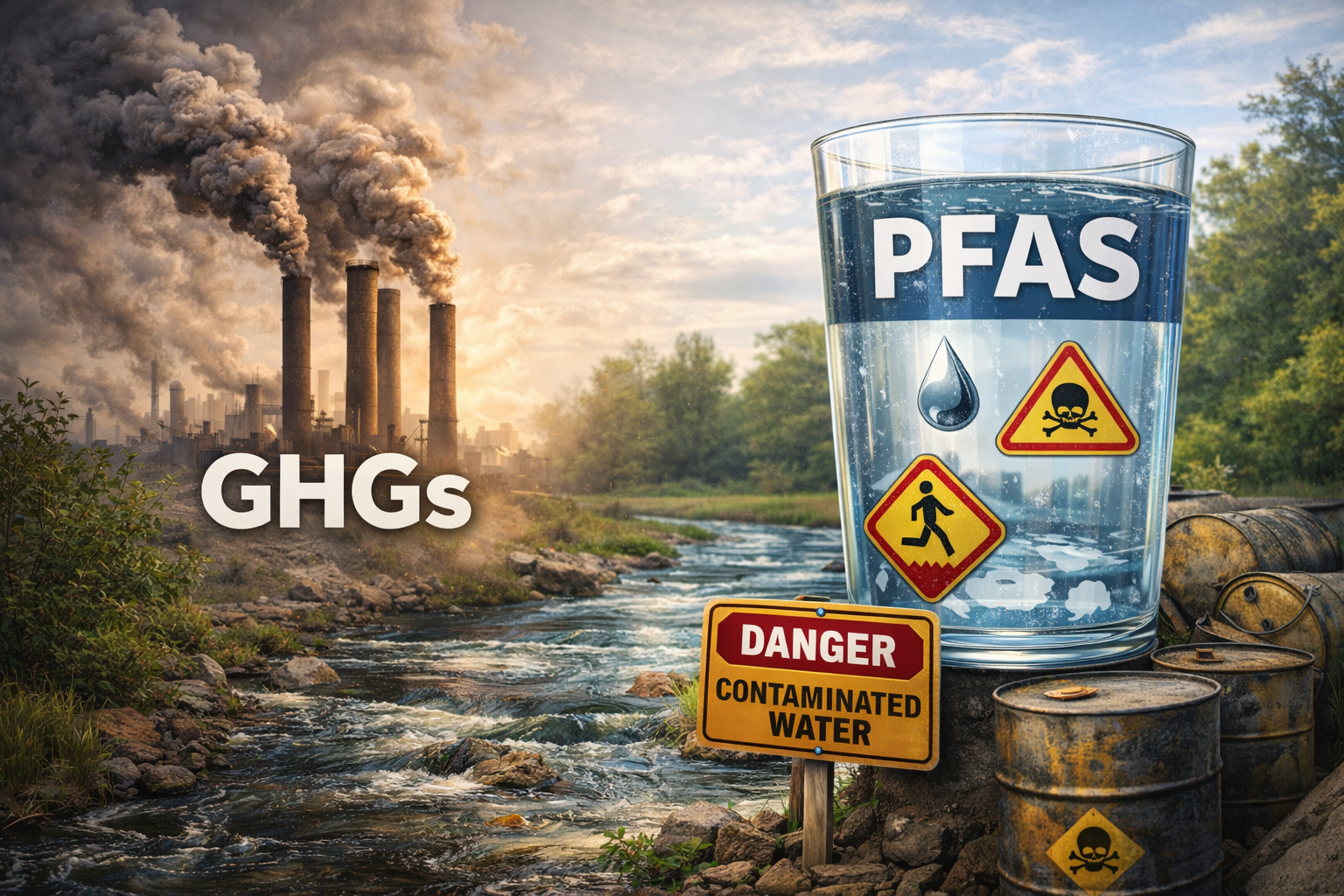
GHG & PFAS: Separate Sides of Different Coins
GHGs sit primarily within a single statute. After Massachusetts v. EPA, the 2009 Endangerment Finding triggered regulation under the Clean Air Act. Once carbon dioxide became a regulated pollutant from vehicles, the statute extended requirements across permitting, power generation, and industrial sources. From then to now, some critics point to the now-overturned Chevron Deference “rule” that aided what amounted to administrative overreach by appointed officials.
PFAS operate differently, however. EPA addresses them through multiple statutes: TSCA for manufacture and reporting, the Safe Drinking Water Act for concentration limits, and CERCLA for hazardous substance designation. No single determination activates the full framework. Each statute requires separate findings, rulemakings, and compliance structures. Regulation proceeds incrementally, compound by compound.
Scope further separates the two. GHG emissions permeate nearly every sector and accumulate globally. Regulating one source implicates others. PFAS risks depend on specific compounds, exposure pathways, and measured concentrations. The regulatory response targets sites, products, and water systems rather than the entire economy.
Final Thoughts on PFAS
Investors should not treat administrative delays in PFAS reporting as signals of broader regulatory retreat.
Current delays in PFAS reporting under TSCA center on data submission timelines and compliance logistics. They do not reverse hazard findings or withdraw authority. By contrast, revisiting the GHG Endangerment Finding would challenge the legal foundation of federal climate regulation. Moreover, GHG policy reflects systemic emissions management. PFAS policy reflects chemical risk control and liability allocation.

TradersQue’s Coverage of BioLargo, Inc.
Since 2022, TradersQue has covered BioLargo, Inc. for its flagship Aqueous Electrostatic Concentrator (AEC) PFAS detection-to-destruction technology that will assuredly corner the particular market of SWDA-based initiatives related to such forever chemicals. Our historical and ongoing coverage can be accessed here as well as the link below.