



How AI Spending, Financialization, and Infrastructure Constraints are Reshaping U.S. Market Risk
In the most recent Freakonomics Radio episode, former U.S. SEC Chair Gary Gensler addresses the financial risks tied to the current AI boom. Gensler did not argue that AI lacks economic value. His concern was that capital spending, stock prices, and new forms of finance may be rising faster than revenues and near-term gains in productivity. In his view, the current cycle rests on a large bet. AI model firms and major cloud companies must earn enough to justify heavy spending on chips, data centers, memory, and power systems.
AI Data Centers Face Issues of Power and Policy | TradersQue
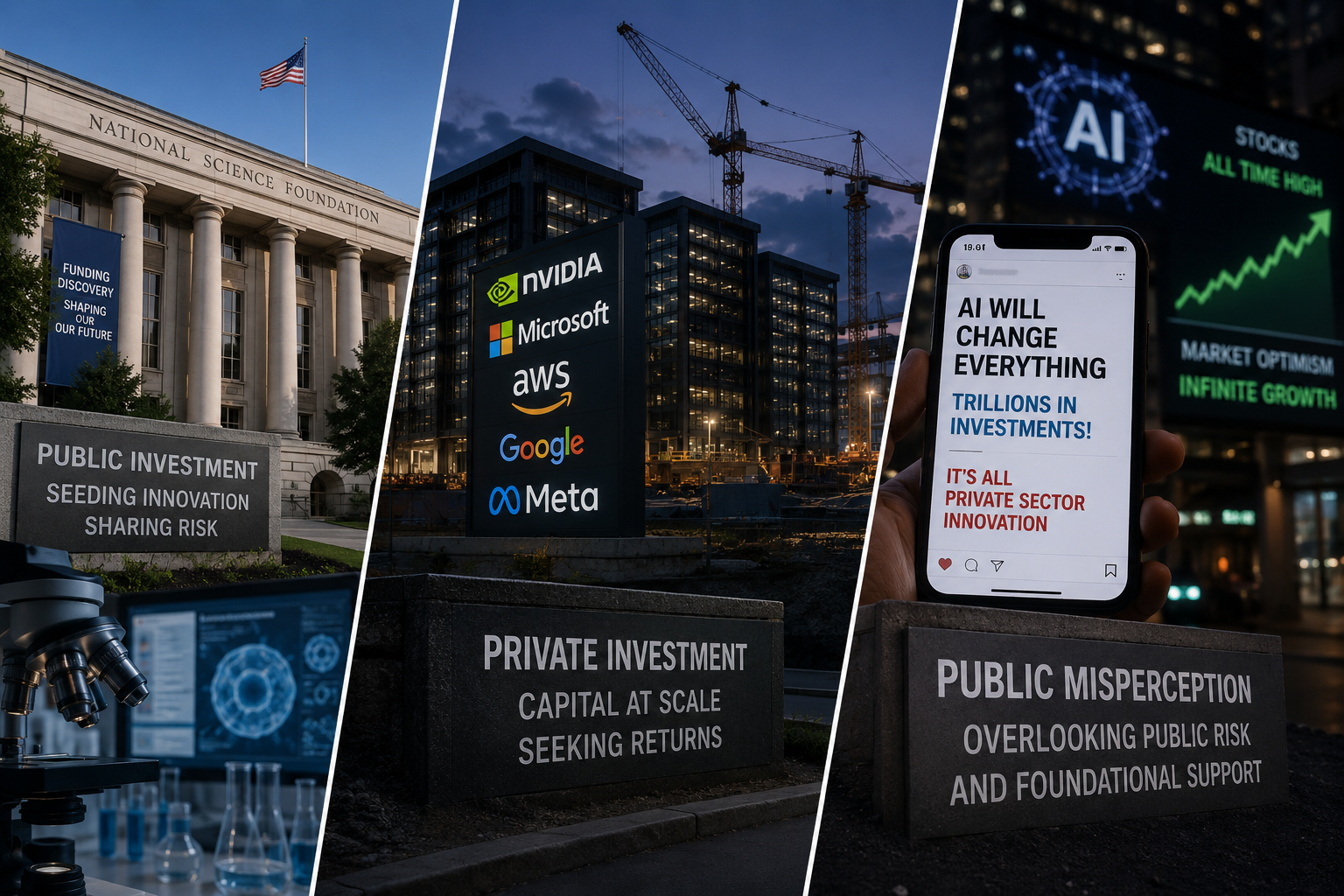
The interview harkens back to themes from Mariana Mazzucato’s The Entrepreneurial State (2013) and her wider work on public investment, innovation, and risk. Mazzucato argues that the state has often carried much of the early risk behind major technologies, while private capital entered later and captured a large share of the returns. Complementary to this is Jason Pontin’s 2013 argument that venture capital has long struggled to fund projects, especially in energy, that need large sums of money, long development periods, and delayed returns.
These views intersect at a broader concern: that a highly financialized economy tends to favor assets that can be priced, sold, and turned into revenue quickly over projects that need patient capital and long-term public support.
Decades of financialization have increased speculation but critically who bears the technological risk, how quickly investors expect results, and how widely a market correction can spread. The current AI buildout makes those changes clear because its effects now reach beyond software into data centers, energy, infrastructure, credit, and consumer spending.

Financialization Changed How Capital Is Allocated
Financialization of the 1970s changed how the economy divides risk and reward. Mazzucato’s work disputes the common view that private finance bears most of the risk behind major innovation. Public agencies have often funded basic research, supported early development, built research networks, or helped create markets before private investors entered.
This matters because the structure of finance helps decide which projects receive money. Private investors tend to prefer clear revenue paths and shorter waits for returns. Major new technologies often require years of testing, large fixed-costs, and uncertain demand. Public institutions can therefore carry much of the early risk while private firms enter once the path to profit becomes clearer.
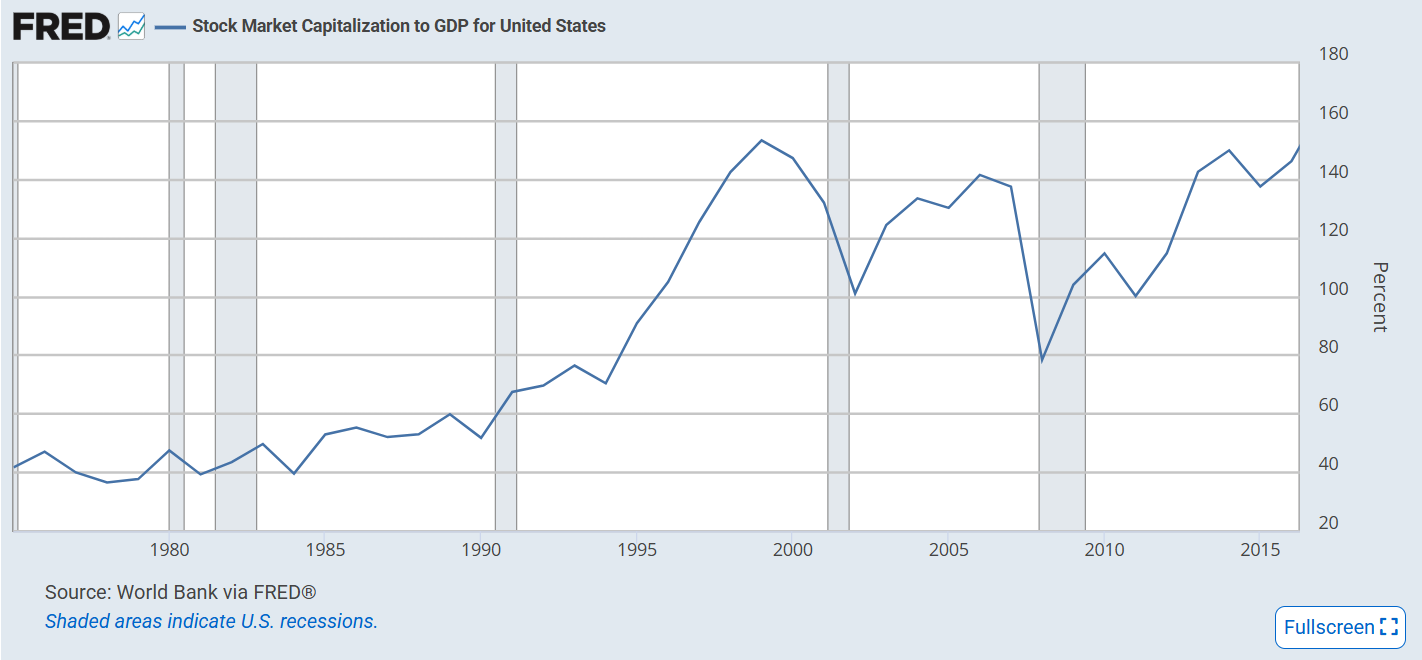
The historical shift is visible in the scale of financial claims relative to national output. Federal Reserve and BIS datasets show a long-run rise in nonfinancial-sector debt and credit relative to GDP, while historical market-capitalization data show that the value of listed U.S. equities became much larger relative to output over the decades following the 1970s. These measures do not by themselves prove Mazzucato’s broader account of financialization, but they document the expansion of financial balance sheets and market claims that forms part of that institutional change.
Pontin made a related point about venture capital by arguing that even aggressive venture investors tended to favor smaller commitments with a likely exit within about a decade. Energy projects were harder to fund because they often required far more capital and much more time. Financialization, in this sense, does not stop investment. It affects which forms of investment appear most attractive.
It also affects how losses can spread. When hopes for a new technology become built into stock prices, debt, and corporate spending, a change in those hopes can reach far beyond the firms that made the technology. Lower stock prices can weaken financing, business investment, household wealth, and consumer spending. Technology forecasts can therefore have larger effects on the wider economy.
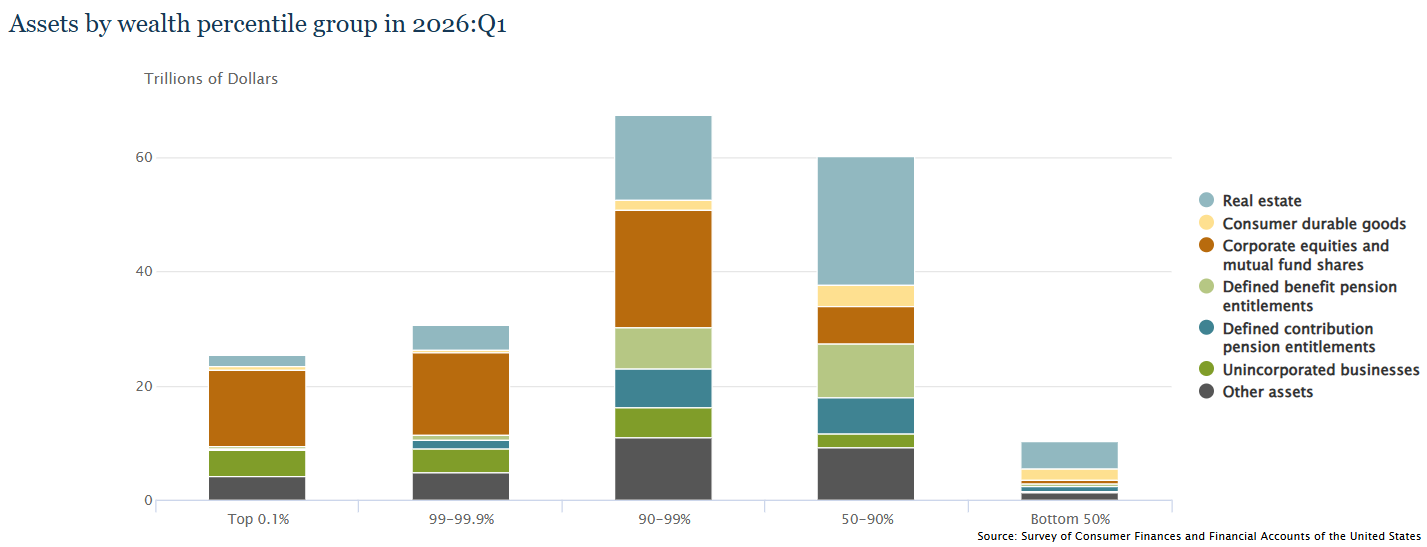
The wealth is also highly concentrated. Federal Reserve distributional accounts show that the top 10 percent of the wealth distribution owns the overwhelming majority of directly and indirectly held corporate equities and mutual-fund shares, while the bottom half owns only a small fraction. That concentration means equity-market gains and losses transmit unevenly through household balance sheets and consumption. Federal Reserve, Distribution of Household Wealth.
AI Exposes the Gap Between Promise and Price
Gensler’s concern fits this pattern. He estimates the present value of the U.S. stock market at about 235 percent of GDP and that AI-related capital spending had climbed from about $140 billion to about $750 billion within three years. He describes the current cycle as a two-part bet. AI firms and major cloud providers must earn enough to support their heavy spending, while AI must also lift productivity enough to justify the wider economic hopes now tied to it.
How China Is Closing the AI Infrastructure Gap | TradersQue
Gensler’s broad point now has support from official national-account research. The U.S. Bureau of Economic Analysis reports that growth in the capital stock of the information industry was among the largest industry-level contributors to real U.S. GDP growth between 2021 and 2024, a pattern BEA says is consistent with AI and AI-related investment making a significant contribution to recent economic growth. Granted, no official agency statistics yet contain a separate “AI industry” category, which makes precise measurement difficult.
The key issue nonetheless is the difference between technical success and financial success. AI may become very useful without supporting every stock price or investment now linked to it. Gensler noted that present AI spending is far above direct AI revenue. Investors are therefore placing great weight on income that has yet to arrive.
How U.S. Data Openness Strengthens China | TradersQue
This does not prove that AI is a bubble, but it does mean that current prices depend heavily on how fast revenue and productivity gains appear. AI use could keep rising while profits grow more slowly than expected. In that case, stock prices could fall even as the technology improves. AI could also cut the revenue of firms whose products it replaces or makes cheaper. The risk, then, is that markets may have priced the gains from AI faster than the economy can produce them. That gap leaves prices more exposed to delays in revenue, margins, and productivity.
AI Risks: Energy, Data Centers, Credit
The present boom also reaches deep into the physical economy, as Gensler stressed. If spending stops rising after the current surge, weaker demand could affect many firms that supply those projects.
Energy
The electricity constraint is already visible in federal data. The U.S. Energy Information Administration estimates that computing accounted for about 8 percent of commercial-sector electricity consumption in 2024 and projects that share to rise substantially over time. EIA separately reports that U.S. electricity demand grew about 1.7 percent annually from 2020 through 2025, compared with roughly 0.1 percent from 2005 through 2019, and identifies data-center electricity use as a major driver of the recent increase.
Pontin’s argument helps explain why energy may not adjust at the same speed. Power plants, transmission lines, grid upgrades, and other large energy projects often require large sums of capital and long approval periods. Their returns may take years to appear. Those features do not fit easily with investors who seek quicker results.
Data Centers
This can create a basic mismatch. Money can move into chips, cloud firms, and data centers much faster than new power supply or transmission can be built. The scale of spending is also visible in corporate filings, revealing a common theme: financial markets may fund AI boom faster than the power system can support it.
- Meta told investors that it expected 2026 capital expenditures, including finance-lease principal payments, of roughly $125 billion to $145 billion, citing component costs and additional data-center capacity.
- Alphabet disclosed expected 2026 capital expenditures of approximately $180 billion to $190 billion
- Amazon reported $43.2 billion of cash capital expenditure in the first quarter of 2026 alone, with most technology-infrastructure spending directed toward AWS growth.
The risk works in multiple directions. Strong AI demand could run into power limits and delay new data-center projects. Weak AI revenue could reduce construction, commercialization, and utility spending at the same time.
Credit
Debt also matters. Gensler drew a distinction between the current cycle and the 2008 crisis because large technology firms have financed much of the early AI buildout from their own cash flow. Yet he also pointed to more debt, off-balance-sheet finance, and ties to neocloud firms and other lenders. A fall in asset prices becomes more serious when firms still have fixed debts, lease payments, or other claims to meet.
Financing structures around data centers are also becoming more elaborate. SEC filings now include securitized data-center revenue structures backed by tenant leases, while some individual operators disclose material dependence on external financing, power availability, customer leasing, and completion of large development projects. These disclosures do not establish systemic risk, but they show that AI-related infrastructure costs increasingly extend beyond the balance sheets of even the largest technology firms.
Is the Deeper Problem Institutional?
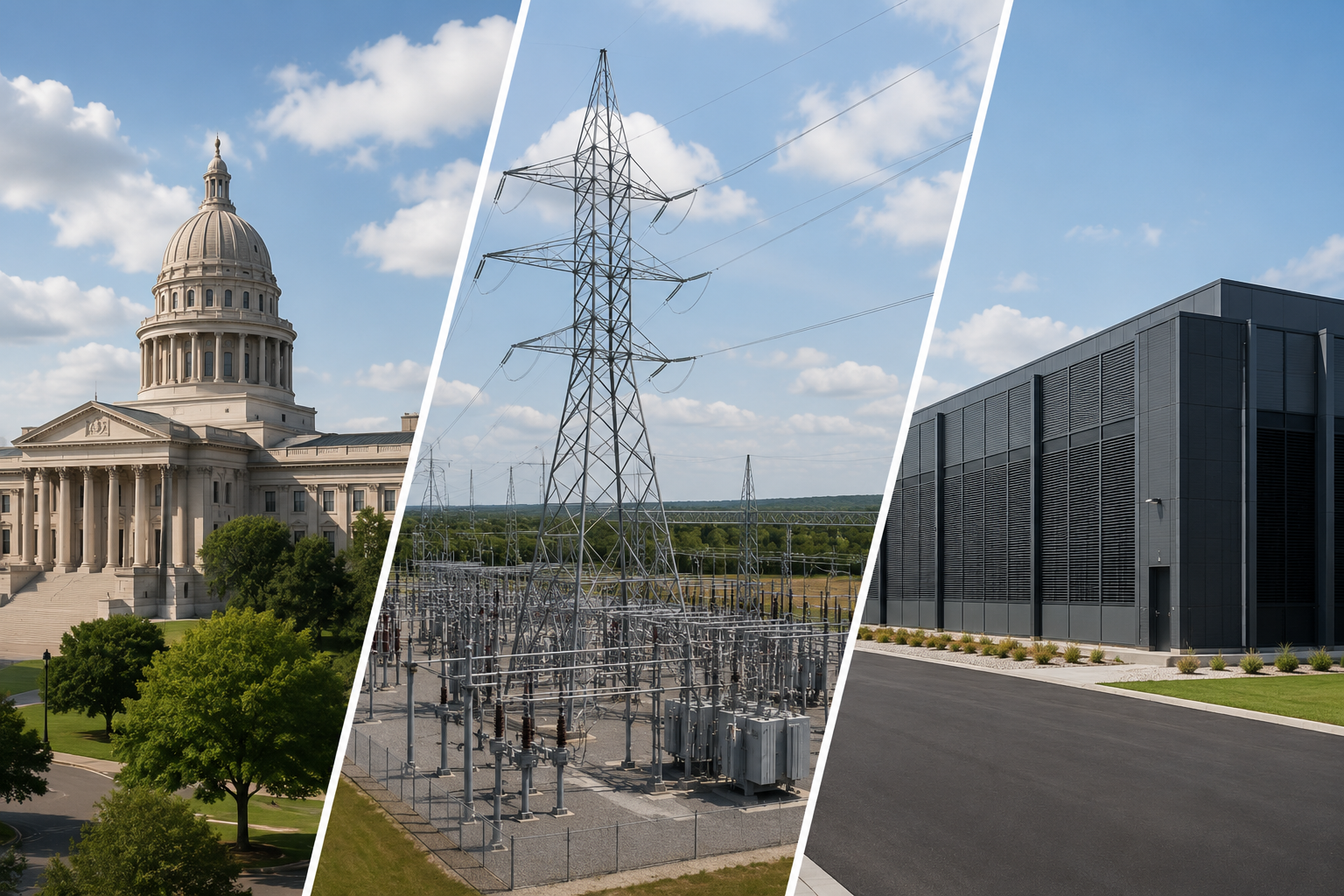
Pontin’s discussion of Apollo shows why finance alone cannot explain major advances in technology. The program required public spending and infrastructural cooperation on a scale that private markets would not have supplied by themselves. Some large technologies require years of work across government, research bodies, private firms, and basic infrastructure. Financial markets cannot perform all of those tasks.
AI Risk Becomes ESG’s Next Flashpoint | TradersQue
Mazzucato makes much the same case. The state has often done more than repair a market after it failed. Public bodies have funded uncertain research, set goals, joined research networks, and helped create markets before private firms could place a clear value on them. The current AI cycle therefore tests whether the United States can support a major shift in technology when finance, energy, regulation, and physical infrastructure all move at different speeds. It is beyond just the stock markets.
Final Thoughts
The main weakness is not a lack of scientific skill or private capital. It is the gap between fast-moving financial markets and slower physical systems. Markets can raise and reprice capital in days. Power grids, permits, research networks, factories, and major construction projects can take years.
The AI Cybersecurity Hype: A Technical Reality Check | TradersQue
That gap ties together the arguments made by Mazzucato, Pontin, and Gensler. Financialization has made it easier to turn hopes about new technology into financial claims. It has not shortened the time needed to build lasting productive capacity. The United States can therefore see real gains from AI while becoming more exposed to market losses if financial expectations move far ahead of economic results.
Additional Coverage
Additional coverage can be found on the author’s X platform in addition to previous archives via TradersQue.com.