



Power Availability and State Regulations Now Matter More than Incentives
The U.S. buildout of AI data centers continues to draw large amounts of capital. Technology companies have announced tens of billions of dollars in new projects. States expect construction work, tax revenue, and new digital infrastructure. Yet the policy debate has shifted toward power supply, grid costs, water use, land use, and public subsidies.
This is not a simple split between states that support data centers and states that oppose them. Most states still allow development, but they are using different tools to control its cost and pace. Some states continue to compete through tax breaks and public support. Others want large users to pay more of the cost of new power and grid infrastructure.
The AI Cybersecurity Hype: A Technical Reality Check | TradersQue
A smaller group has paused selected permits or access to new tax benefits. These actions have different effects on project timing and returns. Investors therefore need to examine the legal form of each policy rather than rely on broad terms such as “ban,” “pause,” or “restriction.”
Four State Policy Models Are Emerging
State policy can be grouped into four broad models, although the categories overlap.
- Expansion states continue to seek major projects through available land, tax policy, utility support, and economic development programs. Indiana, Louisiana, Texas, Virginia, Georgia, and Mississippi fit this model in different ways.
- Guardrail states still permit growth but impose stronger rules for costs, disclosure, environmental effects, or siting. Virginia and Texas are leading examples. Both remain major markets, but each has taken steps to protect households and smaller businesses from costs tied to large new power loads.
AI Risk Becomes ESG’s Next Flashpoint | TradersQue
- Incentive-review states focus on public support rather than construction rights. Illinois stopped processing new applications under its Data Center Investment Program. Ohio paused review of new data center tax exemptions while officials study the industry. Neither action makes private construction illegal.
- Permit-paused states reflect incomplete applications for new or expanded AI facilities capable of producing 50 megawatts, with New York serving as the sole state at present.
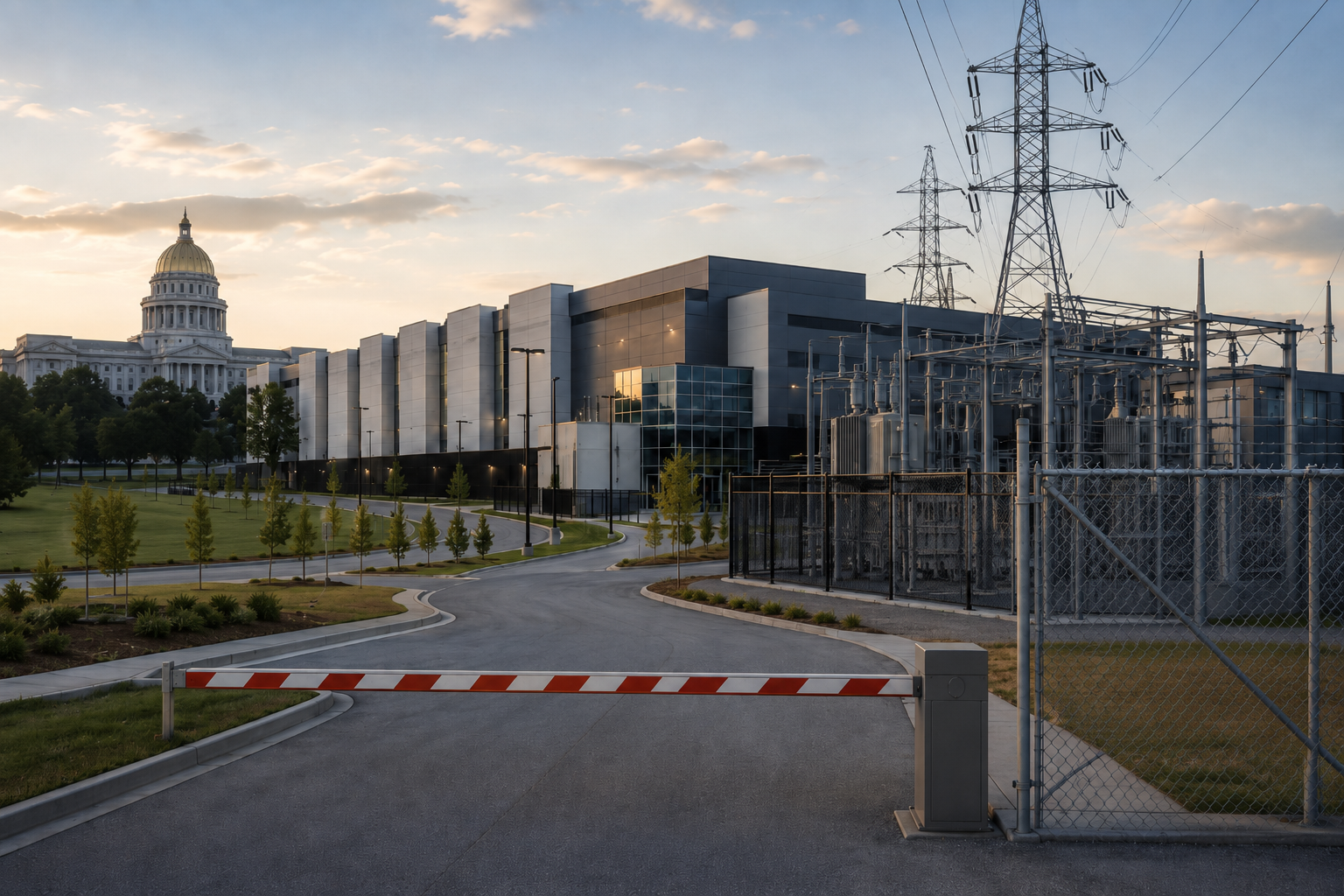
What Each Type of Policy Actually Means
The language used to describe data center policy often makes state opposition appear broader than it is. A suspended tax benefit, a special utility rate, and a permit pause may all be called restrictions, even though they produce different results. The table below separates those tools by their direct effect and normal policy purpose.
| Policy Action | Effect | Rationale |
|---|---|---|
| Permit or construction pause | Temporarily prevents covered projects from advancing through specified approvals | Allows time to study power, water, land use, or cumulative infrastructure effects |
| Tax-incentive suspension or review | Limits access to abatements, credits, or exemptions | Reassesses whether public benefits justify the fiscal cost |
| Special utility tariff or cost-allocation rule | Assigns more infrastructure and power costs to large-load customers | Protects households and smaller businesses from subsidizing grid expansion |
| Environmental or resource-use requirement | Requires disclosure, mitigation, efficiency standards, or impact review | Addresses emissions, water consumption, backup generation, and local effects |
| Local siting authority | Gives municipalities or counties greater influence over location and conditions | Reflects differences in land use, community acceptance, and infrastructure capacity |
| Study commission or reporting mandate | Collects data and produces recommendations before broader action | Responds to uncertainty about demand forecasts, tax revenue, employment, or grid effects |
| Community-benefit or labor condition | Links approval or incentives to jobs, infrastructure, or local investment | Seeks a more visible and measurable public return |
| Outright prohibition | Prevents covered development for the duration or scope of the law | Used where policymakers conclude that identified risks cannot presently be mitigated |
This framework moves the analysis beyond a simple test of whether a state is friendly or hostile to development. The more useful issue is which costs, approvals, and duties apply to each project. Those differences become more important as investment rises and power demand places greater pressure on existing systems.
Data Center Investment Is Still Accelerating
The policy shift has not ended the U.S. buildout. It has changed the tests that new projects must pass. According to CBRE’s Global Data Center Trends 2026, Northern Virginia remained the world’s largest data center market in the first quarter of 2026, while Atlanta, Dallas–Fort Worth, and Chicago completed the four largest North American markets. These regions benefit from dense fiber networks, customer access, skilled contractors, and established utility ties.
Newer markets are competing through large investment plans. Amazon announced two Indiana commitments with a combined value of $26 billion just a year apart. In Louisiana, Meta announced an initial $10 billion project in Richland Parish, while Amazon later announced $12 billion for campuses in Caddo and Bossier parishes. Amazon also stated that its planned Mississippi investment had reached $25 billion.
These figures show the scale of the project pipeline, but they do not represent completed capacity or money already spent. Large campuses can take years to build. They depend on permits, power connections, transmission work, labor supply, construction schedules, and customer demand.
That gap between an announcement and an operating asset is central to investor analysis. New markets may offer cheaper land, strong tax terms, and space for large campuses. They may also have less grid depth and fewer experienced suppliers. A state can approve a project before the local power system can serve it.
Electricity Has Become the Main Constraint
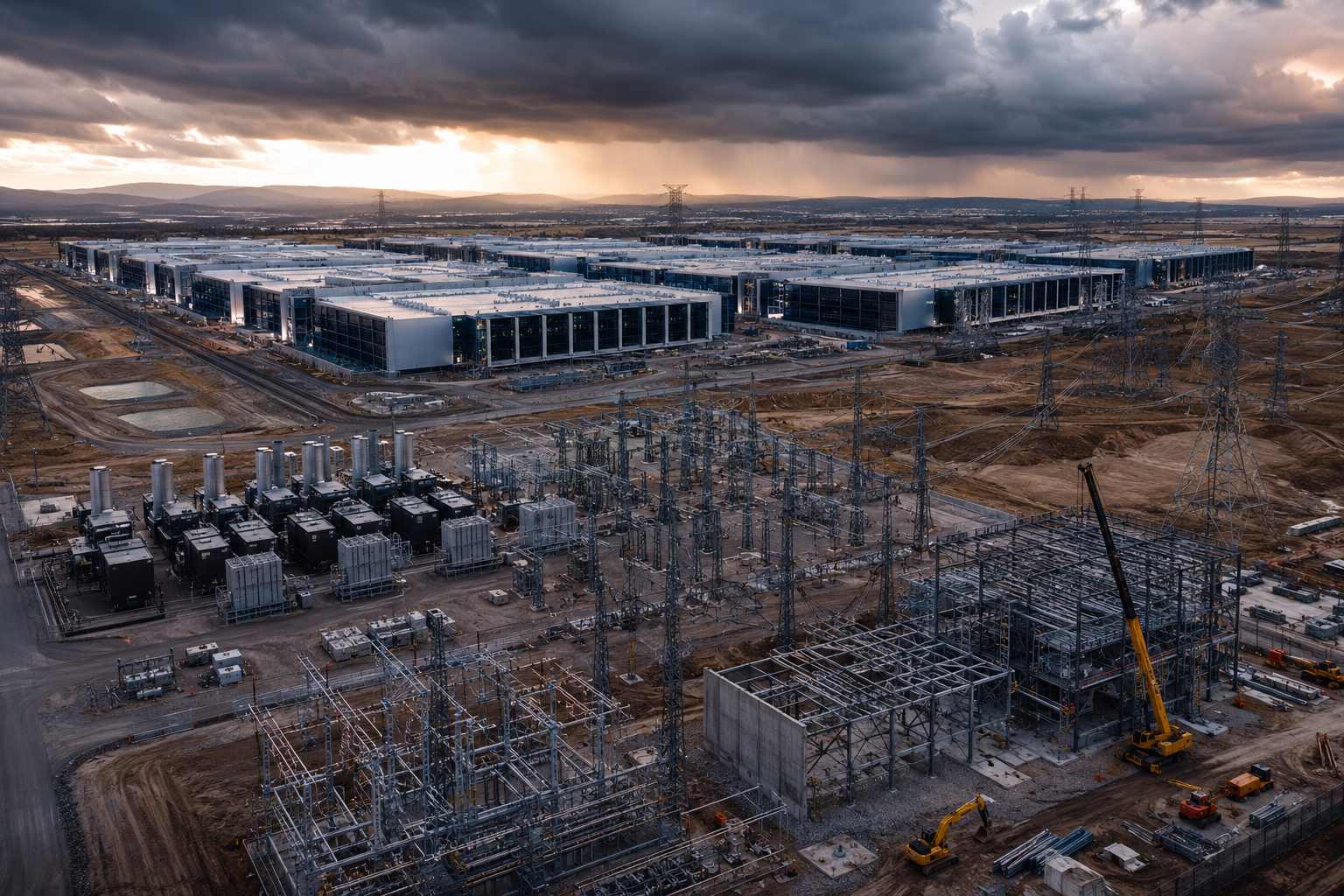
Electricity is now the main policy issue in the U.S. data center market. The 2024 United States Data Center Energy Usage Report estimates that data center electricity demand could double or triple by 2028. The U.S. Energy Information Administration expects large computing facilities to contribute materially to the strongest sustained period of U.S. electricity-demand growth since 2000. Large AI facilities can alter utility forecasts and require new power plants, transmission lines, substations, and backup systems. The main question is who will pay for that infrastructure and who will carry the risk if expected demand does not appear.
Virginia’s 2026 energy legislation placed greater weight on protecting ordinary customers from costs tied to data center growth. Texas directed utility regulators to shield residential customers from related infrastructure costs. And Louisiana’s Executive Order 26-058 requires officials to weigh electricity, transmission, water, land, and other resource demands against expected public benefits before specified incentives are approved or continued.
New York took a more direct step by holding certain incomplete state applications for facilities capable of using at least 50 megawatts. The state is using the pause while agencies develop a wider environmental and policy review. The order creates a direct delay for covered projects, unlike the cost rules used in Virginia and Texas.
For investors, project value now depends heavily on firm power rights, connection status, required upgrades, service terms, and responsibility for grid costs. A tax break cannot offset an uncertain power delivery date. Sites with secured electricity and clear utility agreements may gain an advantage over projects that still depend on future upgrades.
States Are Reassessing Tax Incentives
The debate over tax incentives is separate from the debate over construction. Illinois stopped processing new applications under its Data Center Investment Program. Ohio paused review of new data center tax exemptions while lawmakers study the sector. Both states remain open to development, but projects that need new state support face weaker certainty.
This shift reflects a broader review of public value. Data centers can create large amounts of construction work and add to local tax revenue. Permanent staffing may be modest compared with the size of the investment, while power and infrastructure needs can be extensive. States are therefore asking whether older incentive packages remain fair to taxpayers.
How U.S. Data Openness Strengthens China | TradersQue
Oregon also changed parts of its enterprise-zone framework through House Bill 4084. The measure changed eligibility and administration rules, but the record does not support the broader claim that Oregon eliminated all enterprise-zone relief for data centers. Eligibility depends on current state law and local zone terms, which makes project-level review necessary.
Changes in incentives affect more than a project’s tax bill. They can alter land value, financing terms, building schedules, and talks with local governments. A project with weak economics before incentives may face delay or redesign when access to those benefits becomes uncertain.
Statewide Moratoriums Remain Unusual
New York is the only state identified in the reviewed material with an operative statewide executive pause aimed at certain new hyperscale permit applications. The order is temporary and narrow. It does not stop all construction, suspend every local permit, or affect every application already in progress.
Other states considered temporary limits, but most proposals had not become law by the review date. Delaware, Georgia, Michigan, and Wisconsin introduced measures that would affect large projects or approvals. South Dakota deferred a proposed moratorium and instead pursued cost protections and local authority.
Maine came closer to enactment. Its bill passed both chambers, but the governor vetoed it, and the Legislature sustained the veto. Maryland House Bill 120 proposed a construction and approval moratorium tied to separate generation legislation.
The small number of active statewide pauses does not mean political resistance is minor. The issue has moved from local zoning disputes into legislatures, governors’ offices, utility commissions, and economic development agencies. The more common result is a study, a cost rule, an incentive review, or a tighter permit condition rather than a broad ban.

State Strategies and Policy Risks
State policy is diverging by legal mechanism, market maturity, and infrastructure pressure. Some states continue to recruit large projects, while others are reviewing incentives, shifting grid costs toward developers, or delaying selected approvals. The table below combines each state’s strategic posture with its main development signal and principal source of risk.
| State | Strategy | Significance | Principal Policy or Execution Risk |
|---|---|---|---|
| New York | Selective statewide restraint | Existing and proposed hyperscale activity | Temporary review of power demand, infrastructure impacts, and permitting standards for 50 MW stations |
| Virginia | Continued expansion with stronger safeguards | Largest established U.S. data center concentration | Grid costs, ratepayer protection, emissions, and local siting pressure |
| Texas | Market-led expansion with tighter utility rules | Dallas–Fort Worth remains a major North American market | Reliability, interconnection timing, competition for power, and higher infrastructure commitments |
| Indiana | Accelerated, incentive-backed buildout | Amazon has announced $26 billion in combined commitments | Timely delivery of generation, transmission, labor, and supporting infrastructure |
| Louisiana | Large-scale expansion subject to resource review | Meta’s $10 billion project and Amazon’s $12 billion announcement | Grid expansion, resource demand, project execution, and proof of lasting local benefits |
| Illinois | Incentive reassessment | Chicago remains a leading operating market | New applications under incentive program are not being processed |
| Ohio | Expansion under fiscal and utility scrutiny | Large Columbus and New Albany operating base | Review of tax exemptions, utility effects, and infrastructure cost allocation |
| Georgia | Expansion with rising political scrutiny | Atlanta is among the largest North American markets | Proposed restrictions, local opposition, and concern about power and resource demand |
| Delaware | Emerging precautionary posture | Legislative debate over large-scale development | Proposed temporary restriction rather than a statewide ban |
| Maine | No operative statewide moratorium | Legislative review of impacts | Proposed moratorium was vetoed |
The comparison shows that policy risk does not move in a straight line from supportive to restrictive. Mature markets can remain attractive while imposing higher infrastructure obligations, and emerging markets can offer strong incentives while carrying greater execution risk. For investors, the more important distinction is whether a project has secured power, permits, utility terms, and local approval before policy or infrastructure conditions change.
Implications for Investors
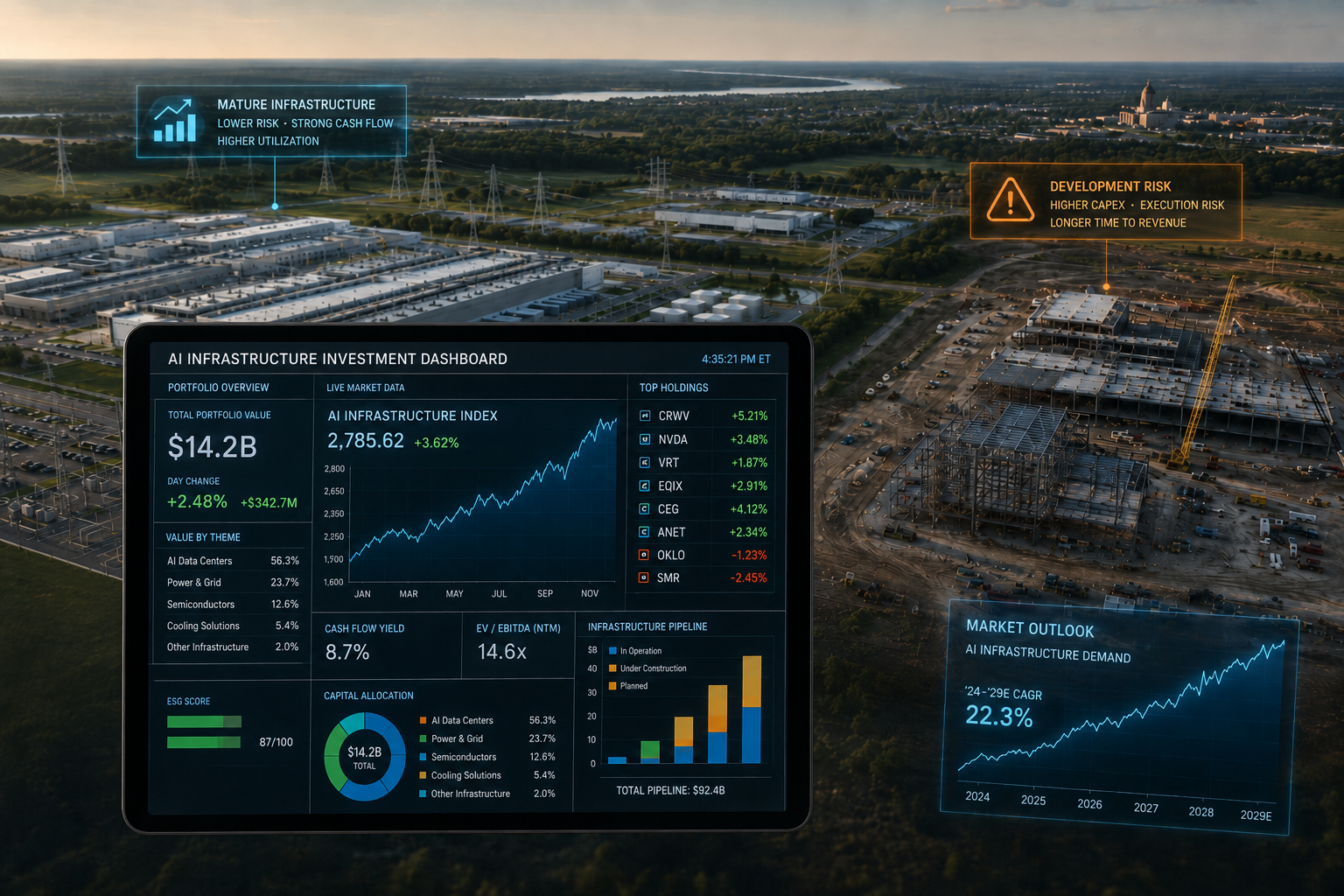
The result is a widening valuation gap between projects with secured power, permits, and infrastructure terms and those that still depend on future approvals or public support. CBRE’s 2026 North American Data Center Investor Intentions Survey found that build-to-suit hyperscale projects remained the most commonly cited investment opportunity among respondents. Consider it representative of a U.S. market developing at separate speeds:
- Projects with permits, electricity supply, and grid connections may gain value as new entrants face longer reviews and higher infrastructure obligations. This outcome is plausible, but it is not certain.
- Existing projects can still face construction delays, local opposition, higher costs, or changes in customer demand.
- Established hubs offer fiber density, customer access, vendor networks, and a record of operating at scale. Virginia, Texas, Georgia, Chicago, and Ohio retain these advantages.
- Emerging markets such as Louisiana, Indiana, and Mississippi offer large capital commitments and active state support. They also carry higher execution risk because their installed capacity and supporting infrastructure are less mature.
Subsequent to those different speeds, investment analysis likewise should identify but separately scrutinize five factors when allocating capital to any public or private AI equity:
- Operating market depth
- Verified or committed capital
- Access to tax incentives
- Electricity and infrastructure execution
- Regulatory and political risk
No single public dataset measures all five factors in a consistent way. State rankings are therefore analytical judgments rather than established facts. The result also depends on the intended use of the facility. AI training, cloud services, government computing, and projects with dedicated generation require different site characteristics.
Final Thoughts
The main division among states is no longer based on simple support or opposition. It concerns how states assign the costs and risks of growth among developers, utilities, electricity customers, and taxpayers.
States with dependable electricity, clear cost-allocation rules, durable local support, and a record of converting announcements into operating capacity will hold the strongest position.
For investors, market scale remains important, but it is no longer sufficient. Electricity access, permit status, infrastructure funding, and policy stability now carry greater weight. The strongest projects will combine established network advantages with a credible path to power and a clear allocation of long-term costs.
Methodology note: This analysis is based on the state-policy and project information contained in the supplied research document, revised July 30, 2026. Legislative status can change, and local restrictions are not fully cataloged. Announced investment may cover multiyear plans and should not be treated as capital already deployed. The article provides educational analysis rather than legal or investment advice.
Additional Coverage
Additional coverage can be found on the author’s X platform in addition to previous archives via TradersQue.com.