



Lake Stockholm Project will Pioneer PFAS Removal at Industrial Scale
November marks the month that BioLargo, Inc. (OTCQB: BLGO) will commence with the construction and installation phases of its promising pilot project using its Aqueous Electrostatic Concentrator (AEC) at Lake Stockholm in New Jersey to remove PFAS from local drinking water. CEO Dennis Calvert recently revealed in late October at the 2024 annual LD Micro Main Event XVII that all necessary permitting had been granted, thus clearing the way for construction and installation to begin this month.
PFAS, due to their resistance to natural degradation and links to health issues, are a high-priority contaminant for environmental and public health. Traditional removal methods, such as granular activated carbon filtration (GAC) or reverse osmosis (RO), generate large volumes of hazardous waste and incur high disposal costs. BioLargo’s industrial-scaled AEC technology will most certainly prove effective by reducing PFAS-laden waste, cutting disposal expenses, and providing an effective alternative that aligns with stringent regulatory and compliance standards.
BioLargo Inc Stock Price Today | OTC: BLGO Live – Investing.com

The AEC system operates by concentrating PFAS contaminants, enabling efficient extraction while keeping waste production minimal. For example, where a carbon filtration system might generate approximately 80,000 pounds of hazardous spent carbon annually, BioLargo’s AEC system produces less than five pounds for an equivalent treatment volume.
This drastic reduction in waste not only lowers disposal costs but also minimizes environmental impact, making it a highly attractive solution as federal regulations like CERCLA and RCRA are set to increase the cost and complexity of handling PFAS waste.

Cost Comparison with Traditional Methods
Energy Costs
- Reverse Osmosis (RO): RO requires high-pressure pumps, leading to electricity costs of approximately $0.80 to $1.20 per 1,000 gallons.
- Granular Activated Carbon (GAC): While less energy-intensive than RO, GAC systems incur additional energy costs for regenerating carbon beds.
- AEC System: BioLargo’s AEC uses around $0.30 per 1,000 gallons, lowering energy costs by more than 60% compared to RO.
Waste Handling and Disposal
- RO Waste Management: RO concentrates PFAS in a brine waste stream that constitutes around 20% of treated water volume, which then requires costly disposal.
- GAC Disposal Costs: Incinerating spent PFAS-laden carbon can cost $1,000 to $2,000 per ton, with transport costs adding several thousand dollars per yearOver time, GAC’s waste and disposal costs can accumulate to tens of thousands of dollars annually.
- AEC Waste Savings: The AEC’s ability to produce minimal PFAS-laden waste (around 1/42,000 the volume of GAC) reduces disposal and transport expenses substantially, as it avoids the costs associated with large-volume waste handling and incineration.
Beyond economic benefits, BioLargo’s AEC technology supports compliance with future regulatory standards, positioning the company as a leader in sustainable PFAS treatment. The Lake Stockholm pilot project will demonstrate the efficacy and cost savings of AEC on a municipal scale, with potential applications in other U.S. water treatment facilities where PFAS contamination is a concern.
BioLargo’s CEO, Dennis Calvert, emphasized that if successful, this pilot could lead to broader adoption among municipalities and industries, allowing communities to achieve regulatory compliance at reduced costs and environmental impact. Calvert stated, “We believe the success of this project will play a big role in attracting further municipal water treatment customers, many of whom are still under the misconception that carbon filtration or ion exchange are the only options for long-term PFAS remediation.”
Recent Updates
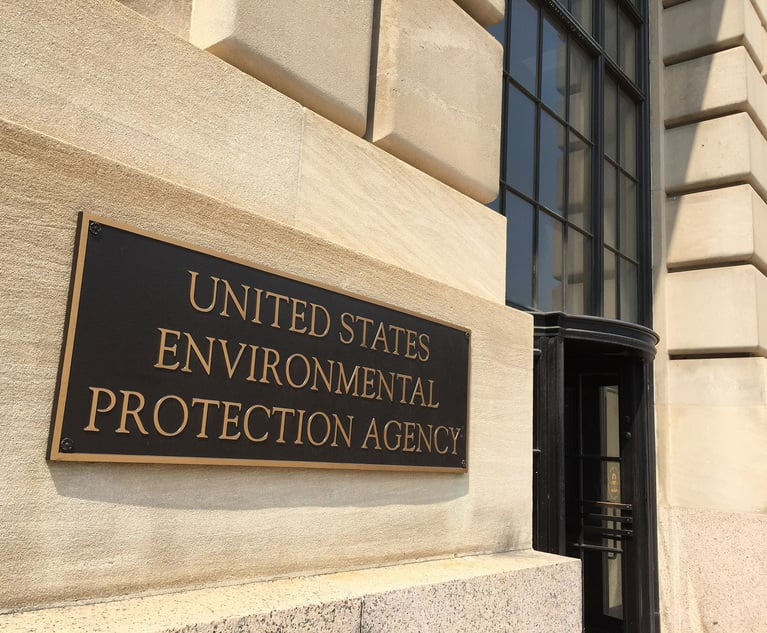
The EPA has postponed the start of the PFAS data reporting period under the Toxic Substances Control Act (TSCA) from November 2024 to July 2025. This delay, prompted by budget cuts and IT constraints, allows time for essential software development to support data submissions. The rule, originating from the 2020 National Defense Authorization Act, requires PFAS manufacturers and importers to report detailed data on PFAS production, usage (including imported materials), and disposal. This data will support regulatory efforts and environmental protections related to PFAS pollution.
The EPA’s delay in TSCA’s PFAS data reporting requirements may moderately impact BioLargo, Inc.’s near-term revenue, as regulatory slowdowns could reduce the immediate demand for PFAS compliance solutions. However, BioLargo’s diverse portfolio and sustainable technologies position it well for long-term demand growth as PFAS regulations continue to tighten.
While slower regulatory timelines might slightly delay growth for PFAS treatment providers, BioLargo’s AEC system remains appealing for municipalities seeking efficient compliance. Though specific analyst opinions on this delay are scarce, companies like BioLargo are generally projected to grow as sustainable, low-cost remediation becomes essential in meeting future environmental standards.
Additionally, states’ ability to enforce PFAS cleanups under the federal Resource Conservation and Recovery Act (RCRA) is under scrutiny, especially when targeting federal agencies. The EPA has used RCRA since 2004 to mandate PFAS investigations, but states’ authority to compel cleanups using RCRA’s hazardous waste provisions remains ambiguous. This issue is central to an ongoing lawsuit where the Air Force disputes New Mexico’s PFAS cleanup order, challenging whether RCRA applies to PFAS in the same way as other hazardous wastes.
To address this, the EPA has proposed two rules. The first, if finalized, would codify a broader hazardous waste definition under RCRA, empowering states to mandate PFAS cleanups even for chemicals not explicitly classified as hazardous wastes. This definition covers wastes that pose serious health or environmental risks if mishandled. The second proposed rule would list specific PFAS chemicals as “hazardous constituents,” advancing regulatory oversight.
The outcome of the Air Force case and the EPA’s pending rules could resolve the long-standing uncertainty around RCRA’s scope, particularly regarding PFAS management on federal lands. Some states, like New Mexico, already consider PFAS within RCRA’s reach, while others await more clarification on enforcement capabilities nationwide and imposed compliance burdens on state agencies.

The recent Supreme Court ruling ending Chevron Deference may undermine federal PFAS regulations by limiting the EPA’s authority to interpret ambiguous laws independently. Courts will now scrutinize EPA’s actions more closely, potentially complicating PFAS regulation and delaying new rules. For BioLargo, Inc., which relies on demand driven by PFAS regulation, this could slow anticipated growth, affecting its market cap and share price if regulatory action weakens or stalls due to legal challenges against EPA PFAS standards.
However, despite the recent changes to Chevron Deference, which limits agencies’ ability to interpret ambiguous statutes, the EPA’s regulatory authority over PFAS is unlikely to be significantly weakened. Key PFAS regulations, including designations under hazardous waste laws, are well-defined in their statutory authority and do not rely heavily on Chevron-based interpretations. Therefore, EPA’s initiatives to list certain PFAS as hazardous constituents under RCRA and CERCLA are expected to proceed without substantial legal setbacks.
Summary of Potential
For BioLargo, Inc., the demand for PFAS remediation remains strong and independent of any potential regulatory delays. Growing awareness of PFAS contamination risks, coupled with ongoing state-level actions and consumer pressure, ensures that demand for innovative, cost-effective PFAS removal technologies, like BioLargo’s AEC system, continues to rise. As such, BioLargo’s market value remains well-supported by the broader, resilient demand for PFAS solutions across municipal and industrial sectors.
BioLargo’s AEC PFAS solution claims 40-300% lower life cycle costs compared to carbon filtration, due to minimal waste production and decreased regulatory burdens. This financial performance, coupled with the cost efficiency of their AEC technology, underpins the potential economic impact of the Lake Stockholm project as BioLargo continues expanding its PFAS solutions to broader markets.
Recent Equity Price Action
DISCLAIMER: This information is provided for general informational purposes only and does not constitute financial, investment, or legal advice. Please consult with a professional advisor before making any financial or investment decisions.
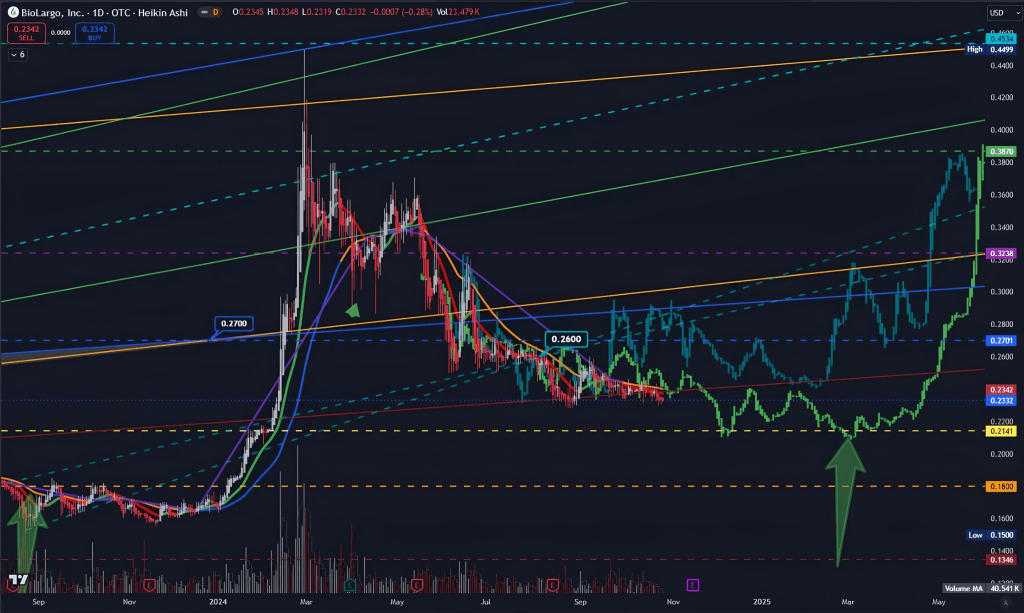
BioLargo’s stock price has proven volatile in a downward trajectory since hitting its annual high of USD .4499 on February 29th, 2024, coinciding with EPA’s PFAS removal, handling, and disposal guidance commenced along with the addition of more specific PFAS chemicals to TSCA a short time later. We at TradersQue anticipated this price-movement as BioLargo’s next material event for its AEC technology would not occur until this month with the Lake Stockholm pilot project.
With sufficient data from its pilot project in tandem with anticipated EPA PFAS announcements in early 2025, we anticipate BioLargo’s price action to rebound and to begin more fairly reflecting the company’s evolving value as its industrial-scaled AEC technology proves successful. With a current market cap of just over $66 million USD, the fair-value potential can be significant. However, predicting the exact impact on market capitalization is challenging due to variables such as market adoption rates, competitive landscape, and broader economic conditions.
Irrespective of price-action, the company’s subsequent financials have underscored BioLargo’s arsenal of topline products and services across its other reputable business divisions, punctuated by the company’s qualifying for OTCQX status in May 2024. These collective highlights prove BioLargo’s status as a legitimate contender in the space of Basic Materials sector within the Chemicals industry.
Upcoming Earnings Report
BioLargo, Inc. is scheduled to release its Q3 2024 earnings on November 14, 2024. Previous quarterly earnings can be located here. with a summary below.
BioLargo, Inc. has achieved significant financial growth, particularly in Q2 2024, with quarterly revenue surging 247% year-over-year to approximately $5 million. Year-to-date revenue reached $9.773 million, marking a 127% increase over the same period in 2023, and setting an annual revenue run rate of about $19.5 million.
Quarter-over-quarter, BioLargo saw strong revenue gains, largely due to its Aqueous Electrostatic Concentrator (AEC) PFAS solutions, which deliver 40-300% lower life cycle costs than traditional carbon filtration. This efficiency, achieved through reduced waste and lower disposal expenses, has made AEC highly attractive under increasingly stringent environmental regulations.
These financial improvements reflect BioLargo’s focus on high-growth markets, strategic partnerships, and cost-effective solutions in PFAS remediation.
About BioLargo, Inc.
BioLargo, Inc. is a cleantech and life sciences innovator and engineering services solution provider. The company’s core products address PFAS contamination, achieve advanced water and wastewater treatment, control odor and VOCs, improve air quality, and control infections and infectious disease. BioLargo’s approach is to invent or acquire novel technologies, develop them into product offerings, and extend their commercial reach through licensing and channel partnerships to maximize their impact.
Additional Coverage
Please review our archives for past coverage on BioLargo, Inc. TradersQue.com remains loyal to and confident of BioLargo, Inc.’s near-term future and long-term future across all business divisions, products, and services. Government contracts for PFAS-removal projects are inevitable as the EPA’s new requirements represent the first set of federally based policies over drinking water quality that, previously, individual states directed. The tens of billions of dollars in current and inevitable funding, in addition to EPS-based infrastructural support–will deliver to BioLargo a number of projects of varying scale and scope as to position the company well head of its competition and peers.
Additional coverage can be found via Todd Analytics’ X and LinkedIn social media accounts.