



How Elon Musk and Javier Milei could Fuse U.S.–Argentina Interests around Lithium, Liberty, and Global Leverage
While the October 2025 legislative vote in Argentina was procedural, its implications were pivotal. Milei’s coalition defied expectations of backlash against his deregulations and subsidy cuts, securing reform continuity and a viable policy climate just as global clean-tech players, including Tesla, weigh South American expansion. Argentina, long defined by volatility, may have bought itself a rare stretch of stability — one that could fuse Milei’s libertarian agenda with Musk’s industrial ambition.
Musk, Milei Seeking Economic Dominance to Rival China, Brazil | TradersQue
The November 5th Tesla shareholder vote on Musk’s compensation could redefine Argentina’s calculus. A rejection might temper Tesla’s global ventures but not Musk’s influence as ideological and capital-network validator. For Milei, that symbolic value still matters: Musk functions as a credibility anchor, even without Tesla’s direct investment. Yet Argentina’s best shot at becoming a U.S.-aligned clean-tech hub depends on a Tesla foothold.
The Global Stakes: Realignment Under Pressure
Global lithium demand is set to triple by 2030. Yet over 70% of battery-grade refining remains in China, posing an increasing strategic vulnerability. In response, the United States has launched an aggressive “friend-shoring” campaign: reallocating critical supply chains to allies and diversifying beyond Chinese dependencies. It has extended bilateral clean-tech agreements to Chile, Canada, and the Philippines. But Argentina remains an underutilized asset in this Western realignment, one rich in resources but historically poor in infrastructure and investment credibility.
That is beginning to change.
Inside Milei’s Gamble: Reform or Relapse?
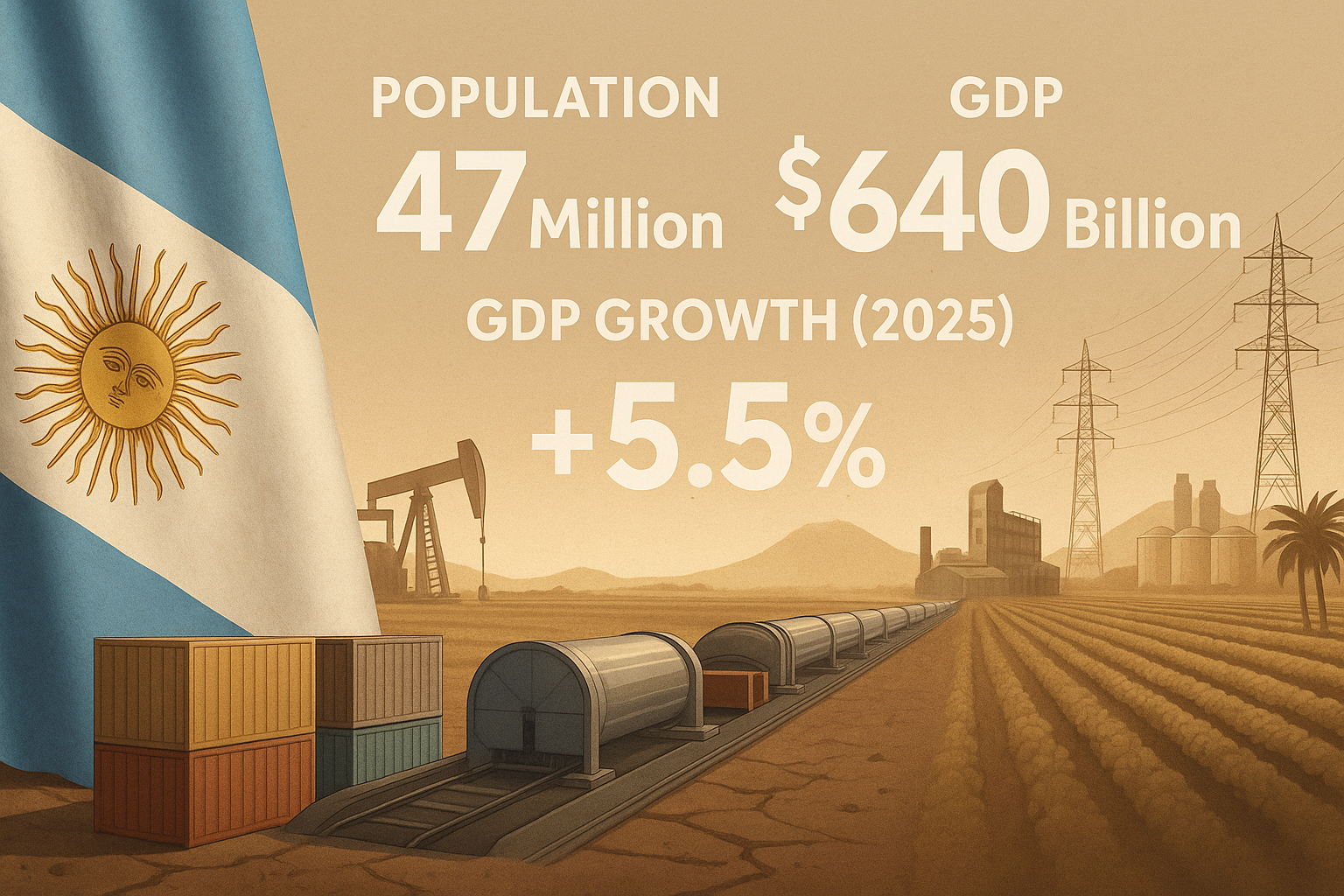
Facing depleted reserves and IMF dependency, Milei has courted both public and private lenders with lithium as collateral. His reforms of partial dollarization, liberalized reserves, and RIGI’s 30-year tax stability have restored investor confidence and drawn $7.5 billion in new projects, including Rio Tinto’s $2.5 billion lithium expansion and a YPF–XtraLit DLE partnership. With 5.5% projected GDP growth, Argentina may emerge as Latin America’s most agile reformer.

Tesla’s Turn: Why Argentina Now?
Tesla’s supply chain stretching from Shanghai to Texas remains overexposed to Asian bottlenecks. Argentina’s low-cost brine lithium and emerging DLE technologies offer Tesla a diversification hedge aligned with U.S. critical-mineral strategy. Y-TEC’s Berisso battery plant and Córdoba’s electronics base add midstream potential. A localized Tesla venture would align ESG standards, lower logistics risk, and cement a Western lithium corridor.
Tesla Stock Price Today | NASDAQ: TSLA Live – Investing.com
How the U.S. Could Anchor Argentina — Like It Has Elsewhere
Washington possesses the instruments to achieve this and has employed them effectively in comparable contexts. The Minerals Security Partnership (MSP) already encompasses Chile and Canada. The U.S. International Development Finance Corporation (DFC) has financed nickel production in the Philippines, while the Export-Import Bank has extended credit support for electric-vehicle supply chains across Southeast Asia. The remaining gap is not technical capacity but political commitment and the presence of a credible Argentine counterpart.
U.S. strategic doctrine increasingly identifies Argentina as a “partner of choice” in the Western Hemisphere, a democratic nation with aligned values, abundant critical minerals, and growing geopolitical relevance. The United States aims to help stabilize Argentina’s economy while shielding it from predatory influence by deepening its role in the rules-based international order.
xAI: Elon Musk’s Safe & Pro-Humanity AI ‣ TradersQue
What is missing is prioritization. Integrating Argentina into these frameworks, as has been done with Chile, Canada, and the Philippines, could convert it into the Western Hemisphere’s lithium-to-battery hub. U.S. support should pair financing guarantees, bilateral R&D, and port and rail upgrades at Bahía Blanca and Rosario. The goal: anchor Argentina before China’s state-backed consolidation through Brazil becomes irreversible.
China’s Expanding Shadow
Beijing’s industrial apparatus is already entrenching in Brazil via BYD’s $10 billion EV and battery complex in Bahia, state-financed lithium concessions, and coordinated tech-sharing. Add to that infiltration of varying degrees, too. These aren’t isolated deals but elements of a hemispheric production hub. Without rapid Western engagement, Latin America’s industrial future will tilt eastward.
BYD Co Ltd-H OTC Markets Stock Price Today | HK: BYDDF Live – Investing.com
The Reform Clock
Milei’s government has three to five years before 2027 elections and the hardening of global EV supply chains to secure Argentina’s place. Failure to embed these reforms into durable law will invite capital flight and Chinese absorption through debt and infrastructure control. Success means transforming volatility into strategic centrality.

The Musk Signal
Investors remember Argentina’s defaults and IMF rescues; what they lack is evidence of permanence. A Musk-led venture, even a pilot-scale facility, could trigger institutional capital inflows by providing three things: credibility for cautious funds, a supply-chain magnet for component makers, and political insulation for RIGI across administrations. It would be less about lithium extraction than institutional validation.
Beyond the Lithium Rush
Argentina has squandered resource booms before. But this moment is different: deregulation, Western realignment, and Tesla’s need to de-risk create a narrow but historic alignment. Unlike Brazil’s scale-driven strategy, Argentina’s midstream focus on refining, modules, and sensor tech demands less capital but yields higher technical value. If coupled with Patagonia’s renewables, it could make Argentina the hemisphere’s clean-tech pivot.
Execution Defines Legacy
Javier Milei has already defied Argentina’s economic gravity. Elon Musk remains a generational disruptor. Together, they could turn Argentina from an exporter of raw materials into a manufacturer of clean technology.
The opportunity is real. What remains is execution.
Additional Coverage
Additional coverage can be found on the author’s X and LinkedIn accounts.

🌿 From Compliance to Competitive Advantage:
Your Sustainability Story Starts Here
In global business, sustainability remains no longer a sidebar — it represents the storyline. At TradersQue, we guide organizations with disclosures ranging from CSR initiatives to basic ESG metrics to sustainability strategy and leadership, registering a narrative that resonates with investors, regulators, and stakeholders.
TradersQue delivers a viable framework for impact, investment, and integrity. Our reports are not simply documents; they are proof of foresight, accountability, and long-term value.
We align your assessed sustainability and ESG goals with the Global Reporting Initiative (GRI) Standards, the world’s most widely adopted sustainability reporting framework. We then identify what matters most through materiality analysis, and translate complex data into visual, stakeholder-ready reports for any business, from start-up enterprises to legacy conglomerates.
Through every stage, your organization gains:
- Visual, presentation-ready reports tailored for internal or public audiences
- Alignment with GRI Standards and UN SDGs for global recognition
- Sector-specific insights and optional third-party assurance preparation to enhance stakeholder confidence
With TradersQue, ESG and sustainability reporting become your company’s collective growth narrative—one grounded in data, shaped by vision, and certified for tomorrow’s global standards.
Your corporate resilience deserves recognition. Let us author its legacy.