



Macro Crosscurrents Keep Equities on Edge in 2026
Financial markets are navigating a tense stretch as resilient employment trends, elevated borrowing costs, and renewed trade policy debates reshape investor positioning. With benchmark yields holding firm and policy clarity limited, traders are reacting swiftly to each economic release, leaving price action reactive and sentiment fragile.
BRICS+ to Pivot Beyond the U.S. Dollar? ‣ TradersQue
 Labor Data Reprices Rate Cut Expectations
The most recent employment report reinforced the view that the United States economy is not slowing fast enough to justify aggressive Federal Reserve easing.
January payrolls showed continued job creation with unemployment holding near 4.3 percent. While this level is above the cycle lows near 3.5 percent seen in prior years it still reflects a relatively resilient labor market. Wage growth remains above 3 percent year over year which keeps pressure on inflation expectations.
The Federal Reserve maintained its policy rate in the 3.50 percent to 3.75 percent range at its latest meeting. Markets had previously priced in multiple cuts for 2026, but futures positioning has shifted toward fewer reductions in the first half of the year.
When labor markets stay firm the Fed has less urgency to cut. Those dynamic feeds directly into equity volatility especially in rate sensitive sectors.
 Yields Remain the Market Gatekeeper
The 10-year Treasury yield is hovering around 4.1 percent which has become a key valuation anchor for equities. At the peak of tightening in prior cycles yields pushed well above 4 percent and markets struggled to sustain premium multiples.
When the 10-year yield stays above 4 percent discounted cash flow models assign lower present values to long duration assets. This disproportionately affects technology artificial intelligence and other growth heavy sectors.
Bond market volatility also remains elevated. A move of 15 to 20 basis points in the 10-year yield over a short period now regularly triggers sharp sector rotation. Investors are watching the 4.00 percent level closely as a psychological and technical pivot.
If yields fall toward 3.75 percent equity multiples could expand again. If yields push toward 4.25 percent pressure on growth stocks may intensify.
 Tech and Small Caps Lead the Pullback
Major indexes are reflecting this rate sensitivity.
Investing.com – Stock Market Quotes & Financial News
The S and P 500 recently traded near the 680 level on its ETF proxy while the Nasdaq heavy benchmark declined more than 1.5 percent in the latest session. Small caps underperformed with declines approaching 2 percent intraday.
Technology represents roughly 28 percent to 30 percent of the S and P 500 weighting depending on classification. That concentration means weakness in mega cap names can drag the entire index lower even if sectors such as utilities or healthcare are stable.
Small caps are particularly vulnerable in a higher yield environment because many rely on refinancing and external capital. When borrowing costs remain elevated profit margins compress and earnings estimates come under pressure.
This leadership rotation reinforces the pattern seen throughout the tightening cycle where duration heavy and capital-intensive names feel the brunt of rate repricing.
 Tactical Outlook for the Next Two to Four Weeks
Base Case Choppy Headline Driven Trade
The market appears to be in a late tightening early easing debate phase rather than a confirmed easing cycle. Economic growth is slowing but not collapsing. Inflation is moderating but not decisively below target.
Upcoming data releases including the January Consumer Price Index will be critical. A monthly inflation print above expectations even by 0.2 percentage points could push yields higher and weigh on equities. Conversely a softer print could pull rate cut expectations forward.
Volatility measures have edged higher with the VIX moving into the upper teens from lower levels earlier in the quarter. That reflects heightened sensitivity to macro data and policy headlines.
Investors should expect rallies to face resistance unless supported by declining yields or clearly improving inflation data.
 What Could Improve the Tape Quickly
A sustained drop in the 10-year Treasury yield from 4.1 percent toward 3.8 percent would likely support growth valuations. That move would signal confidence that inflation is easing and that the Fed can shift toward accommodation.
Clear evidence of slowing wage growth below 3 percent year over year could also strengthen the case for rate cuts. Combined with stable corporate earnings growth in the mid-single digits that would create a more constructive backdrop.
Improved market breadth would be another positive signal. If more than 60 percent of S and P 500 components trade above their 50 day moving averages it would indicate broader participation rather than narrow leadership.
 What Keeps Pressure on Risk Assets
Upside surprises in inflation or services activity would reinforce the higher for longer narrative. A move in the 10-year yield toward 4.25 percent could compress price to earnings multiples by one to two points based on historical sensitivity.
If technology earnings guidance weakens or capital expenditure plans slow investors may reassess the premium currently embedded in artificial intelligence related stocks.
In addition, geopolitical or trade related uncertainty can amplify existing rate pressures. Markets tend to reprice quickly when policy uncertainty increases particularly if it carries inflation implications.
 The Trump Factor Adds a Volatility Layer
Political developments linked to President Donald Trump are adding an additional layer of uncertainty to markets.
Tariff discussions and congressional action around trade policy have resurfaced as focal points. Tariffs can have a dual effect. On one hand they may support domestic industrial investment and supply chain realignment. On the other hand, they can raise input costs and contribute to inflationary pressure.
Historical tariff episodes have coincided with increased equity volatility and shifts in sector leadership. Industrial and defense related sectors may benefit from onshoring themes while multinational technology and consumer companies face potential margin risks.
Markets are particularly sensitive to any signal that trade policy could slow global growth which currently sits near 3 percent according to recent international estimates. Even a modest downward revision of 0.5 percentage points to global growth forecasts can materially affect earnings expectations for large cap exporters.
In the short-term tariff headlines often function as risk off catalysts. In the longer term they may reshape supply chains and capital allocation trends.
 Macro Cycle Perspective
This environment reflects a transition phase rather than a clear expansion or recession.
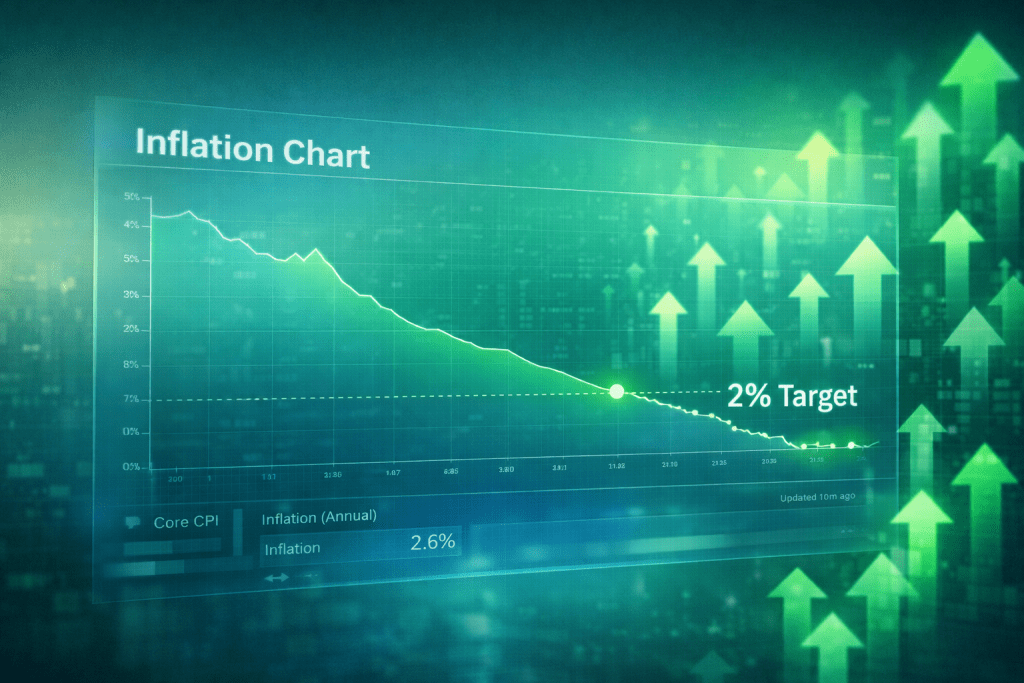
Gross domestic product growth has moderated from earlier post pandemic highs yet remains positive. Inflation has eased from peak levels above 8 percent in prior years but is still above the Federal Reserve two percent target.
That mix creates tension. Investors want rate cuts, but policymakers require clearer disinflation before acting decisively.
In this regime cash yielding above 3 percent competes with equities more directly. Short duration bonds offer stability while equity investors demand stronger balance sheets and consistent free cash flow.
Companies with high leverage or uncertain funding needs face greater scrutiny as financing costs remain elevated relative to the ultra-low-rate period earlier in the decade.
 Final Thought
Markets are once again orbiting around one central force, interest rates. Elevated Treasury yields, resilient employment trends, and politically sensitive trade developments have combined to create a fragile risk backdrop where confidence can fade quickly and positioning shifts just as fast.
This is not a recession panic, nor is it a clean expansion phase. It is a transition environment defined by debate. Policymakers are weighing progress on disinflation against still firm growth, while investors are constantly repricing expectations for when and how aggressively monetary easing might arrive. That tension keeps volatility elevated and leadership narrow.
Until inflation shows clearer evidence of trending sustainably toward target, or benchmark yields break convincingly lower from the 4 percent area, rallies may struggle to build durable momentum. Strong balance sheets, steady cash flow, and disciplined capital allocation are likely to command a premium, while highly leveraged or speculative segments remain sensitive to every basis point move in rates.
For now, a single data release can shift sentiment in an afternoon. In 2026, macro conditions are still setting the rhythm, and equities are moving carefully in step, advancing when the tempo softens and retreating when the beat of higher yields grows louder.