



Stock Market Highs and Anticipated Fed Rate Cut, Too Little and Too Late
While the stock market soars to new heights and the Federal Reserve prepares for a rate cut in September 2024, the underlying U.S. economic forecast paints a more concerning picture. This article delves into the reasons behind this paradox and why the future might not be as bright as it seems.
Stock Market Index – Major World Indices Live – Investing.com
 Underlying Economic Weaknesses
Beneath the market euphoria lies a series of troubling economic indicators:
- Stagnant Wage Growth: Over the past decade, real wages have increased only marginally. According to the Bureau of Labor Statistics, the average hourly earnings adjusted for inflation have seen negligible growth, impacting consumer spending.
- Rising Debt Levels: Overall U.S. government debt has officially breached an historical $35 trillion, with an expected addition $1.3 trillion expected before year’s end. Corporate debt has ballooned to over $10 trillion, with companies increasingly reliant on borrowed funds. Meanwhile, consumer debt, including credit card and student loan debt, exceeds $16 trillion, according to the Federal Reserve. Moreover, $9 trillion of U.S. debt will mature in 2025, presenting a significant refinancing challenge amid potentially higher interest rates.
- Labor Market Struggles: Despite a low unemployment rate, the rise of gig economy jobs and part-time work means many Americans face job insecurity and lack benefits. For example, a significant portion of new jobs are in low-wage sectors like retail and hospitality. Additionally, U.S. jobs data continues to be revised lower for previous monthly reports with each successive monthly report, indicating a weaker labor market than initially reported. The Bureau of Labor Statistics revised May 2024 job gains from 306,000 to 285,000 in June, and the most significant revision occurred in March 2024, from 311,000 to 243,000, highlighting the instability in reported job growth.
- Hardship Loans: More Americans are requesting hardship loans borrowed against their 401(k) retirement plans, primarily to afford their mortgages, which they can barely afford. Vanguard reported a 15% increase in hardship withdrawals in the past year, indicating rising financial distress among households.
- Credit Card Defaults: The 3-month credit card default rates are increasing, with recent data showing a rise to 2.3% from 1.8% last year. This suggests that more Americans are struggling to keep up with their debt payments, reflecting broader financial instability.
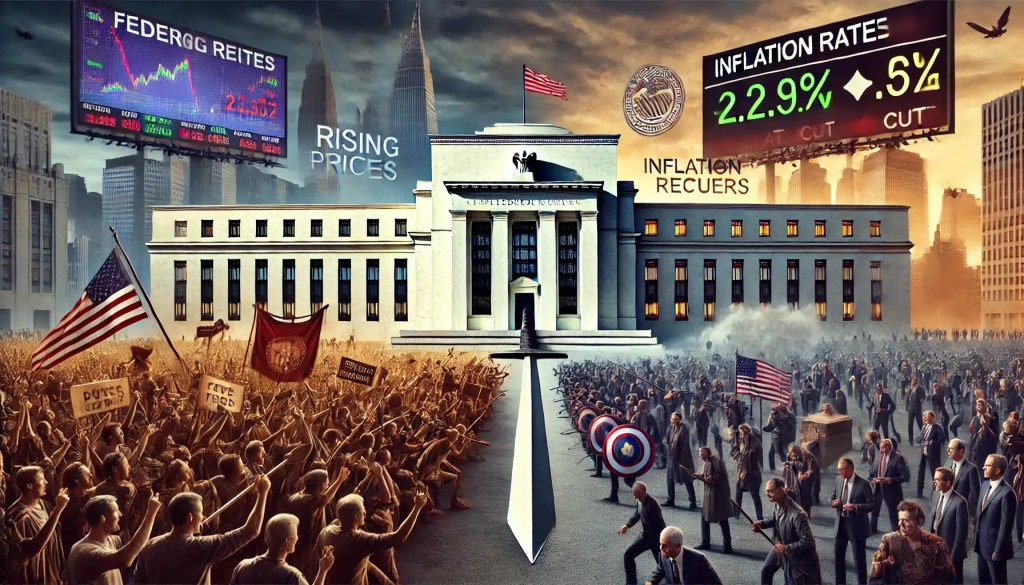 Federal Reserve’s Rate Cut: A Double-Edged Sword
The anticipated rate cut in September 2024 is intended to stimulate the economy, but it carries significant risks:
- Diminishing Returns: Past rate cuts have shown limited success in spurring long-term growth. The 2019-2020 rate cuts led to temporary boosts but did not result in sustained economic improvement.
- Inflation Concerns: Lower rates could stoke inflation, which has already been creeping up. The Consumer Price Index (CPI) shows inflation at a 3% annual rate, reducing real incomes.
- Financial Instability: Prolonged low rates can inflate asset bubbles. For example, the housing market has seen price surges reminiscent of the pre-2008 financial crisis, raising concerns of potential market corrections. Additionally, the refinancing of $9 trillion in debt could become more costly, potentially leading to higher interest expenses and financial strain on both the government and corporations.
Global Economic Pressures
The U.S. economy does not exist in a vacuum and is influenced by global economic conditions:
- Trade Tensions: Ongoing trade disputes, particularly with China, have led to tariffs and retaliations affecting U.S. exports. The agriculture and manufacturing sectors have been particularly hard-hit.
- Global Slowdown: Major economies like China and the European Union are experiencing slower growth. The International Monetary Fund (IMF) has downgraded global growth projections, which negatively impacts U.S. economic prospects. China’s recent economic moves, including rate cuts across various industries, have been insufficient to spur the world’s second-largest economy into an optimal recovery trajectory. Despite reducing lending rates for sectors like real estate and manufacturing, the stimulus has not significantly boosted consumer spending or investment confidence, leaving global economic recovery sluggish.
China’s Economic Leverage: A Tale of Two U.S. Presidencies
- Under a Trump Presidency: A Chinese recovery might face renewed trade tensions, as former President Trump has historically favored tariffs and stricter trade policies against China. For example, during his previous term, tariffs on Chinese goods led to significant retaliatory tariffs on U.S. agricultural exports. U.S. soybean exports to China dropped by over 50%, and the American Farm Bureau reported a significant increase in farm bankruptcies. Renewed tariffs could once again impact U.S. farmers, leading to financial distress in the agriculture sector. The agriculture sector is essential to the U.S. economy, contributing about $1.05 trillion to the GDP. Retaliatory tariffs on U.S. agriculture would not only hurt farmers but could also impact related industries, such as equipment manufacturing, food processing, and transportation.
- Under a Harris Presidency: A Chinese recovery could benefit from a more diplomatic approach to trade relations. Vice President Harris may pursue multilateral agreements and reduced tariffs, fostering a more stable international trade environment. However, this might lead to increased competition for U.S. industries if Chinese exports rise significantly. Specific U.S. industries under threat could include technology and manufacturing sectors. Companies like Intel and General Motors might face intensified competition. The semiconductor industry alone contributed about $277 billion to the U.S. GDP in 2022, while the automobile manufacturing sector contributed about $493 billion. Increased Chinese competition in these sectors could lead to reduced market share and profits for U.S. companies, affecting overall economic growth.
Significance of a Widening Yield Curve
The yield curve, which plots the interest rates of bonds with different maturity dates, is a critical economic indicator. A widening yield curve, where long-term rates rise faster than short-term rates, can have significant implications:
- Inflation Risk: A widening yield curve often signals expectations of higher inflation. Investors demand higher yields for long-term bonds to compensate for the anticipated decrease in purchasing power. This can erode real returns for fixed-income investments and increase borrowing costs for consumers and businesses. As of July 2024, the spread between the 2-year and 10-year Treasury yields has widened to 1.2%, up from 0.8% earlier this year, indicating rising inflation expectations.
- Recession Probability: Conversely, an inverted yield curve, where short-term rates are higher than long-term rates, is a well-known predictor of recessions. The current yield curve has been inverted for nearly 520 consecutive trading days, the longest inversion in U.S. history, surpassing the 1978-1980 inversion under Federal Reserve Chair Paul Volker. This prolonged inversion indicates sustained economic uncertainty and potential recession risks. However, the recent widening, with the 30-year Treasury yield at 4.5% and the 1-year Treasury yield at 3.0%, suggests an initial phase of economic overheating. If not managed properly, this could lead to a recession following a period of high inflation.
 Final Thoughts
Despite the stock market highs and a looming Fed rate cut, the U.S. economic forecast remains troubling. Factors such as stagnant wages, high debt levels, and a struggling labor market indicate underlying weaknesses. Increasing hardship loans and rising credit card defaults highlight financial distress among households.
While the Federal Reserve’s rate cut aims to stimulate the economy, it carries risks of inflation and financial instability. Global economic pressures, including trade tensions and a global slowdown, further complicate the outlook. The varying impacts of a Chinese recovery under different U.S. presidencies add to the uncertainty, with potential benefits and drawbacks for key industries like agriculture, technology, and manufacturing.
Additionally, the significance of a widening yield curve underscores the risks of inflation and recession, especially given the current yield curve inversion, which is the longest in U.S. history. These factors make it imperative for investors and policymakers to look beyond market indices to address these fundamental issues and ensure a more stable economic future.
More coverage on U.S. economic issues can be accessed via ToddAnalytics’ LinkedIn page as well as via his X page.