



Japan and India Anchor a Structural Uranium Shift. U.S. Miners May Lead the Response.
The global uranium market has entered a phase of visible realignment. Japan’s formal return to nuclear operations and India’s 100-gigawatt roadmap reconfigure demand not as abstract “renaissance” rhetoric but as a procurement cycle shaped by state policy, regulatory overhaul, and long-term capital planning.
Uranium Futures | Investing.com
This shift redefines how U.S.-listed uranium producers, specifically Uranium Energy Corp (UEC), Energy Fuels Inc. (UUUU), and Ur-Energy Inc. (URG), will be positioned. The implications extend well beyond price levels or inventory drawdowns. The operative variables are contract tenor, regional fuel security, and reactor buildout timelines. As Asia commits to nuclear persistence, North American ISR capacity becomes not just viable but strategically necessary.
Japan Revalidates Nuclear as Energy Infrastructure
Three developments in Japan signal more than incremental progress: they restore latent capacity, clarify cross-border capital flows, and compress the timeline for U.S. reactor deployment.
- Reactivation of Kashiwazaki-Kariwa Units 6 and 7 (2.71 GW) marks the re-entry of a facility offline since 2011. Its restart would represent a return of one of the largest single-site sources of nuclear demand globally.
- Japan’s $550 billion U.S. investment package, of which $332 billion targets energy infrastructure, explicitly prioritizes nuclear deployment through AP1000 and SMR designs in partnership with Westinghouse.
- Westinghouse’s stated ambition to begin construction on ten AP1000 reactors by 2030 is partly motivated by anticipated load demand from AI-driven data centers. If initiated by the late 2020s, these projects could drive early fuel procurement as soon as 2027–2029.
The significance lies not in public statements, but in institutional sequencing. Japan’s capital commitment, paired with utility-level procurement cycles, moves uranium demand from speculative upside to contract-backed visibility.
India Reorients Policy to Attract Foreign Nuclear Supply
India’s targets are neither abstract nor experimental. They are numerically defined and structurally dependent on international reactor suppliers.
- A formal 100-GW target by 2047 (up from 8.9 GW today) requires a massive build-out of roughly 70–100 reactors, depending on unit size. This scale places India among the world’s largest prospective nuclear markets and underscores the system-level demand implications embedded in its long-term energy strategy.
- Proposed amendments to the Civil Liability for Nuclear Damage Act would cap supplier liability and align India with international conventions, removing the principal barrier that has kept foreign vendors, such as Westinghouse and GE Hitachi, from entering viable commercial contracts. Without this reform, India’s nuclear expansion cannot realistically incorporate large, imported reactor technologies.
- Fuel demand impacts are quantifiable. A typical 1-GW reactor requires 200–250 MT/year. Even a 50-GW outcome (half of India’s target) would add 9,000–11,000 MT/year of steady-state demand, or roughly 15% of today’s global uranium consumption. This makes India’s roadmap a structurally significant driver of long-term uranium markets, even under partial execution.
The convergence of capacity growth with legal realignment transforms India from a theoretical growth market into a future procurement engine.
U.S. Uranium Supplies: Undersized but Strategically Located
Contrary to frequently cited figures, U.S. domestic uranium production currently meets approximately 5 percent of its utility demand, not less than 1 percent. Nonetheless, this modest share underscores strategic exposure, especially given global supply concentration.
U.S. Uranium Poised for Growth Amid Nuclear Revival | TradersQue
Kazakhstan, Canada, and Namibia account for the majority of mine output, concentrating risk in a narrow band of jurisdictions. U.S. policy interventions though, fragmented, aim to reduce this exposure.
- Civil Nuclear Credit (CNC) Program allocates $6 billion to preserve existing domestic nuclear capacit.
- Low-Enriched Uranium (LEU) Acquisition Program, with $3.4 billion in funding, targets non-Russian fuel procurement for domestic use.
- Support for HALEU and LEU production, through a mix of IRA allocations and supplemental requests, provides approximately $1.5 billion in capital across multiple appropriations.
These programs do not guarantee price floors or off-take agreements, but they collectively alter the financial risk profile for domestic producers.
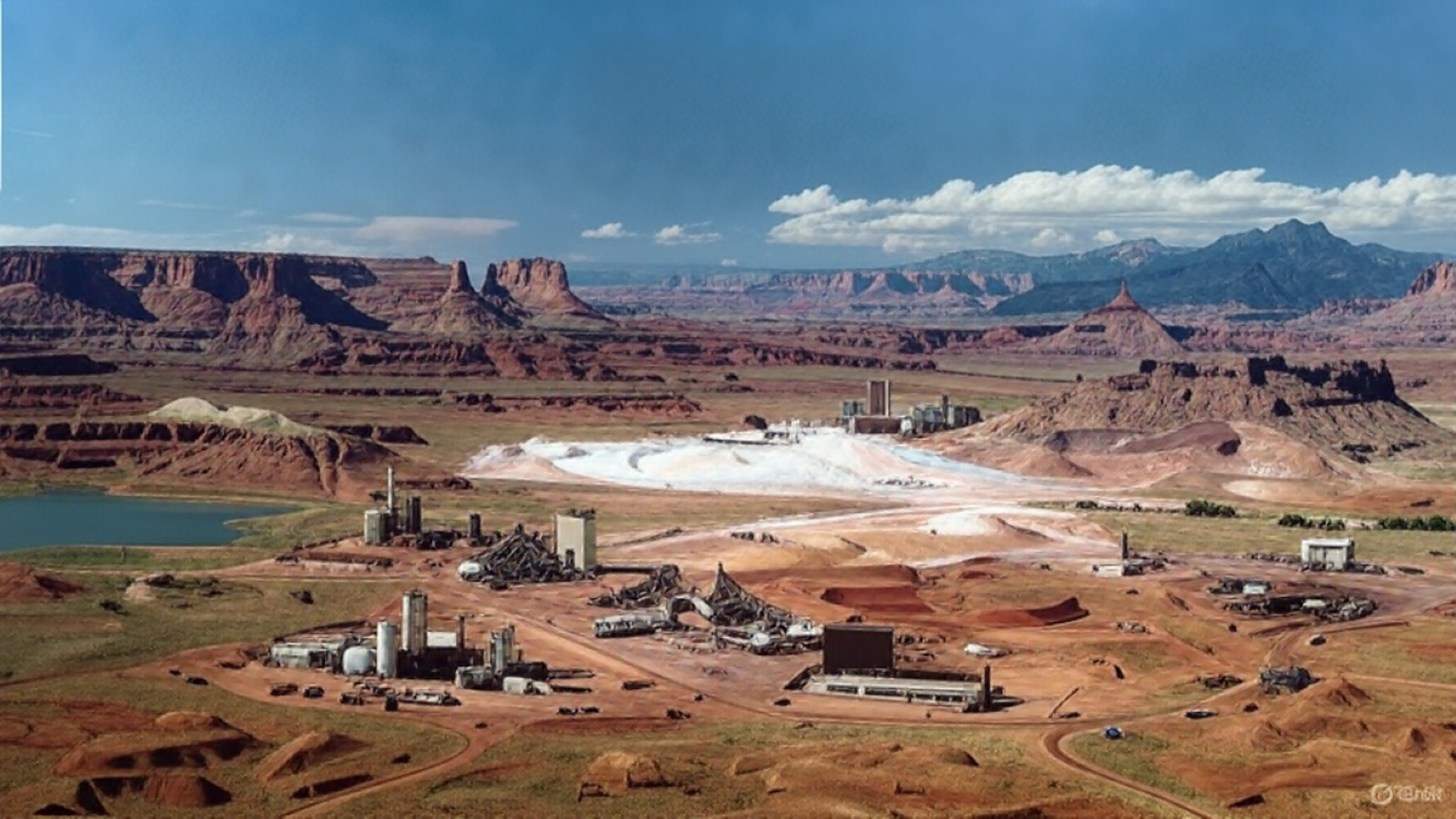
Why U.S. ISR Firms Are Positioned to Respond First
Among U.S.-listed firms, in-situ recovery (ISR) operators retain a structural advantage: short restart timelines and comparatively low capital intensity.
- Uranium Energy Corp (UEC) maintains ISR assets in Texas and Wyoming, with unhedged production and physical uranium inventory.
- Energy Fuels Inc. (UUUU) controls the White Mesa Mill, the only operating conventional uranium mill in the United States and has positioned itself as a rare earth processor.
- Ur-Energy Inc. (URG) has restarted Lost Creek and holds permits for the fully licensed Shirley Basin project.
Given ISR’s 2–4-year development timelines, these firms are among the few capable of responding within the decade to shifts in utility contracting.
Contract Behavior as a Leading Indicator
Contract tenor and diversification rather than spot market metrics now serve as primary indicators of future demand. A growing number of utilities are reportedly modifying procurement behavior by extending contract durations into the 2030s and beyond, seeking non-Russian enrichment pathways, and diversifying regional exposure across supply chains.
U.S. Uranium Policy Meets Energy Scarcity | TradersQue
These are not guarantees. They are, however, observable trends that shift the center of gravity toward domestic production with credible forward visibility.
Strategic Outlook
2025–2027
Utilities hedge against conversion and enrichment bottlenecks. ISR firms with existing inventory and idle capacity capture early contracting rounds.
2027–2030
AP1000 construction accelerates. Capital flows align with reactor procurement. Mid-tier U.S. producers begin physical scaling.
2030–2040
India’s buildout compresses global supply margins. Higher-cost jurisdictions enter the supply stack. North American assets gain structural relevance in utility portfolios.
Final Thoughts
Japan and India have not merely signaled interest in nuclear energy; they have institutionalized it through policy, law, and capital. This reclassifies uranium procurement as a long-cycle infrastructure function, not a tactical hedge.
For U.S. ISR miners, the opportunity is not speculative but rather contingent. Yet the contingencies now rest on state-level programs, not sentiment. That distinction matters.
The uranium market’s new scaffolding is in place. U.S. production may finally have the policy visibility to scale within it.
Archived Uranium Coverage | TradersQue
With uranium spot prices climbing above $83 per pound in October 2025, the market has clearly moved beyond mid-year expectations. The run from $63 in February confirms the tightening trajectory forecast in TradersQue’s February coverage.
Additional Coverage
Additional coverage can be found on the author’s X and LinkedIn pages.