



U.S. Uranium to Surge as Pro-Domestic Energy Policies and Increased Appetite for Sustainable Energy Demand Drive Momentum
Uranium Futures Price Today – Investing.com
The Nuclear Comeback: A New Era for U.S. Uranium
Necessity is the mother of invention—or of reinterpretation.
With nuclear energy returning to the center of U.S. energy strategy, uranium demand is building steadily. President Donald Trump’s inauguration signals intent to prioritize domestic production, deregulation, and strategic stockpiling. As utilities renew long-term contracting, term prices are expected to rise, reflecting a structural supply gap years in the making.

Geopolitical Risks and the Uranium Supply Chain
The uranium market is increasingly shaped by politics as much as geology. Kazakhstan, supplying roughly 43 percent of global output, remains the nexus of supply risk due to its deep commercial ties with Russia and China. Russia’s state-linked enterprises still dominate much of the global fuel cycle, constraining Western utilities reliant on imports.
Further pressure stems from Niger’s nationalization of assets and export freezes on about 2 million pounds of uranium, while flooding at Namibia’s Langer Heinrich Mine highlighted climate-linked disruptions. Together, these developments expose how governance and weather events alike can distort supply.
Although Canada and Australia provide about 30 percent of U.S. uranium imports, China’s expanding offtake agreements in Africa and Central Asia continue to tighten Western access. The World Nuclear Association projects a 28 percent rise in global uranium demand by 2030, a figure likely conservative amid Japan’s restarts, India’s expansion, and European nuclear renewals.
The Investment Landscape: Uranium Beyond U₃O₈
Investor focus centers on U₃O₈, the tradable uranium concentrate, and on enrichment capacity within the nuclear fuel cycle. Growth opportunities also exist in LEU and HALEU supply and related advanced-reactor feedstocks.
Exposure is available through the Sprott Physical Uranium Trust, uranium mining equities, and specialized ETFs. As the sector consolidates, M&A activity is expected to intensify among companies controlling permitted North American projects.
The U.S. Push for Uranium Self-Sufficiency
Despite bipartisan support for revitalizing domestic uranium mining, production remains minimal. The EIA reported total U.S. output of roughly 677,000 pounds in 2024—negligible against more than 50 million pounds consumed annually.
The DOE Uranium Reserve Program, authorized for up to $1.5 billion over ten years, received $75 million in initial appropriations by FY 2024 to acquire domestically mined U₃O₈. The Nuclear Fuel Security Act within the FY 2024 National Defense Authorization Act established authorities to onshore mining, conversion, and enrichment capacity. Still, analysts argue that reforms in permitting, infrastructure, and workforce development will be required for the U.S. to achieve meaningful self-sufficiency.
Energy-Hungry Tech Giants and the Nuclear Connection

Technology firms are becoming strategic participants in the nuclear value chain. Alphabet has invested in advanced-reactor developers Oklo and Kairos Power, while Microsoft signed a 2023 pilot agreement with Helion Energy targeting fusion-based electricity delivery by 2028.
With data centers projected by the EIA Annual Energy Outlook 2025 to consume 9 percent of total U.S. power by 2030, nuclear’s role as a stable, carbon-free source of baseload electricity is expanding rapidly.
Policy Outlook and Federal Investment
Lengthy permitting—often spanning a decade—has long constrained U.S. uranium projects. The new administration is expected to streamline regulatory approvals and coordinate agencies to accelerate development. Proposals circulating in early 2025 focused on:
- Shortening NRC and EPA review timelines for projects in Wyoming, Texas, and Utah;
- Simplifying environmental compliance without compromising safety;
- Expanding federal procurement of U.S.-produced U₃O₈ and HALEU to secure supply.
At the same time, federal programs already in place are being leveraged to rebuild the nuclear fuel chain:
- Next-Generation Reactors: The DOE Advanced Reactor Demonstration Program—a $3.2 billion initiative—continues to support SMR and HALEU-based systems led by TerraPower and X-energy.
- Enrichment and Fabrication: The DOE HALEU Demonstration Project at Piketon, Ohio, operated by Centrus Energy (NYSE: LEU), is restarting limited enrichment capacity.
- Mining and Milling: The White Mesa Mill in Utah, the only operating conventional uranium mill in the U.S., is exploring expansion and diversification into rare earth processing.
Together, these efforts aim to reduce dependency on imports from Kazakhstan, Canada, and Australia while rebuilding industrial resilience.
Strategic Reserves and Domestic Preference
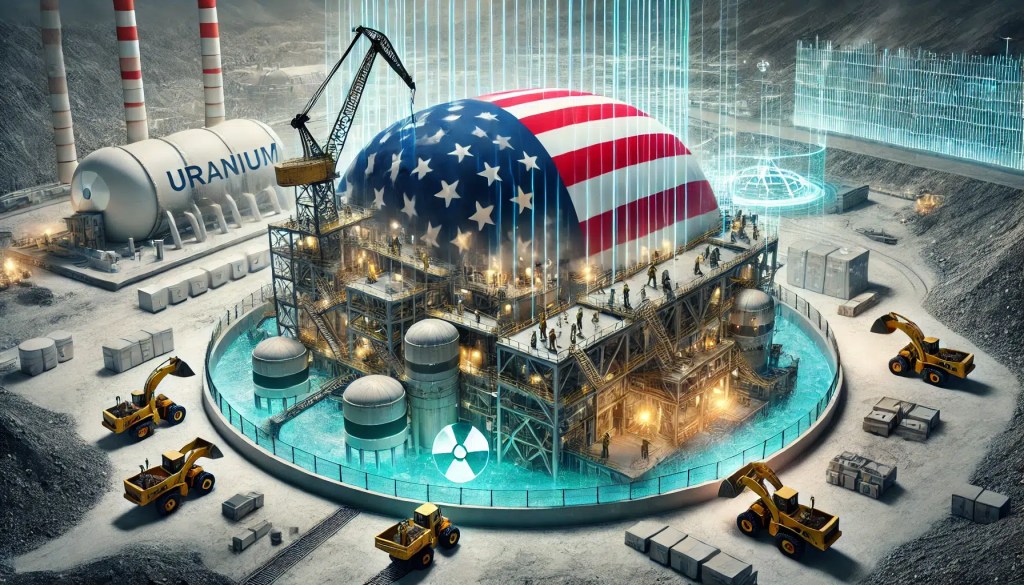
The U.S. consumes roughly 51 million pounds of uranium annually but produces less than 1 percent of that total. The DOE Reserve’s pilot purchases—modest but symbolically critical—sought to stabilize domestic prices and signal long-term procurement support.
Longer-term plans include stockpiling LEU and HALEU for defense, research, and civilian reactors, establishing predictable revenue streams for U.S. producers. Analysts also anticipate potential trade measures—conditional tariffs on Russian and Kazakh uranium or domestic sourcing mandates for utilities—to align national energy security with industrial revitalization.
Analysts anticipated that Trump might revisit trade measures similar to those applied in metals and critical-minerals markets. While no formal action had been introduced as of February 2025, potential scenarios under review included:
- Conditional tariffs on uranium imports from Russia and Kazakhstan;
- Utility sourcing mandates requiring a portion of uranium from domestic producers;
- Long-term government offtake agreements to support price stability.
Such proposals underscored the broader policy goal of aligning energy independence with industrial capacity rebuilding.
Market Outlook and Investment Considerations
At publication, uranium traded near $63 per pound, up from $58–$60 at the start of the year. Most consultancies, including UxC and TradeTech, projected prices in the $70–$80 range by mid-2025 as contracting tightened.
Key structural drivers include chronic underinvestment, limited new supply, and rising demand from SMRs and data infrastructure. Investors seeking exposure can target miners, utility suppliers with long-term contracts, or advanced-reactor developers. While regulatory and geopolitical risks remain, uranium’s repricing reflects durable fundamentals rather than short-term speculation.
Key U.S. Players
- Long-term Contracts: Utilities with locked-in long-term uranium contracts could experience stability despite rising spot prices, presenting investment opportunities in well-positioned energy providers.
- Emerging Technologies: Companies focused on SMR technology and next-generation reactor designs offer significant growth potential for investors as nuclear innovation scales globally.
Uranium Energy Corp (NYSE: UEC)

Uranium Energy Stock Price Today | NYSE: UEC Live – Investing.com
Headquartered in Corpus Christi, Texas, UEC is a debt-free, ISR-focused producer with permitted projects in Texas and Wyoming and ongoing feasibility work at Roughrider in Canada. Its Sweetwater and Anfield acquisitions in 2024 expanded domestic resources, positioning the company to supply future DOE and utility contracts.
Key Highlights of UEC’s Operations and Strategy
-
Strategic Positioning
-
Expanded Resource Base in the U.S.: UEC has significantly increased its portfolio of fully permitted In-Situ Recovery (ISR) projects in the United States, enhancing its position as a leading domestic uranium producer.
-
Processing Facilities:
- Hobson Processing Facility: Located in Texas, this facility serves as the central hub for UEC’s South Texas operations, with a licensed capacity to process up to 4 million pounds of uranium annually.
- Irigaray Processing Plant: Situated in Wyoming, the Irigaray Plant’s licensed production capacity was increased to 4 million pounds of U₃O₈ annually as of October 2024.
-
-
Market Expansion Through Acquisitions
-
Acquisition of Rio Tinto’s Assets: In December 2024, UEC completed the acquisition of Rio Tinto’s Sweetwater Plant and Wyoming uranium assets, adding approximately 175 million pounds of historical uranium resources. This acquisition established UEC’s third hub-and-spoke ISR production platform in the U.S.
-
Increased Holdings in Anfield Energy: In January 2025, UEC expanded its strategic investment in Anfield Energy, further strengthening its resource base and market position.
-
-
Specialization and Technology
-
In-Situ Recovery (ISR) Technology: UEC continues to utilize cost-efficient and environmentally friendly ISR extraction methods, minimizing surface disruption and reducing production costs.
-
Eco-Friendly Leadership: The company’s commitment to ISR technology underscores its leadership in sustainable uranium production.
-
-
Domestic Focus and Energy Policy Tailwinds
-
Key U.S. Assets: With production-ready projects in Texas and Wyoming, UEC plays a critical role in reducing U.S. reliance on imported uranium.
-
Federal Initiatives: UEC benefits from government programs designed to boost domestic uranium output, aligning with national energy security goals.
-
-
Financial Strength
-
Robust Financial Position: As of October 31, 2024, UEC reported over $350 million in liquid assets, including cash, equity holdings, and inventory at market prices, with no debt.
-
Debt-Free Balance Sheet: UEC’s lack of debt provides greater flexibility in expanding its ISR production and advancing its Canadian assets, including the Roughrider Project.
-
-
Growth Outlook and Market Potential
-
Global Uranium Demand: The demand for uranium is projected to rise significantly by 2030, providing a strong market tailwind.
-
Strategic Reopening: UEC successfully restarted ISR production at the Christensen Ranch in Wyoming in August 2024, enhancing operational capacity.
-
Aggressive Growth Strategy: UEC’s focus on acquisitions and production scaling positions it as a key contender for significant value creation.
-
Stock Performance and Analyst Ratings
-
Current Stock Price (as of February 24, 2025): $5.635 USD.
-
Analyst Consensus: The stock is rated as a “Buy” with a median 12-month price target of $8.75 USD, representing a potential upside of approximately 55%.
Why UEC is a Top Uranium Investment
Uranium Energy Corporation combines financial strength, strategic acquisitions, cutting-edge ISR technology, and favorable market conditions to solidify its leadership in the uranium sector. Its alignment with federal energy independence initiatives and the global nuclear energy renaissance makes UEC a standout opportunity for investors seeking exposure to the uranium market.
| Metric | Data |
|---|---|
| Stock Price (2/24/2025) | $5.66 USD |
| Analyst Price Target | $8.75 USD (~54.6% Upside) |
| Cash/Equity Holdings | $331.5 Million (as of 7/31/2024) |
| Uranium Processing | 4M pounds annually (Hobson & Irigaray Facilities combined) |
| Key Assets | Texas, Wyoming, Sweetwater Plant, Roughrider Project |
| Debt | $0 (Debt-Free) |
| Global Uranium Demand | Forecasted +28% by 2030 |
Conclusion
UEC is more than just a uranium company—it’s a strategic partner in America’s pursuit of energy independence and a major player in the growing global demand for nuclear energy. With a debt-free balance sheet, innovative ISR technology, and a strategic portfolio of assets, UEC stands poised to deliver long-term value for investors.
Energy Fuels Inc (NYSE: UUUU)

Energy Fuels Inc Stock Price Today | NYSE: UUUU Live – Investing.com
Operator of the White Mesa Mill—the only conventional uranium mill in the U.S.—Energy Fuels produces uranium, vanadium, and rare earth oxides. With ≈ $117 million in working capital and no debt, it is expanding capacity for REE and HALEU feedstock and participates in DOE’s uranium reserve solicitations.
Key Highlights of UUUU’s Operations and Strategy
- Industry Leadership and Scalability
-
-
Largest Uranium Producer in the U.S.: Energy Fuels maintains its position as a leading supplier of uranium for nuclear energy production.
-
White Mesa Mill (Utah):
- The only operational conventional uranium mill in the U.S.
- Annual processing capacity: 8 million pounds of uranium, enabling unmatched scalability.
- Processes ore from Energy Fuels’ mines in Utah, Arizona, and Wyoming.
-
-
Diversification into Critical Materials
-
Rare Earth Elements (REEs):
- Processes monazite sands, a primary source of REEs.
- Reduces U.S. reliance on foreign REE supply chains, especially from China.
- Supports clean energy technologies, including wind turbines, electric vehicles, and advanced batteries.
-
Vanadium: Supplements the company’s portfolio with a material essential for steel production and energy storage.
-
-
Strategic U.S. Assets
-
Pinyon Plain Mine (Arizona):
- One of the highest-grade uranium mines in the U.S.
- Poised to supply feedstock to the White Mesa Mill as uranium demand rises.
-
La Sal Complex (Utah): A production-ready project capable of increasing supply to meet market needs.
-
-
Federal Support and Energy Independence
- Government Incentives:
- Direct beneficiary of U.S. policies aimed at reducing reliance on uranium imports from regions like Kazakhstan and Russia.
- Supplier for the Department of Energy’s uranium reserve program, solidifying its role in U.S. energy security.
- Government Incentives:
-
Financial Strength
- Strong Balance Sheet:
- $116.6 million in working capital as of 2024.
- No significant debt, enabling flexibility to invest in uranium and REE production while weathering market fluctuations.
- Strong Balance Sheet:
-
Market Growth and Outlook
-
Global Uranium Demand: Rising prices and growing demand for clean nuclear energy place Energy Fuels in a strong position for growth.
-
Rare Earth Demand: As the clean energy transition accelerates, the need for domestically sourced REEs will further enhance Energy Fuels’ relevance and profitability.
-
Investor Snapshot
| Metric | Data |
|---|---|
| Stock Price (2/24/2025) | $4.635 USD |
| Analyst Price Target | $10.50 USD (~126.5% Upside) |
| White Mesa Capacity | 8M pounds of uranium annually |
| Working Capital | $116.6M (as of 2024) |
| Key Assets | White Mesa Mill, Pinyon Plain Mine, La Sal Complex |
| Debt | $0 (Debt-Free) |
Note: The analyst price target of $10.50 USD suggests a potential upside of approximately 126.5% from the current stock price.
Conclusion
Energy Fuels is uniquely positioned to lead the U.S. in uranium production while expanding its footprint in the rare earth element market. With a debt-free balance sheet, unmatched infrastructure, and diversification into clean energy materials, Energy Fuels is not just a uranium company—it’s a critical player in the transition to energy independence and sustainable technologies.
UR-Energy (NYSE: URG)

Ur Energy Stock Price Today | NYSE: URG Live – Investing.com
A Wyoming-based ISR producer operating Lost Creek and developing Shirley Basin for 2027 startup. It maintains ≈ $70 million in cash with low debt, aligning production scalability with federal procurement initiatives.
Key Highlights of URG’s Operations and Strategy
-
Specialization in In-Situ Recovery (ISR) Technology
-
Low-Cost, Eco-Friendly Production: Ur-Energy utilizes ISR technology to extract uranium efficiently and sustainably, minimizing environmental impact and production costs.
-
Sustainability Leader: The ISR method aligns with the rising demand for environmentally responsible energy solutions.
-
-
Strategic U.S. Assets
-
Lost Creek ISR Facility (Wyoming):
- Fully operational since 2013.
- Modular, scalable design allows for rapid production increases based on market demand.
- Produced approximately 2.7 million pounds of U₃O₈ since operations commenced.
-
Shirley Basin Project (Wyoming):
- Fully licensed and production-ready.
- Complements Lost Creek operations, adding scalability to meet future demand.
-
-
Strategic Growth and Production Expansion
-
Optimized Operations: Continuous improvements at Lost Creek enhance efficiency and output, making it a cornerstone of the company’s growth.
-
Scalability: With two production-ready sites, Ur-Energy is prepared to rapidly expand production in response to rising uranium demand and prices.
-
-
Financial Strength and Discipline
-
Financial Flexibility:
- As of December 31, 2024, Ur-Energy reported $70 million in cash and equivalents.
- Maintains a low-debt profile, enabling reinvestment in operations and expansion projects.
-
Adaptability: Financial discipline allows the company to navigate uranium market volatility while preparing for price surges.
-
-
Federal Support and Market Potential
-
U.S. Government Backing:
- Direct beneficiary of the Department of Energy’s $1.5 billion uranium reserve program, which secures a stable domestic nuclear fuel supply.
- Aligns with national energy independence and security initiatives.
-
Rising Uranium Prices:
- Spot prices projected to reach $90–$100/lb by mid-2025, with long-term estimates between $130–$150/lb, providing a favorable market environment for Ur-Energy.
-
Investor Snapshot
| Metric | Data |
|---|---|
| Stock Price (2/24/2025) | $0.9519 USD |
| Analyst Price Target | $1.85 USD (~94% Upside) |
| 2024 Uranium Production | 280,000 pounds (Lost Creek) |
| Cash/Equivalents | $70 Million (as of 12/31/2024) |
| Debt | Low-debt profile |
| Key Assets | Lost Creek, Shirley Basin |
| Uranium Prices | Projected $90–$100/lb (2025) |
Conclusion
As of early 2025, uranium’s resurgence reflected structural rather than speculative forces: under-supply, policy intervention, and renewed industrial interest in nuclear energy.
Federal programs were embryonic but directionally aligned toward fuel-cycle reconstruction. Utilities were re-entering term contracts, and technology-sector electricity demand underscored nuclear’s strategic role.
U.S. uranium equities—led by Uranium Energy Corp, Energy Fuels, and Ur-Energy—were positioned as early beneficiaries of this policy-supported normalization phase.
Parting Thoughts
Nuclear energy has re-emerged as a key solution to meet the growing U.S. demand for clean, reliable power, driven by data centers supporting cloud computing and AI. This resurgence, driven by economic factors and partnerships with tech giants like Google, Amazon Web Services, and Oracle, faces challenges from a significant shortfall in global uranium supply, leaving the U.S. reliant on imports.
As energy demand rises and is satisfied by nuclear energy, the subsequent bullish outlook will attract increased investment in uranium futures and equities.
Additional Coverage
Additional coverage can be found via Todd Analytics’ X and LinkedIn social media accounts.