



Federal Reserve Cuts Interest Rates by 50 Basis Points: Key Implications for the U.S. Economy
On September 18, 2024, the Federal Reserve, led by Jerome Powell, announced a surprising 50 basis point rate cut, shifting its policy focus toward boosting economic growth while moderating inflation. Let’s break down what this means for the U.S. economy.
Stock Market Index – Major World Indices Live – Investing.com
The Fed’s Decision to Cut Rates: A Notable Shift
On September 18, 2024, Federal Reserve Chair Jerome Powell announced a significant policy move: a 50 basis point (0.50%) rate cut. This adjustment lowered the federal funds rate to a range of 4.75%-5.00%. This was the Fed’s first substantial rate cut in over four years and signaled a more aggressive stance to support the economy amid concerns about slowing growth and easing inflation.
Why Was This Necessary?
Inflation had been consistently above the Fed’s 2% target but recently showed signs of easing. According to Powell, the decision was based on growing confidence that inflationary pressures were under control, allowing the Fed to refocus on sustaining a healthy labor market. While the labor market remained strong, Powell highlighted some cooling trends, including slower wage growth and fewer job vacancies—indicators that pointed to a gradual economic softening without risking a full downturn.
 Market Expectations and Reactions
Surprising Market Participants
The 50 basis point cut was larger than expected. Many market participants had anticipated a smaller reduction of 25 basis points. Powell emphasized that the Fed’s primary goal was to balance its dual mandate: promoting maximum employment and price stability. Despite the larger-than-expected cut, Powell was careful to temper expectations, stressing that future decisions would depend on incoming economic data.
Impact on Borrowing Costs
This rate cut is expected to lower borrowing costs across sectors, including housing and automotive, where financing is a key driver of consumer demand. However, the reduction may also have a downside—lower returns on savings and pensions, which could impact retirees and conservative investors.
 How the Yield Curve Responded
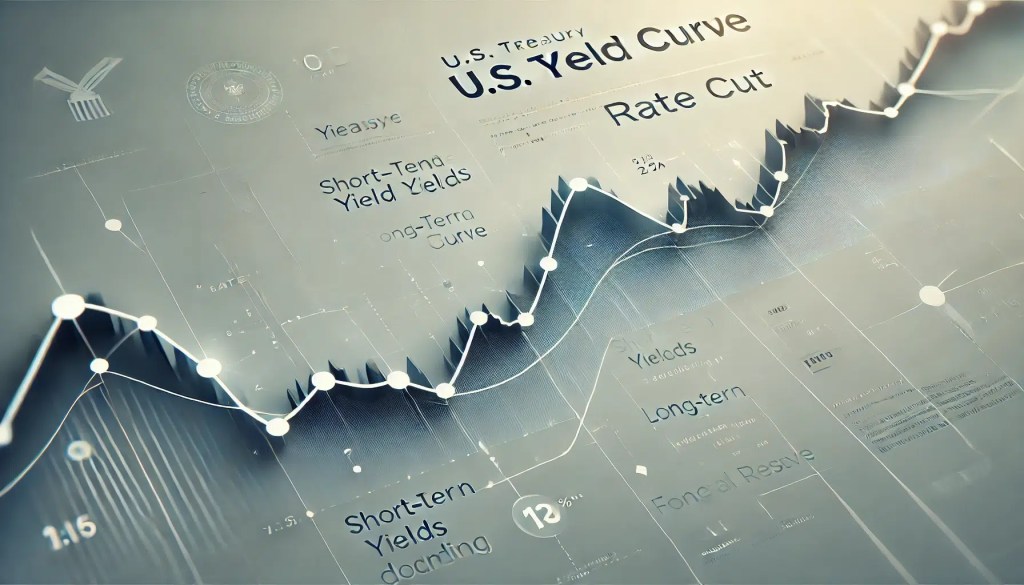
The Fed’s rate cut had a significant impact on the U.S. Treasury yield curve. Following the announcement, short-term yields fell sharply, as these are closely tied to the Federal Reserve’s policy changes. However, long-term yields remained relatively elevated due to broader economic factors like rising fiscal deficits and substantial government bond issuance.
Yield Curve Steepening
The yield curve steepened after the cut, reflecting a widening gap between short- and long-term rates. This shift suggests that while short-term rates are expected to fall further, long-term rates remain anchored by fiscal concerns and inflation expectations. The bond market saw rallies, especially in the intermediate part of the curve (3- to 7-year maturities), which offered higher yields with less risk from interest rate fluctuations.
Long-Term Yields and Sectors Affected
Despite the Fed’s aggressive cut, long-term yields, such as the 10-year Treasury, were slow to decline, impacted by high government borrowing needs. This has particular implications for sectors like housing, where mortgage rates, which closely follow the 10-year yield, remained above 6%.
 Growing Recession Concerns Amid Rate Cuts
Despite the rate cut being designed to boost the economy, there is rising concern among economists about a potential deeper recession. Let’s explore the key factors driving these concerns.
Labor Market Weakness
The labor market, while still strong, showed signs of weakening. The unemployment rate ticked up to 4.2% from its April 2023 low of 3.4%, signaling slower job growth. Wage growth has also softened, which, while helpful in easing inflation, points to a potential slowdown in economic momentum.
Inverted Yield Curve
The yield curve, a historically reliable recession predictor, remains a concern. Although short-term rates have responded to the Fed’s recent cuts, long-term rates remain high. This inversion—where short-term rates exceed long-term rates—has often signaled an impending recession.
Declining Consumer Confidence
Consumers, the backbone of the U.S. economy, are also under pressure. Despite the rate cut, borrowing costs remain high due to previous interest rate hikes, and sectors like housing and durable goods have been hit the hardest. Mortgage rates, even after the cut, are keeping home affordability low, contributing to weaker consumer spending.
Corporate Earnings Pressures
Companies, especially those in borrowing-sensitive sectors like real estate and consumer goods, are seeing shrinking profit margins. With demand weakening and rising costs cutting into profits, layoffs could rise, further worsening the unemployment outlook.
 Global Economic Challenges
The global economy presents additional challenges for the U.S., potentially exacerbating recession risks. China’s economic slowdown and Europe’s energy crisis are weighing on international demand for U.S. goods and services, adding another layer of uncertainty to the Fed’s outlook.
Fed’s Limited Tools
While the Federal Reserve’s rate cut signals a willingness to support the economy, many experts worry that monetary policy alone may not be sufficient to stave off a deeper recession. With high government debt and political gridlock, fiscal support might be limited, leaving the Fed with fewer tools to manage the downturn.
 Navigating the Path Ahead
The Federal Reserve’s 50 basis point rate cut marks a major shift in policy aimed at balancing inflation control and economic growth. While the Fed has shown its willingness to take decisive action, concerns about a deeper recession persist, driven by weakening labor market trends, global economic pressures, and structural fiscal issues. The next few months will be critical in determining whether these fears materialize or if the Fed’s aggressive move can steer the U.S. economy away from a downturn.