



Uranium’s Surge Fuels Nuclear’s New Dawn
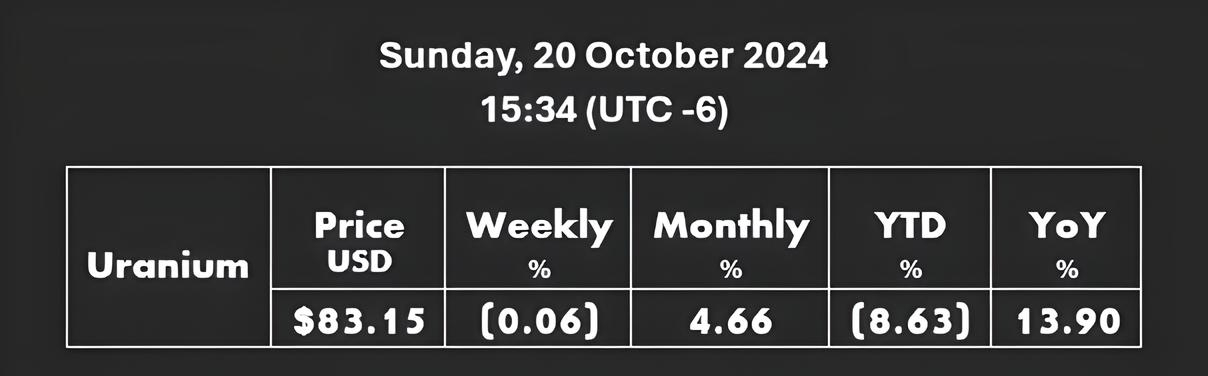
Uranium Futures Price Today – Investing.com
Necessity is the mother of invention.
Or of revised interpretation.
Once a 1970s U.S. energy pariah, nuclear energy has reemerged as the 21st-century darling to solve the increasing domestic demand for dependable, efficient, and clean energy development fueled by uranium concentrate.
But its recent renaissance is not because of nuclear power’s low-cost, zero-emissions profile, or due to the industry’s decades of safety improvements that have shed its former reputation. This renewed interest is purely economic, as evidenced by recent private partnerships involving tech giants Microsoft, Amazon, Oracle, and Google, predated by historic political precedent via the 2022 Inflation Reduction Act’s emphasis on nuclear energy that has since evolved into lucrative domestic contracts specific to strategic sourcing and reactor construction.
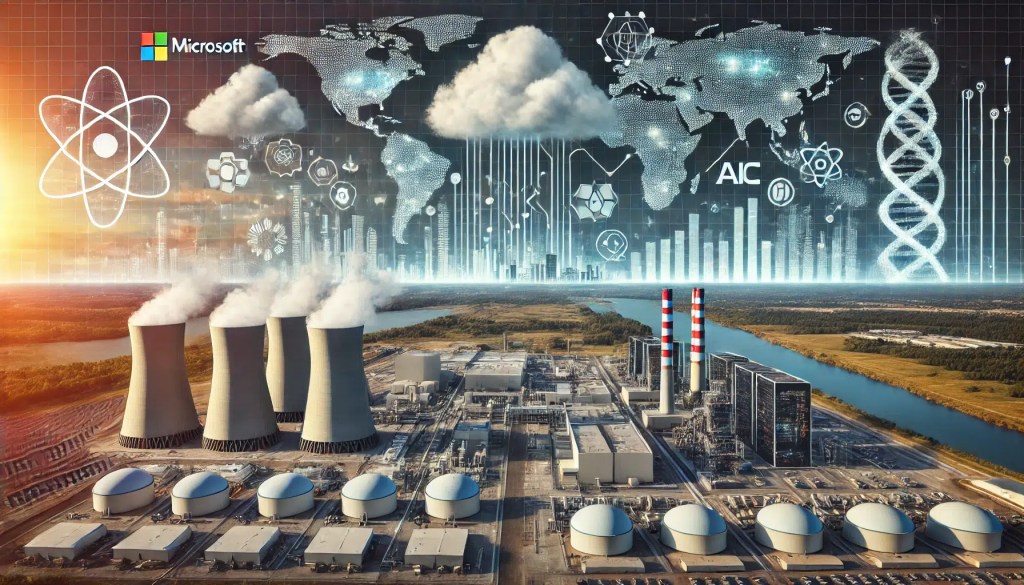
This constellation of deals and awards spotlight how tech companies will amplify energy demand moving forward. Presently consuming 3% of all U.S. domestic energy consumption, data centers leveraging cloud computing and generative AI will command 9% before 2030.
These same deals also expose supply shortfalls.
Presently, global supplies are 30 – 35 million pounds short of roughly 182 million pounds annual demand. The U.S. alone consumes over 51 million pounds of uranium concentrate yearly while only producing fewer than 100,000 lbs. monthly—a 130-fold disparity that requires Canada and Australia to backfill.
 Caution: Energy Crossroads May Prove Rough
As with any commodity, uranium mining and enrichment are subject to geopolitical tensions, wreaking havoc on source availability and supply chain disruptions. A significant portion of global uranium supply is controlled by countries like Kazakhstan and Russia, making U.S. energy utilities dependent on industrial metals such as uranium highly exposed to procurement risks and associated price increases. The fear is growing more palpable as many utilities are actively seeking to “flex up” legacy contracts, extending typical two – three-year agreements past 2030 that are focused more on asset-security than on cost-savings.
This leaves 2027 as a watershed moment for utilities and a critical pivot point for uranium supplies and subsequent costs.
Utilities’ exposure only increases in tandem with inevitable price squeezes. And though some analysts contend utilities companies can still comfortably profit from uranium term prices well above $150/lb., there will occur consolidation among energy providers as some fail at merely contracting term prices and contract lengths strategically as uranium values continue rising bullishly.
As contract term prices from demand rise, spot prices will stabilize in the $70/lb. range, analysts say. And with a common historical delay often occurring between economic shifts and market responses, analysts project spot prices to climb to $130/lb. – $150/lb., implying potential gains of 56% – 80%. In short, the rally in uranium is just beginning.
Financial Powerhouses Bet Big on Uranium as Nuclear Energy Resurgence Looms
A key indicator of nuclear energy’s revival is the recent commitment by 14 of the world’s largest banks to fund a threefold increase reliable uranium production by 2050. The most pressing concern is how well these financial resources will be allocated. An overemphasis on reactor construction could jeopardize the acquisition of sufficient uranium fuel, which is essential alongside the downstream costs of uranium conversion, enrichment, and fabrication.
Adding an additional layer of market intrigue to nuclear energy’s reprisal is the possibility of technology giants outright purchasing their own nuclear reactor facility and circumventing established but unreliable domestic energy grids. Such “behind the line” approaches will further fast track energy utility consolidation, notably stretching from Wyoming to Texas where land and resources prove more plentiful.
Volatility to uranium’s short-term value and pricing will determine as well as reflect the number of developers committed to transitioning to producers to control multiple junctures in the production process. Analysts are expecting mergers and acquisitions (M&As) to increase significantly in the near term as established players, including energy utilities, seek protection and preservation along entire value chains. This does not diminish the role of explorers and developers; quite the contrary as many producing mines will peak around 2030, requiring new earthly sources of uranium if nuclear energy’s scope and scale unfold as anticipated.
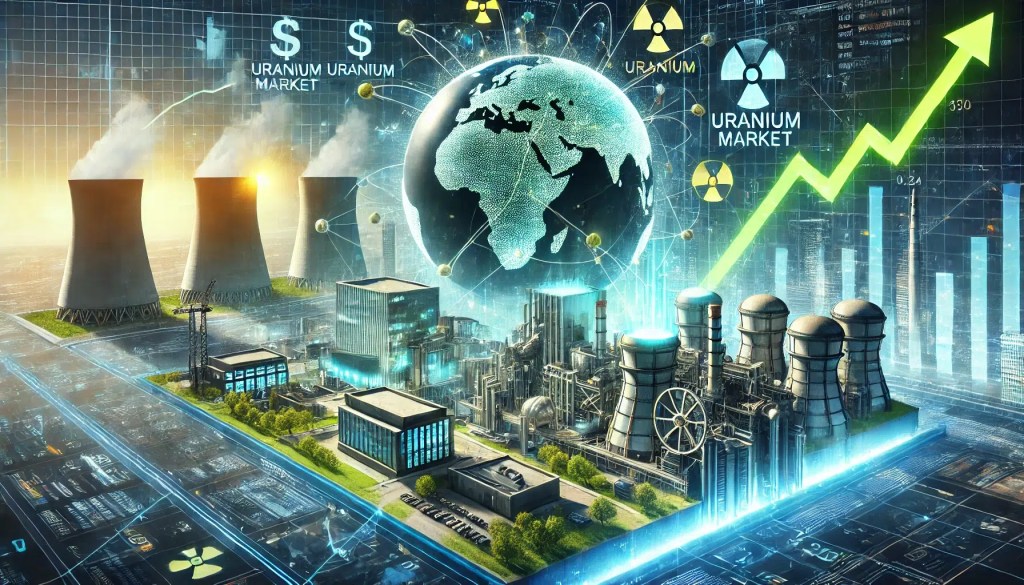 Key Uranium Market Players Set to Thrive by 2030
Through various research, TradersQue has identified the following global players in the uranium market that are expected to achieve significant growth and value in the near-term—prior to and leading up to 2030.
Uranium Energy Corporation

Uranium Energy Stock Price Today | NYSE: UEC Live – Investing.com
Uranium Energy Corporation (NYSE: UEC) specializes in uranium exploration and production, focusing on in-situ recovery (ISR) technology for efficient and eco-friendly extraction. Key U.S. assets include production-ready projects in Texas and Wyoming. UEC is certainly a darling of government and private funding sources as America seeks greater uranium development to fast-track its goal to be more energy dependent, leading some to characterize uranium as the next oil rush.
Recent expansions include the acquisition of UEX Corporation in 2022, adding Canadian development-stage projects like Shea Creek and Christie Lake. UEC also acquired the Roughrider Project from Rio Tinto, strengthening its position in the Athabasca Basin. In 2023, UEC secured further exploration land in Canada and formed joint ventures to boost its uranium resource base.
Uranium Energy Corporation (UEC) reported strong financial performance for fiscal 2023. The company achieved record revenues of approximately $164 million, driven by uranium spot market sales. UEC posted a gross profit of $49.6 million for the fiscal year, reflecting its focus on expanding production capabilities and resource development.
UEC’s balance sheet remains solid, with no debt and around $192.3 million in liquid assets, including $57.6 million in cash, $100.4 million in equity holdings, and $34.3 million in physical uranium inventories. The company remains strategically well-positioned to continue advancing its U.S. and Canadian uranium projects without the pressure of debt, enabling future acquisitions and project development.
Additionally, UEC has a market capitalization of approximately $1.5 billion, indicating its growing significance in the uranium sector. As of October 2024, analysts rank $UEC as a buy with a 12-month price-target of $10.31 USD, representing a 21% upside.
Kazatomprom JSC
NATKY – NATIONAL ATOMIC CO KAZATOMPROM JSC | Overview | OTC Markets
National Atomic Company Kazatomprom JSC (OTC: NATKY) is the world’s largest uranium producer, responsible for about 20% of global uranium production across all activities: exploration, production, processing, and sale of uranium and uranium products. The company also processes rare metals and produces beryllium, tantalum, and niobium products. In addition, Kazatomprom offers communication and security services, sulfuric acid production, and semiconductor materials; and it provides research, project development, engineering consulting, drilling, procurement, transportation services, and radiation and environmental monitoring. The company also engages in financial investments and asset management. Established in 1997, Kazatomprom is headquartered in Astana, Kazakhstan.
The company also specializes in ISR technology, which is more environmentally friendly than conventional mining. Kazatomprom operates 26 uranium deposits through subsidiaries, joint ventures, and associates across Kazakhstan. The company’s primary export markets include Asia, Europe, and North America, and it also produces uranium dioxide fuel pellets and exports rare metals.
In terms of recent activities, Kazatomprom has focused on expanding exploration within Kazakhstan, securing new licenses for uranium deposits. This includes strengthening its joint ventures, such as its work with JV Inkai LLP for further uranium exploration.
Financially, for the first half of 2023, Kazatomprom reported revenues of approximately 1.4 trillion Kazakhstani tenge (KZT), which converts to around $3.03 billion USD (as of 2023 exchange rates). This represents a 43% year-on-year increase. The company’s adjusted EBITDA reached 829 billion KZT, equivalent to about $1.79 billion USD, reflecting significant profitability. Importantly, Kazatomprom remains largely debt-free, an advantage given the volatility of global markets.
Kazatomprom’s market capitalization is approximately $10.3 billion USD, and the company has seen steady cash flows from operations, ensuring its ability to fund ongoing projects and future growth. As of October 2024, analysts currently rank $NATKY as a strong buy but with 12-month price-target of $51.22 USD.
IsoEnergy LTD.
Isoenergy Ltd OTC Markets Stock Price Today | TSX: ISENF Live – Investing.com
IsoEnergy Ltd. (OTCQX: ISENF) is a uranium exploration and development company primarily focused on projects in the eastern Athabasca Basin, a region rich in uranium resources in Saskatchewan, Canada. The company holds interests in several key uranium properties, including Larocque East, Geiger, and Thorburn Lake, among others. IsoEnergy is actively involved in advancing these projects to meet the growing demand for uranium driven by increasing support for nuclear energy as a clean energy source. IsoEnergy was founded by, and continues to be supported by, NexGen Energy Ltd., its major shareholder, leveraging NexGen’s expertise and resources to advance its projects
In 2023, IsoEnergy merged with Consolidated Uranium, strengthening its asset base and positioning itself as a major player in the uranium sector with assets across Canada, the U.S., and Australia. The merger enhances its access to capital and ability to develop uranium projects in stable regions.
Additionally, IsoEnergy acquired Anfield Energy in a C$126.8 million ($91.86 million USD) all-stock deal, including the Shootaring Canyon Mill, one of only three licensed uranium mills in the U.S. The acquisition added several uranium and vanadium projects, such as Velvet-Wood, which contains over 4.6 million pounds of uranium and 5 million pounds of vanadium, boosting IsoEnergy’s U.S. production potential and operational synergies amid rising nuclear energy demand. The acquisition of Anfield, along with its proximity to IsoEnergy’s Tony M Mine, is expected to reduce costs and position IsoEnergy as a major player in U.S. uranium production.
Financially, IsoEnergy has a market capitalization of approximately $534 million USD and holds $48.66 million USD in cash. The company has $31.15 million USD in debt, resulting in a net cash position of around $17.51 million USD. However, it has reported a net loss of $20.57 million USD over the trailing twelve months, reflecting its focus on exploration and development rather than current production. As of October 11th, 2024, analysts have graded $ISENF as a buy by 8 analysts and with a projected 12-month price-target of $4.84 USD, representing a 70% upside.
 Parting Thoughts
Nuclear energy has re-emerged as a key solution to meet the growing U.S. demand for clean, reliable power, driven by data centers supporting cloud computing and AI. This resurgence, driven by economic factors and partnerships with tech giants like Microsoft and Oracle, faces challenges from a significant shortfall in global uranium supply, leaving the U.S. reliant on imports.
As energy demand rises and is satisfied by nuclear energy, the subsequent bullish outlook will attract increased investment in uranium futures and equities.
Additional Coverage
Additional coverage can be found via Todd Analytics’ X and LinkedIn social media accounts.