



U.S. policies like the belated 45Z and the subsequent Farm-to-Fly Act are failing farmers and ethanol producers.
The recent release of 45Z guidance under the Inflation Reduction Act (IRA) is a staggering demonstration of governmental ineptitude. Two years late and woefully incomplete, the guidance offers little clarity while placing disproportionate burdens on U.S. farmers and ethanol producers. Worse still, the Farm-to-Fly Act —billed as a path to accelerate sustainable aviation fuel (SAF) production—is equally hollow, lacking the financial incentives needed for real progress. These policy failures aren’t just harming domestic agriculture—they’re pushing the U.S. further behind global competitors like Brazil, whose ethanol-to-SAF advancements could severely undermine American leadership in renewable energy.
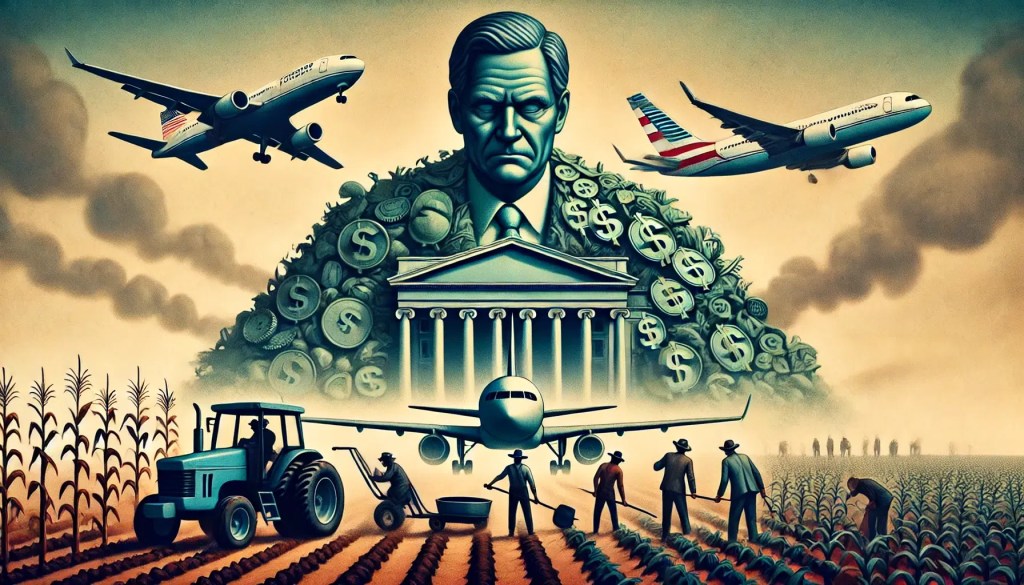
The 45Z Debacle: A Masterclass in Policy Dysfunction
The Treasury’s 45Z guidance burdens farmers with a labyrinth of impractical requirements while failing to provide a meaningful compliance roadmap or sufficient incentives. Chief among its failures are mandates that ignore both modern agricultural realities and the economic pressures faced by farmers.
Unfunded Demands: The Carbon Capture and Cover Crop Farce
Carbon capture and storage (CCS) is now an integrated requirement, yet farmers are expected to bear the costs of verification, adding financial strain to already thin margins. Similarly, cover crop requirements are laughable, with the current $50-per-acre subsidy far too low to incentivize adoption.
Fertilizer Regulations: Impractical and Unworkable
The guidance requires nitrogen fertilizers to be applied within a 30-day spring window—an impossible demand given the unpredictable planting schedules and logistical challenges of large-scale operations. Adding insult to injury, wet mills have been disqualified from SAF eligibility, undermining a key segment of the ethanol industry with no explanation or viable alternative.
Exacerbating the Farmer-Ethanol Producer Divide
While SAF producers qualify for tax credits, the guidance leaves upstream stakeholders—farmers and ethanol producers—without direct support. This will inevitably lead to cost-shifting disputes between ethanol plants and farmers, with no guarantee of fair compensation for compliance efforts.
Falling Behind: How Brazil Threatens U.S. Leadership

The delays and lack of actionable guidance in the U.S. have global consequences. Brazil, with its highly efficient ethanol production and expanding capacity for ethanol-to-SAF conversion, is quickly becoming a formidable competitor. Brazil’s sugarcane-based ethanol boasts a far lower carbon intensity (CI) score compared to U.S. corn ethanol, giving it a competitive edge in global SAF markets.
Brazil’s SAF Potential vs. U.S. Policy Paralysis
As the U.S. struggles with inconsistent policies, Brazil is leveraging its robust agricultural infrastructure and existing ethanol production expertise to dominate SAF innovation. Brazil’s leadership in sugarcane-based ethanol allows it to meet stringent CI requirements without the burdensome mandates now facing U.S. farmers.
- Sugarcane ethanol in Brazil has a CI score of approximately 24 gCO2e/MJ, compared to U.S. corn ethanol, which averages 56 gCO2e/MJ—a 57% lower carbon footprint.
- Brazil’s ethanol output in 2023 reached 33 billion liters, with nearly 20% earmarked for export—a significant share of the global market.
- Analysts predict that Brazil’s ethanol-to-SAF production capacity could meet 25% of global SAF demand by 2030, equivalent to 4 billion gallons annually, assuming current investment trends continue.
With Brazil ramping up production and actively courting international markets, the U.S. risks losing its share of the growing SAF market.
Implications for U.S. Agriculture
Without policy reforms that level the playing field, the U.S. may find itself ceding ground to Brazil not only in SAF production but also in the broader renewable energy market. Brazil’s success demonstrates what can happen when governments offer consistent guidance, direct subsidies, and streamlined logistics. For the U.S. to compete, it must act decisively to correct the course of its agricultural and energy policies.
The Farm-to-Fly Act: A Hollow Gesture
While the Farm-to-Fly Act claims to accelerate SAF production, it offers little substance. The Act promises expanded crop markets and SAF eligibility under USDA bioenergy programs but lacks the tax incentives needed to motivate change. This lack of financial support exposes the legislation as a symbolic gesture, rather than a meaningful driver of innovation.
Unrealistic SAF Targets and Consumer Fallout
The federal goal of deriving 47% of aviation fuel from SAF by 2030 is ambitious but unrealistic without better policy support. Airlines will inevitably pass the cost of SAF adoption onto consumers, but whether passengers will accept higher ticket prices remains uncertain. Without robust financial mechanisms, the initiative risks failure, leaving the aviation industry unable to meet sustainability commitments.
Final Thoughts: A System Destined to Fail

The 45Z guidance and Farm-to-Fly Act reflect a systemic failure to understand the agricultural and energy sectors they aim to reform. By burdening farmers with new costs and logistical challenges while offering little in return, policymakers have created a framework destined to collapse.
Meanwhile, Brazil’s rise in ethanol-to-SAF production underscores the dangers of America’s policy paralysis. Without meaningful tax incentives, streamlined logistics, and a genuine commitment to supporting farmers and ethanol producers, the U.S. will struggle to compete globally. Policymakers must recognize that ambition detached from practicality serves no one.
Additional Coverage
Additional coverage on 45Z coverage in particular and on biofuels in general, including our coverage on biofuels/SAF producers Gevo (NASDAQ: $GEVO) and LanzaTech (NASDAQ: $LNZA), can be found via our archives at TradersQue.com as well as on Todd Analytics’ X and LinkedIn social media accounts. Todd Analytics has an extensive history on all aforementioned platforms of Brazil’s agricultural and manufacturing threat to the U.S.