



NEI/NLR Offer a Broad Nuclear Energy Play Beyond Uranium
The Nuclear Energy Index (NEI), proxied by VanEck’s NLR ETF (“NLR”), is not a pure uranium-mining index but rather a broad nuclear-energy index with vast exposure to uranium miners, nuclear utilities, fuel-cycle companies, reactor technology firms, and nuclear engineering or service providers.
Nuclear Energy Index | Trading Economics
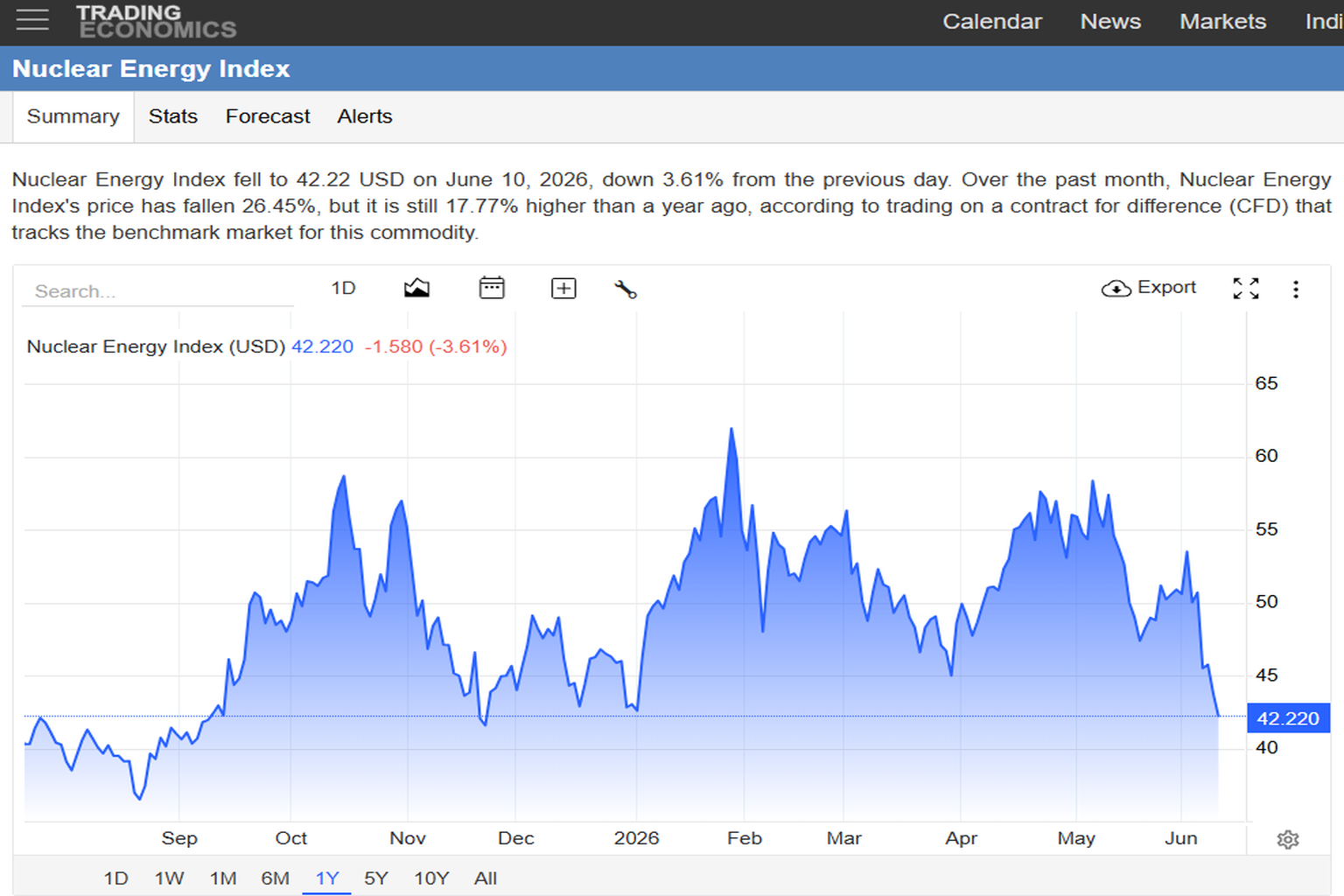
Nuclear Energy Index Exposure
NLR gives investors a broad nuclear energy mix, combining uranium exposure, power infrastructure, and nuclear technology upside. The index suits investors who want exposure to wider nuclear trends, including rising power demand, grid upgrades, energy security, AI and data-center electricity use, and reactor life extensions.
It may rise with uranium stocks during strong uranium cycles, but it will not track miners exactly because utilities and service companies are also major parts of the fund. NLR is not low risk, but it is more balanced than a pure uranium-miner basket because it spreads exposure across miners, utilities, fuel-cycle firms, and nuclear-service providers.
India’s Energy Push Continues Going Nuclear | TradersQue
For U.S. investors, the best sources to track include uranium prices, utility contracting, uncovered utility demand, producer contracts, and fuel-cycle market data.
Uranium and Fuel-Cycle Exposure

The Nuclear Energy Index’s first priority is uranium and fuel-cycle exposure: Cameco, Uranium Energy, Kazatomprom, Paladin, NexGen, Denison Mines, Energy Fuels, Centrus, Yellow Cake, IsoEnergy, Deep Yellow, and enCore Energy comprise the core.
| Company | Investor Resources | Suggested Use |
|---|---|---|
| Cameco / $CCJ | Investor relations; annual reports; SEC EDGAR filings; SEDAR+ filings; news releases | Uranium production, realized uranium pricing, long-term contract book, UF6 conversion exposure, Westinghouse ownership, production guidance, inventory strategy, and utility contracting trends. |
| Uranium Energy / $UEC | Investor centre; company filings; SEC EDGAR filings; investor presentations; news releases | U.S. ISR uranium restart progress, permitted production capacity, physical uranium inventory, hub-and-spoke project economics, contract exposure, and U.S. nuclear fuel security policy. |
| Kazatomprom / $NATKY | Investor relations; financial results / reports; stock exchange announcements; production updates / news; annual reports | Global uranium supply discipline, attributable production, sales volumes, realized uranium price, JV output, sulfuric acid constraints, dividend policy, and Kazakhstan sovereign / logistics risk. |
| Paladin Energy / $PALAF | Investor centre; ASX announcements; reports; presentations; SEDAR+ filings | Langer Heinrich production ramp, Namibia operating costs, sales contracts, inventory build, Fission / Patterson Lake South integration, financing needs, and uranium price leverage. |
| NexGen Energy / NXE | Investor centre; SEC EDGAR filings; SEDAR+ filings; corporate presentations; Rook I project page | Rook I / Arrow permitting, project financing, capex inflation, uranium reserve base, offtake potential, construction timeline, Indigenous / provincial approvals, and strategic partner interest. |
| Denison Mines / $DNN | Investor relations; presentations; SEC EDGAR filings; SEDAR+ filings; Wheeler River project | Wheeler River ISR development, Phoenix feasibility economics, permitting milestones, uranium inventory, McClean Lake / toll milling exposure, financing strategy, and Athabasca Basin exploration upside. |
| Energy Fuels / $UUUU | Investor relations; SEC filings; SEC EDGAR filings; news releases; White Mesa Mill overview | U.S. uranium production, White Mesa Mill utilization, vanadium / rare earth optionality, uranium inventory, contract book, ISR and conventional mine restarts, and U.S. strategic fuel-cycle policy. |
| Centrus Energy / $LEU | Investor relations; SEC filings; SEC EDGAR filings; news releases; HALEU program overview | HALEU commercialization, LEU enrichment supply, DOE contracts, SWU market tightness, Russian enrichment replacement demand, order book, gross margins, and domestic fuel-cycle policy support. |
| Yellow Cake / $YLLXF | Results and reports; regulatory news; company overview; uranium holdings / NAV updates; London Stock Exchange profile | physical U3O8 holdings, NAV discount / premium, uranium spot-price sensitivity, purchase agreements, storage costs, share issuance / buybacks, and direct uranium price beta without mine operating risk. |
| IsoEnergy / $ISENF | Investor centre; presentations; news releases; SEDAR+ filings; projects overview | Athabasca Basin exploration, U.S. and Australian development portfolio, resource growth, project sequencing, cash runway, permitting progress, and torque to long-term uranium prices. |
| Deep Yellow / $DYLLF | Investor centre; ASX announcements; ASX company page; reports; Tumas project | Namibia Tumas development, Mulga Rock optionality, project financing, DFS / capex updates, permitting, offtake strategy, resource conversion, and long-term production growth pathway. |
| enCore Energy / $EU | Investor centre; presentations; SEC EDGAR filings; regulatory filings; news releases | U.S. ISR production ramp, Alta Mesa and Rosita operations, uranium sales contracts, permitted capacity, production costs, cash flow conversion, and U.S. domestic uranium procurement policy. |
These specific stocks are more sensitive to uranium prices, long-term utility contracting, mine supply, enrichment, conversion, and investor appetite for uranium scarcity. They can rise quickly in strong uranium markets, but they can also fall sharply when sentiment weakens.
Nuclear Utilities & Power Generators

The Nuclear Energy Index’s next layer involves nuclear utilities and power generators. This includes Constellation Energy, Public Service Enterprise Group, PG&E, Fortum, CEZ, and CGN Power. These companies’ value depends more on electricity demand, regulated power markets, nuclear plant performance, policy support, reactor life extensions, and power prices.
Uranium Royalty Corp: A Different Uranium Bet | TradersQue
But this group can make the index more stable than a pure uranium-miner basket.
| Company | Key Sources | Suggested Use |
|---|---|---|
| Constellation Energy / $CEG | Investor relations; SEC filings; earnings releases / presentations; annual reports | U.S. nuclear fleet output, capacity factors, realized power prices, data-center / AI power contracts, clean-energy credits, reactor license extensions, refueling outages, and free cash flow. |
| Public Service Enterprise Group / $PEG | Investor relations; SEC filings; financial reports; presentations | Track regulated earnings, allowed ROE, nuclear plant performance, dividend policy, New Jersey clean-energy support, and rate-case outcomes. |
| PG&E Corporation / $PCG | Investor relations; SEC filings; SEC EDGAR company page; CPUC proceedings / documents search; Diablo Canyon regulatory materials | California power demand, Diablo Canyon life extension, cost recovery, wildfire liabilities, regulated rate base growth, grid investment, and state policy support. |
| Fortum / FORTUM.HE | Investor relations; reports and presentations; stock exchange releases; financial calendar | Nordic power prices, nuclear and hydro generation, hedge ratios, achieved power prices, nuclear availability, dividend policy, and balance-sheet leverage. |
| ČEZ Group / CEZ.PR | Investor relations; financial reports; annual reports; Prague Stock Exchange profile; generation / operations overview | Czech nuclear generation, power-price exposure, dividends, state ownership influence, new nuclear capex, regulated distribution earnings, and reactor expansion policy. |
| CGN Power / 1816.HK | Investor relations updates; HKEX filings search; annual / interim results archive; company announcements | Chinese nuclear capacity additions, utilization hours, on-grid tariffs, reactor commissioning, plant availability, debt levels, dividend policy, and state policy support. |
Adjacent Nuclear Services

The Nuclear Energy Index’s third priority is nuclear technology, engineering, and services: BWX Technologies, NuScale, Oklo, Nano Nuclear, Silex Systems, CGN Mining, and KEPCO Engineering & Construction.
U.S. Uranium Poised for Growth Amid Nuclear Revival | TradersQue
These particular names offer exposure to reactor components, small modular reactors, nuclear engineering, enrichment technology, and specialized services. Although this bucket adds growth potential, it also adds more serious execution risk as some companies depend on future projects, approvals, or commercialization.
| Company | Key Sources | Suggested Use |
|---|---|---|
| BWX Technologies / $BWXT | Investor relations; SEC filings; annual reports; quarterly results; SEC EDGAR company page | U.S. Navy nuclear propulsion demand, nuclear components, government backlog, book-to-bill, commercial nuclear orders, margin expansion, medical isotopes, and long-cycle contract visibility. |
| NuScale Power / $SMR | Investor relations; SEC filings; press releases; NRC NuScale US460 review; NRC NuScale application documents | SMR customer pipeline, NRC licensing milestones, deployment timelines, project economics, cash runway, signed customer commitments, dilution risk, and commercialization progress. |
| Oklo / $OKLO | Investor relations; SEC filings; SEC EDGAR company page; NRC Aurora application documents; press releases | Advanced fission demand, data-center power agreements, licensing progress, site approvals, customer conversion from MOU / LOI to contract, cash burn, and fuel supply strategy. |
| Nano Nuclear Energy / $NNE | Investor relations; SEC EDGAR company page; company news; NRC KRONOS MMR project page; University of Illinois KRONOS project update | Microreactor development progress, licensing submissions, engineering milestones, university / lab partnerships, acquisitions, cash runway, dilution risk, and prototype timelines. |
| Silex Systems / $SILXY | Investor relations; financial reports; ASX announcements; NRC Global Laser Enrichment licensing; Federal Register GLE Paducah notice | Laser uranium enrichment commercialization, partner funding, regulatory approvals, SWU market tightness, U.S. fuel-cycle policy, and enrichment security demand. |
| CGN Mining / 1164.HK | Financial reports; HKEX filings search; announcements and circulars; stock information; operational statement example | Uranium trading volumes, uranium inventory, procurement margins, offtake arrangements, spot / long-term uranium price exposure, and China nuclear fuel requirements. |
| KEPCO Engineering & Construction / 052690.KS | Company website; Korea DART filings portal; DART company information; quarterly report example; annual report example | Korean nuclear EPC activity, APR-1400 exports, reactor design contracts, order intake, nuclear segment revenue, overseas project awards, margins, and SMR commercialization milestones. |
The key point for investors is that NLR blends commodity exposure, infrastructure exposure, and technology optionality. It should often move with uranium equities, especially during strong uranium cycles. But it will not track uranium miners one-for-one because utilities and service companies make up a large part of the portfolio.
This index is useful for investors who want a wider nuclear-power commitment based on strongly correlative trends: rising electricity demand, grid needs, energy security, AI and data-center power use, and reactor extensions.
The Flagship U.S. Uranium Producer: UEC | TradersQue
For investors seeking a broader, less concentrated way to invest in nuclear energy, NLR is more balanced. It is not low risk but it spreads risk across miners, utilities, fuel-cycle companies, and nuclear-service providers.
For U.S. investors, these are the most reliable sources to track uranium prices, utility contracting, uncovered utility requirements, producer contract books, and fuel-cycle market data.
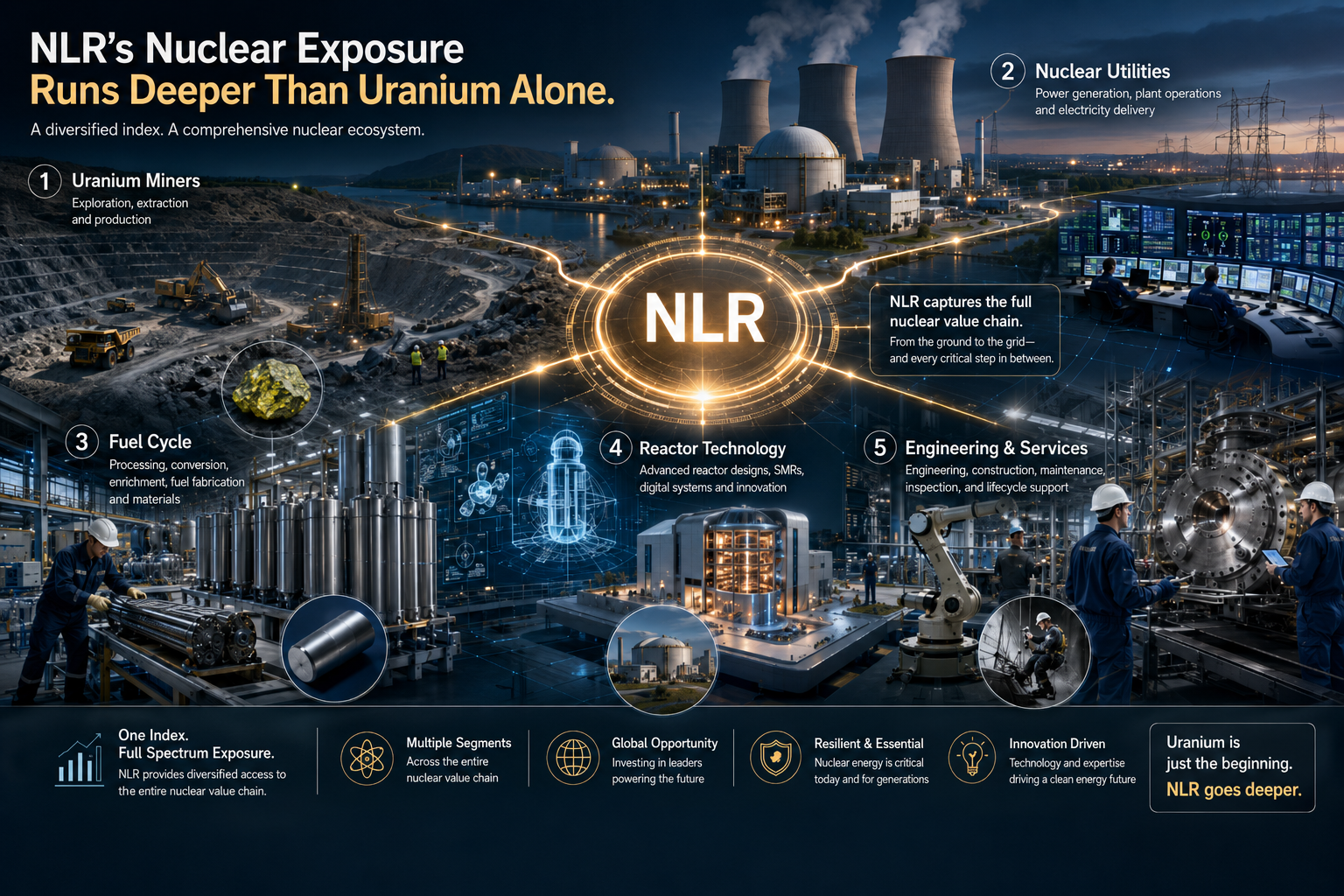
Relevant Uranium Profiles
| Demand | Source | Use |
|---|---|---|
| Uranium spot and long-term price indicators | UxC | U3O8 spot price, long-term uranium price, UF6 conversion, SWU enrichment, utility contracting activity, reactor demand, market outlooks. Mostly subscription-based. |
| Uranium spot, mid-term, and long-term price indicators | TradeTech | Daily, weekly, and monthly uranium price indicators; U3O8, UF6 conversion, and SWU enrichment prices; Nuclear Market Review. Mostly subscription-based. |
| U.S. utility purchases, deliveries, inventories, contract volumes, and forward coverage | U.S. Energy Information Administration | Best free U.S. government source. Includes U.S. civilian nuclear operator uranium purchases, future deliveries, inventories, enrichment services, and unfilled market requirements. |
| U.S. utility uncovered / unfilled requirements | EIA Form EIA-858 / UMAR | Survey collects uranium contracts, deliveries for the next 10 years, inventories, enrichment, feed deliveries, and unfilled market requirements. |
| Producer contract books | Company annual reports / 10-K / 40-F / 6-K filings | Contracted volumes, realized pricing, market-related contract exposure, delivery commitments, and customer/geographic mix. Cameco is the best disclosure model. |
| Exchange-traded uranium futures proxy | CME Group — UxC Uranium U3O8 Futures | Futures quotes based on UxC uranium pricing. Useful for market-implied direction, though liquidity can be thin. |
Considerations for Investors
All investors should use NLR for equity-market pricing, EIA for U.S. utility coverage, UxC/TradeTech for price and contract-market intelligence, and producer filings for company-level contract leverage.
We at TradersQue recommends tracking this particular stack based on investors’ comfort, access, and experience:
- Novice: EIA UMAR + SEC/SEDAR company filings + Cameco reports + CME UxC futures.
- Intermediate: UxC + TradeTech.
- Expert: NLR holdings, URA and URNM holdings, company earnings calls, and producer realized-price disclosures.
Put differently: EIA UMAR is the cleanest public source for U.S. utility purchasing, inventories, deliveries, enrichment services, and contracting data. UxC and TradeTech are the relevant specialist sources for uranium price and contract-market intelligence; much of the useful content is subscription-gated. VanEck, Global X, and Sprott are the issuer sources for NLR, URA, and URNM exposure.
Final Thoughts
NLR is a broad equity proxy for the nuclear-energy investment theme, not a direct contracting instrument. It can reflect term-contract optimism when that optimism flows into uranium miners and fuel-cycle companies. But its signal is diluted by utilities, engineering firms, SMR developers, and service providers whose stock prices may respond more to power prices, regulation, project execution, interest rates, AI/data-center electricity demand, or policy announcements.
So yes, investors can use the index confidently as a diversified nuclear-equity instrument. They should not use it confidently as a standalone gauge of utility term-contract strength. For that, pair NLR with long-term uranium price indicators, producer contract books, utility uncovered-requirement data, and fuel-cycle market reports.