



UROY After Sweetwater: The Financing Question Moves to the Foreground
Uranium Royalty Corp. (NASDAQ: UROY) has moved into the part of the Sweetwater story that matters most for shareholders: financing, cash generation and execution. When TradersQue examined UROY in July, Sweetwater was still largely a transaction thesis whose economic effects had yet to appear in reported financials. The first post-transaction quarter now provides a clearer view of the company that emerged from the acquisition.
Uranium Royalty Corp | NASDAQ: UROY | Investing.com
UROY is larger, more diversified and better positioned to generate recurring revenue outside uranium, but it is also more leveraged and more dependent on disciplined liquidity management. The September materials make the original case for Sweetwater possible to measure.
The Post-Sweetwater Balance Sheet Is Now Visible

UROY completed its acquisition of approximately 92% of Sweetwater on July 27. At July 31, the company reported about $442 million of land and $1.30 billion of mineral properties and interests. The transaction also left UROY with approximately $535.7 million of non-current long-term debt and another $17.1 million classified as current, along with $31.4 million of advanced minimum royalty obligations and $22.6 million of mandatorily redeemable preferred stock. Those figures establish the financial burden now attached to the enlarged asset base and make the balance sheet a far more important part of valuation than it was before the transaction.
UEC’s Expanding Role Changes UROY’s Valuation | TradersQue
Liquidity is correspondingly tighter. UROY reported $54.1 million of unrestricted cash and $49.5 million of restricted cash, while current liabilities exceeded current assets by about $17.25 million. The company still owns substantial assets and retains several potential sources of liquidity, but the margin for error has narrowed. Uranium prices, royalty development and future project economics remain important, although they now sit alongside obligations that must be met on fixed schedules.
January 2027 Is the First Important Deadline

The most immediate obligation is UROY’s $40 million borrowing under its senior secured revolving credit facility, which matures on January 31, 2027. Management says it expects to meet that obligation through some combination of unrestricted cash, equity financing, royalty receipts and, if necessary, asset sales. The Form 10-Q adds an important qualification: management concluded that current conditions create substantial doubt about UROY’s ability to continue as a going concern for one year after issuance of the financial statements and stated that its present plans do not remove that doubt.
Uranium Royalty Corp: A Different Uranium Bet | TradersQue
That disclosure should not be read as evidence that default is inevitable. It does, however, establish that repayment cannot yet be treated as routine. The method of repayment will matter because each option carries a different economic consequence for shareholders. Equity issuance would improve liquidity but increase dilution, while asset sales could preserve equity at the cost of reducing future income or optionality. Repayment from internally generated cash would provide the clearest evidence that the enlarged company can support its own capital structure. The January 2027 maturity therefore gives investors a specific date against which to judge post-Sweetwater execution.
Physical Uranium Has Already Served as a Source of Capital
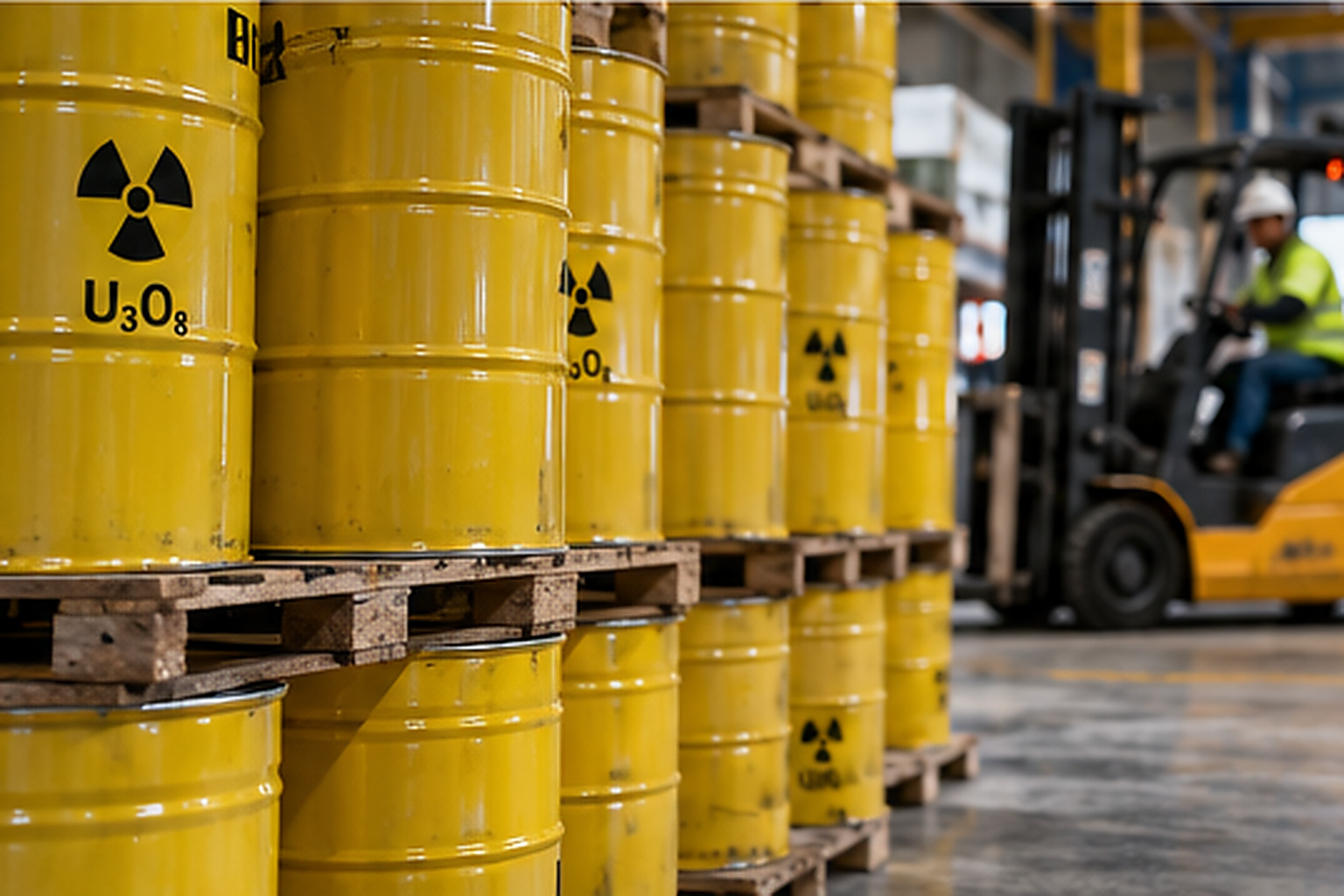
UROY’s uranium inventory played a direct role in the quarter. During the three months ended July 31, the company sold 593,255 pounds of U3O8 for approximately $51 million. The average realized selling price was about $86 per pound, compared with cost of sales of approximately $57.40 per pound. The transaction clarifies management’s approach to physical uranium: the holdings are not simply a vehicle for commodity exposure but can also be monetized to fund acquisitions or meet other capital requirements.
Rare Earth & Critical Minerals Stocks in Focus | TradersQue
That flexibility is useful while much of the uranium royalty portfolio remains tied to development schedules controlled by third parties, but it imposes a capital-allocation test. Uranium sold today no longer participates in any subsequent increase in price, so the economics depend on what management acquires or finances with the proceeds. If inventory is converted into royalties or streams that generate durable cash flow, the trade may strengthen the portfolio. If physical holdings are increasingly used to cover financing pressure, the implications are less favorable. The September filing therefore turns physical uranium from a passive holding into an active source of corporate liquidity, which changes how investors should evaluate its role in the business.
Sweetwater Now Has to Demonstrate Its Cash Contribution
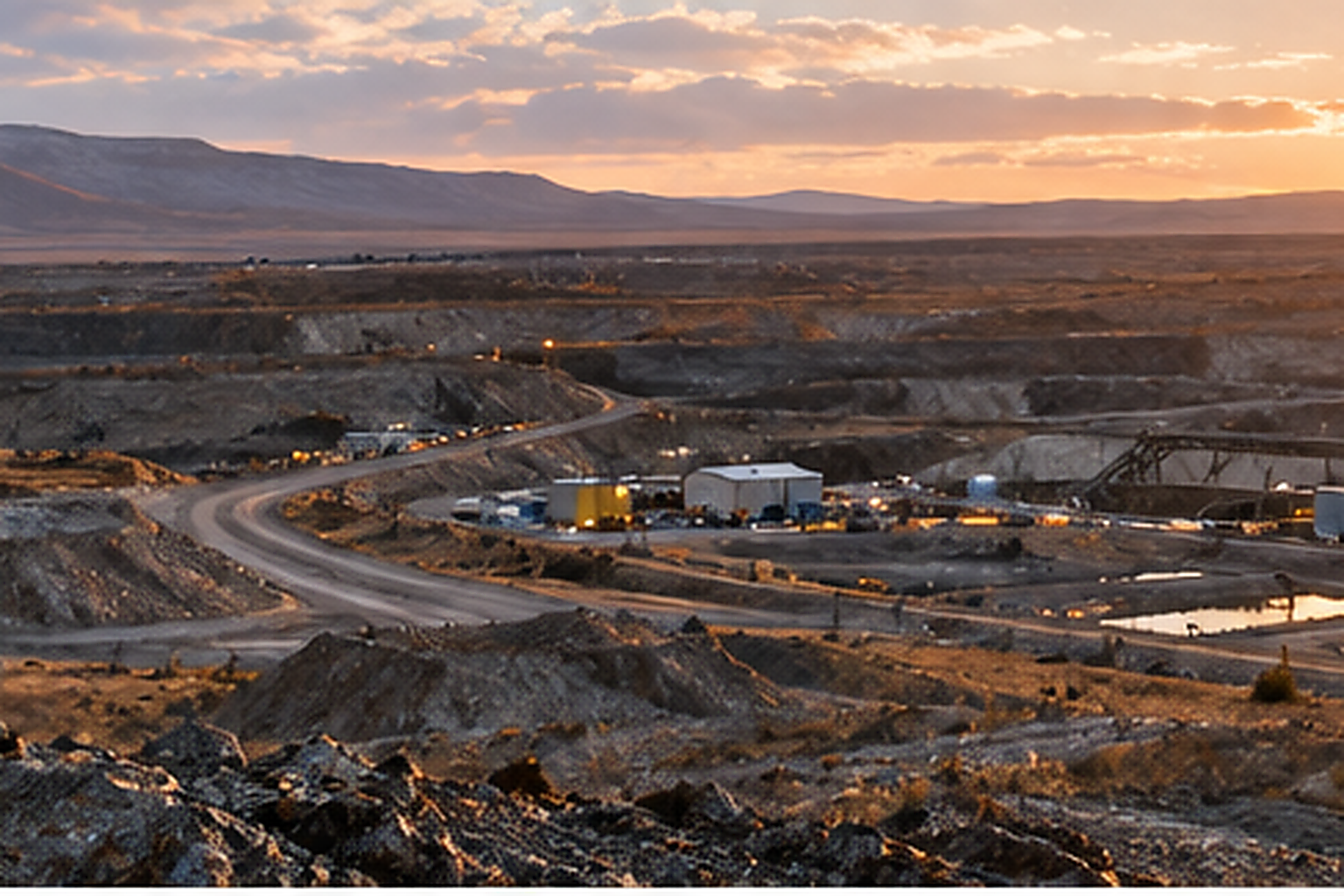
Management’s September presentation provides more detail on the operating case for Sweetwater. UROY reports that the acquired operations generated average annual revenue of about $79 million, average net income of roughly $28 million and average EBITDA of approximately $78 million across 2024 and 2025 on a 100% Sweetwater basis. Those figures do not represent UROY’s roughly 92% interest, and EBITDA is a non-GAAP measure, but they provide a clearer reference point for the earnings capacity management acquired. The more useful measure from this point forward will be the amount of cash that reaches UROY after interest, debt service and corporate costs.
Management also points to approximately 2.7 times embedded production growth through planned brownfield expansions and advanced greenfield projects and states that UROY would not be required to finance the underlying construction. That is one of the stronger features of the royalty model because higher production can increase receipts without forcing UROY to fund the operator’s full development cost. The forecast still depends on project schedules, operator performance and commodity conditions outside UROY’s control, and the company acknowledges that much of the project information comes from third-party disclosures that it generally cannot independently verify. The 2.7-times figure therefore belongs in the forward earnings case rather than current production, but it remains important because Sweetwater’s ability to generate more cash without equivalent capital spending is central to the transaction’s financing logic.
The Uranium Portfolio Is Beginning to Sort by Timing

The September materials also provide a clearer view of where UROY’s uranium interests sit along the development curve. The company lists 27 uranium interests across 24 projects, with producing exposure that includes Cigar Lake, McArthur River, Langer Heinrich and Lance, while Roughrider, Churchrock and Dewey-Burdock remain in various stages of development and permitting. TradersQue has already examined the breadth of the portfolio, so the relevant issue now is not the number of interests but whether individual assets are moving closer to revenue.
NLR’s Nuclear Exposure Runs Deep | TradersQue
Recent project developments help refine that timetable. Langer Heinrich remains in ramp-up, while Lance has encountered slower-than-expected wellfield performance, prompting Peninsula to withdraw its 2026 production guidance. Roughrider is advancing pre-feasibility work, Churchrock has progressed through groundwater permitting, and Dewey-Burdock has received federal approvals allowing infrastructure construction while state permitting continues. None of these developments changes the broad uranium thesis, but each affects the expected timing of royalty receipts. That timing now carries greater weight because UROY’s financial obligations operate on much shorter schedules than many of its development-stage assets.
Uranium Fundamentals Operate on a Longer Schedule
UROY’s September materials continue to support management’s constructive long-term uranium view, citing supply deficits, long mine-development timelines and rising utility requirements. Stronger uranium prices could increase the value of physical holdings, improve project economics and accelerate development across the royalty portfolio. Those effects may ultimately strengthen both asset values and royalty income, but they are unlikely to arrive on the same schedule as the company’s near-term financing obligations.
India’s Energy Push Continues Going Nuclear | TradersQue
The January 2027 bridge maturity makes that timing gap especially important. UROY can be correct about the long-term uranium market while still facing a demanding period of balance-sheet management over the next several quarters. The distinction is not academic. A higher uranium price can increase the estimated value of a development-stage royalty long before that royalty produces cash, while debt service requires liquidity on a fixed timetable. The company therefore needs the Sweetwater assets to provide enough current cash generation to bridge the period between long-term uranium value and actual royalty receipts.
Final Thoughts
The acquisition has already changed UROY’s size, asset mix and financing structure. The next phase will be judged less by acreage, royalty counts and presentation forecasts than by the financial results that follow. Sweetwater cash generation, interest expense, bridge-loan repayment, equity issuance, asset monetization and the progression of uranium interests toward paying royalties will provide a clearer measure of whether the transaction is improving shareholder economics.
Cash flow per diluted share will be especially important because asset growth alone does not establish that the enlarged company is creating greater economic value for existing shareholders. Sweetwater was intended to give UROY a producing royalty base capable of supporting further investment in uranium while reducing dependence on the development schedules of individual uranium projects. The September materials provide the first meaningful evidence against which that strategy can be tested. UROY now has more assets and more potential revenue, but the value of that expansion will depend on how effectively management converts those assets into cash while meeting the obligations created by the acquisition.
Additional Coverage
Additional coverage can be found on the author’s X platform in addition to previous archives via TradersQue.com.